Clinical Peptide Medicine — Structured. Applied. Evolving.

PEPTIDE GUIDES
Understand the Peptide Before You Decide What It Means
Peptide medicine is often taught backwards.
A peptide name is introduced.
Then a list of claimed benefits appears underneath it.
That approach encourages memorization, exaggeration, and poor clinical reasoning.
Praxis Peptide Institute takes a different approach.
Every peptide should be understood through the same sequence:
PHYSIOLOGY → MECHANISM → EVIDENCE → RISK → MONITORING → PATIENT CONTEXT → DECISION
This library is designed to help patients, clinicians, and serious learners understand what individual peptides actually are, which signaling systems they influence, how strong the evidence is, where uncertainty remains, and why the same peptide may make sense in one biological context and not another.
THE GOAL IS NOT TO MEMORIZE WHAT A PEPTIDE IS “GOOD FOR.”
The goal is to understand:
WHAT SIGNAL IT CHANGES, WHAT SYSTEM RESPONDS, WHAT THE HUMAN EVIDENCE ACTUALLY SHOWS, AND WHAT MUST BE MONITORED IF THAT PATHWAY IS ALTERED.
HOW TO USE A PEPTIDE GUIDE
EVERY GUIDE WILL ANSWER THE SAME QUESTIONS:
- What is this peptide?
- Is it endogenous, synthetic, modified, or peptide-derived?
- Where does it normally act?
- What receptor or pathway does it influence?
- What does the mechanism plausibly predict?
- What has actually been demonstrated in humans?
- What remains preclinical or uncertain?
- What are the major safety concerns?
- What should be monitored?
- Who may be a poor candidate?
- What would define success?
- What would make the strategy inappropriate?
METABOLIC & INCRETIN PEPTIDES
GLP-1
GLUCAGON
GLP-1
An intestinal incretin hormone that enhances glucose-dependent insulin release, regulates glucagon, slows gastric emptying, increases satiety, and coordinates post-meal metabolic control.
GIP
GLUCAGON
GLP-1
A nutrient-responsive incretin hormone that supports glucose-dependent insulin secretion while influencing glucagon regulation, adipose-tissue signaling, nutrient storage, bone biology, and energy balance.
GLUCAGON
GLUCAGON
SEMAGLUTIDE
A pancreatic peptide hormone that protects against low blood sugar by increasing liver glucose production while also influencing fat metabolism, appetite, and energy expenditure.
SEMAGLUTIDE
SEMAGLUTIDE
SEMAGLUTIDE
A GLP-1 receptor agonist that supports blood-sugar regulation, appetite control, weight reduction, and broader cardiometabolic health through coordinated pancreatic, gastrointestinal, and brain signaling.
TIRZEPATIDE
SEMAGLUTIDE
TIRZEPATIDE
A dual GIP and GLP-1 receptor agonist that improves glucose regulation, reduces appetite, and produces substantial weight loss through complementary incretin signaling pathways.
RETATRUTIDE
SEMAGLUTIDE
TIRZEPATIDE
An investigational triple-receptor agonist targeting GIP, GLP-1, and glucagon pathways to influence appetite, glucose control, energy expenditure, fat metabolism, and body weight.
TESAMORELIN
TESAMORELIN
TESAMORELIN
A stabilized GHRH analog that stimulates endogenous growth-hormone release and downstream IGF-1 signaling, with particular relevance to visceral-fat reduction and body-composition physiology.
AOD-9604
TESAMORELIN
TESAMORELIN
A modified growth-hormone fragment investigated for its potential effects on fat metabolism and lipolysis without reproducing the broader growth-promoting actions of full-length growth hormone.
MOTS-c
TESAMORELIN
5-AMINO-1MQ
A mitochondrial-derived peptide that helps coordinate cellular energy sensing, glucose utilization, metabolic flexibility, stress adaptation, and communication between mitochondria and the rest of the body.
5-AMINO-1MQ
5-AMINO-1MQ
5-AMINO-1MQ
A small-molecule NNMT inhibitor studied for its potential to influence NAD⁺ metabolism, cellular energy regulation, adipose-tissue biology, metabolic efficiency, and body composition.
METABOLIC & INCRETIN PEPTIDES DOWNLOADABLE PDF'S
GH, IGF-1 & GROWTH-SIGNALING PEPTIDES
GHRH
SOMATOSTATIN
GHRELIN
A hypothalamic signaling peptide that stimulates the pituitary to release growth hormone in pulses, supporting downstream IGF-1 production, metabolism, recovery, and tissue maintenance.
GHRELIN
SOMATOSTATIN
GHRELIN
A stomach-derived peptide known as the “hunger hormone” that regulates appetite, gastrointestinal activity, energy balance, reward signaling, and pulsatile growth-hormone release.
SOMATOSTATIN
SOMATOSTATIN
SOMATOSTATIN
A widespread inhibitory peptide that reduces growth hormone and numerous pancreatic and gastrointestinal secretions, acting as a physiological brake across endocrine, digestive, and neural systems.
IGF-1
MODIFIED GRF 1-29
SOMATOSTATIN
A growth-promoting hormone produced primarily by the liver in response to growth hormone, coordinating cellular growth, protein synthesis, tissue repair, metabolism, and development.
CJC-1295
MODIFIED GRF 1-29
MODIFIED GRF 1-29
A long-acting modified GHRH analog designed to extend growth-hormone stimulation, producing sustained increases in GH and IGF-1 through prolonged pituitary receptor activation.
MODIFIED GRF 1-29
MODIFIED GRF 1-29
MODIFIED GRF 1-29
A stabilized, short-acting GHRH analog designed to stimulate brief, physiologic growth-hormone pulses while preserving more natural timing and feedback within the GH–IGF-1 axis.
SERMORELIN
SERMORELIN
SERMORELIN
A synthetic version of the active 29-amino-acid GHRH sequence that stimulates the pituitary to release endogenous growth hormone within the body’s regulatory feedback system.
IPAMORELIN
SERMORELIN
SERMORELIN
A selective growth-hormone secretagogue that activates the ghrelin receptor to promote GH release, with comparatively limited effects on cortisol, prolactin, and appetite signaling.
GHRP-2
SERMORELIN
GHRP-2
A potent ghrelin-receptor agonist that stimulates growth-hormone release and may influence appetite, prolactin, cortisol, gastric activity, and broader neuroendocrine signaling.
GHRP-6
IGF-1 LR3
GHRP-2
A growth-hormone secretagogue recognized for activating the ghrelin receptor, increasing GH release, strongly stimulating appetite, and influencing gastrointestinal motility, energy intake, and metabolism.
IGF-1 LR3
IGF-1 LR3
IGF-1 LR3
An experimental, extended-acting IGF-1 analog engineered to reduce binding-protein restriction, producing broader and more sustained growth, metabolic, and tissue-building signaling.
IGF-1 DES
IGF-1 LR3
IGF-1 LR3
An experimental, shortened IGF-1 analog with reduced binding-protein affinity and strong local receptor activity, studied for concentrated growth and tissue-repair signaling.
GH, IGF-1 & GROWTH-SIGNALING PEPTIDES DOWNLOADABLE PDF'S
TISSUE REPAIR & REGENERATIVE SIGNALING
BPC-157
BPC-157
BPC-157
An experimental gastric-derived peptide studied for tissue repair, vascular signaling, gastrointestinal protection, inflammation regulation, and recovery across tendons, ligaments, muscles, nerves, and digestive tissues.
TB-500
BPC-157
BPC-157
A synthetic thymosin beta-4–related peptide studied for cellular migration, angiogenesis, inflammation control, tissue remodeling, flexibility, and recovery following muscular or connective-tissue injury.
GHK-Cu
BPC-157
GHK-Cu
A naturally occurring copper-binding tripeptide involved in wound repair, collagen remodeling, antioxidant defense, skin and hair health, inflammatory balance, and regenerative gene signaling.
KPV
ARA-290 / CIBINETIDE
GHK-Cu
A short alpha-MSH-derived tripeptide studied for anti-inflammatory, antimicrobial, intestinal barrier, and immune-regulating effects without directly producing the pigmentation associated with melanocortin signaling.
ARA-290 / CIBINETIDE
ARA-290 / CIBINETIDE
ARA-290 / CIBINETIDE
An experimental erythropoietin-derived peptide designed to activate tissue-protective signaling without stimulating red-blood-cell production, with research focused on inflammation, neuropathy, and tissue repair.
B7-33
ARA-290 / CIBINETIDE
ARA-290 / CIBINETIDE
An experimental relaxin-family peptide that selectively activates RXFP1-related signaling, with research focused on fibrosis, cardiovascular remodeling, vascular function, inflammation, and organ protection.
THYMOSIN BETA-4
THYMOSIN BETA-4
THYMOSIN BETA-4
A naturally occurring actin-binding peptide that coordinates cellular migration, angiogenesis, inflammation resolution, wound repair, tissue remodeling, and recovery across multiple organ systems.
IMMUNE REGULATION & HOST DEFENSE
THYMOSIN ALPHA-1
THYMOSIN ALPHA-1
THYMOSIN ALPHA-1
An immune-regulating thymic peptide that supports T-cell function, dendritic-cell activity, innate defense, immune coordination, and restoration of balanced responses during infection or immune dysfunction.
KPV
THYMOSIN ALPHA-1
THYMOSIN ALPHA-1
A short alpha-MSH-derived tripeptide studied for anti-inflammatory, antimicrobial, intestinal barrier, and immune-regulating effects without directly producing the pigmentation associated with melanocortin signaling.
LL-37
THYMOSIN ALPHA-1
LL-37
A human antimicrobial peptide that supports frontline defense against pathogens while influencing biofilms, inflammation, immune-cell recruitment, wound healing, barrier protection, and tissue repair.
VIP
ALPHA-MSH-RELATED SIGNALING
LL-37
A widely distributed neuroimmune peptide that supports vasodilation, smooth-muscle relaxation, intestinal function, airway regulation, circadian signaling, and balanced inflammatory responses across multiple tissues.
THYMOSIN BETA-4
ALPHA-MSH-RELATED SIGNALING
ALPHA-MSH-RELATED SIGNALING
A naturally occurring actin-binding peptide that coordinates cellular migration, angiogenesis, inflammation resolution, wound repair, tissue remodeling, and recovery across multiple organ systems.
ALPHA-MSH-RELATED SIGNALING
ALPHA-MSH-RELATED SIGNALING
ALPHA-MSH-RELATED SIGNALING
A melanocortin signaling network involved in pigmentation, appetite, inflammation control, immune regulation, energy balance, and tissue protection through several receptor-specific physiological pathways.
TUFTSIN
TUFTSIN
TUFTSIN
A naturally occurring immune-stimulating tetrapeptide that enhances macrophage and neutrophil activity, phagocytosis, microbial defense, immune surveillance, and coordinated innate immune responses.
BRAIN & NEUROPEPTIDE SIGNALING
VIP
SELANK
SEMAX
A widely distributed neuroimmune peptide that supports vasodilation, smooth-muscle relaxation, intestinal function, airway regulation, circadian signaling, and balanced inflammatory responses across multiple tissues.
SEMAX
SELANK
SEMAX
A synthetic ACTH-derived peptide studied for neuroprotection, cognitive performance, stress resilience, neurotrophic signaling, cerebral circulation, and recovery during neurological or psychological stress.
SELANK
SELANK
PE-22-28
A synthetic tuftsin-derived peptide studied for anxiety regulation, emotional stability, cognition, immune communication modulation, and neurotransmitter balance without the typical sedation associated with conventional anxiolytics.
PE-22-28
EPITALON / EPITHALON
PE-22-28
An experimental spadin-derived peptide studied for rapid antidepressant-like effects, neuroplasticity, stress adaptation, and TREK-1 potassium-channel modulation within mood-regulating neural networks.
PINEALON
EPITALON / EPITHALON
EPITALON / EPITHALON
A short synthetic peptide studied for neuroprotection, cognitive aging, gene regulation, oxidative-stress control, sleep support, and preservation of neuronal function under physiological stress.
EPITALON / EPITHALON
EPITALON / EPITHALON
EPITALON / EPITHALON
A synthetic tetrapeptide derived from epithalamin research and studied for circadian regulation, melatonin signaling, cellular aging, oxidative balance, telomere biology, and longevity-related mechanisms.
DSIP
CEREBROLYSIN
OXYTOCIN
Delta sleep-inducing peptide is an experimental neuropeptide studied for sleep regulation, stress adaptation, pain modulation, hormonal balance, and autonomic nervous-system stability.
OXYTOCIN
CEREBROLYSIN
OXYTOCIN
A hypothalamic peptide hormone involved in social bonding, trust, childbirth, lactation, sexual function, stress regulation, emotional processing, and coordinated brain–body signaling.
CEREBROLYSIN
CEREBROLYSIN
CEREBROLYSIN
An injectable mixture of neuroactive peptides and amino acids studied for neuroprotection, neuroplasticity, neuronal repair, cognition, stroke recovery, traumatic brain injury, and neurodegenerative conditions.
P21
DIHEXA
CEREBROLYSIN
An experimental peptide derived from a region of ciliary neurotrophic factor and studied for neurogenesis, synaptic plasticity, learning, memory, and neuronal recovery.
DIHEXA
DIHEXA
DIHEXA
An experimental angiotensin IV–related compound studied for cognitive enhancement, synapse formation, neuroplasticity, and neuronal repair through hepatocyte growth factor and c-Met signaling.
MITOCHONDRIAL & CELLULAR-STRESS PEPTIDES
MOTS-c
SHLP PEPTIDES
HUMANIN
A mitochondrial-derived peptide that helps coordinate cellular energy sensing, glucose utilization, metabolic flexibility, stress adaptation, exercise responses, and communication between mitochondria and the nucleus.
HUMANIN
SHLP PEPTIDES
HUMANIN
A mitochondrial-derived peptide with cytoprotective, anti-apoptotic, metabolic, and stress-resilience signaling studied across aging, neurodegeneration, cardiovascular biology, insulin sensitivity, and cellular survival.
SHLP PEPTIDES
SHLP PEPTIDES
SS-31 / ELAMIPRETIDE
Small humanin-like peptides produced from mitochondrial DNA that participate in cellular survival, metabolism, oxidative-stress control, inflammatory balance, insulin signaling, and mitochondrial communication.
SS-31 / ELAMIPRETIDE
SS-31 / ELAMIPRETIDE
SS-31 / ELAMIPRETIDE
A mitochondria-targeted tetrapeptide that interacts with cardiolipin to support inner-membrane structure, electron transport, ATP production, oxidative balance, and cellular energy during physiological stress.
FGF21
SS-31 / ELAMIPRETIDE
FGF21
A liver-derived metabolic hormone that coordinates fasting adaptation, glucose and lipid metabolism, insulin sensitivity, energy expenditure, stress responses, and communication between metabolic tissues.
GDF15
SS-31 / ELAMIPRETIDE
FGF21
A stress-responsive signaling protein that acts through the brainstem GFRAL receptor to influence appetite, nausea, energy intake, weight regulation, and systemic responses to cellular injury.
MITOCHONDRIAL & CELLULAR-STRESS PEPTIDE DOWNLOADABLE PDF'S
GUT & BARRIER PEPTIDES
GLP-2
BPC-157
GLP-2
An intestinal peptide that promotes mucosal growth, nutrient absorption, barrier integrity, intestinal blood flow, and digestive adaptation while reducing gastric secretion and gastrointestinal motility.
KPV
BPC-157
GLP-2
A short alpha-MSH-derived tripeptide studied for anti-inflammatory, antimicrobial, intestinal barrier, and immune-regulating effects without directly producing the pigmentation associated with melanocortin signaling.
BPC-157
BPC-157
BPC-157
An experimental gastric-derived peptide studied for tissue repair, vascular signaling, gastrointestinal protection, inflammation regulation, and recovery across tendons, ligaments, muscles, nerves, and digestive tissues.
LL-37
MOTILIN
BPC-157
A human antimicrobial peptide that supports frontline defense against pathogens while influencing biofilms, inflammation, immune-cell recruitment, wound healing, barrier protection, and tissue repair.
VIP
MOTILIN
MOTILIN
A widely distributed neuroimmune peptide that supports vasodilation, smooth-muscle relaxation, intestinal function, airway regulation, circadian signaling, and balanced inflammatory responses across multiple tissues.
MOTILIN
MOTILIN
MOTILIN
A gastrointestinal peptide that activates the migrating motor complex between meals, coordinating stomach and small-intestinal contractions to clear residual food, secretions, and bacteria.
SECRETIN
SECRETIN
SECRETIN
A duodenal peptide released in response to acid that stimulates pancreatic bicarbonate, protects the intestinal environment, regulates gastric function, and supports digestive fluid balance.
CCK
SECRETIN
SECRETIN
A meal-responsive intestinal peptide that promotes gallbladder contraction, pancreatic enzyme release, digestive coordination, gastric slowing, and satiety through gastrointestinal, vagal, and brain signaling.
PYY
SECRETIN
PYY
A gut-derived satiety peptide released after eating that reduces appetite, slows gastrointestinal transit, influences pancreatic secretion, and helps coordinate post-meal energy intake.
SEXUAL, REPRODUCTIVE & SOCIAL SIGNALING
PT-141 / BREMELANOTIDE
PT-141 / BREMELANOTIDE
PT-141 / BREMELANOTIDE
A synthetic melanocortin receptor agonist that acts through central neural pathways to influence sexual desire and arousal rather than working primarily through vascular mechanisms.
KISSPEPTIN
PT-141 / BREMELANOTIDE
PT-141 / BREMELANOTIDE
A hypothalamic reproductive peptide that activates GnRH neurons, initiates puberty, coordinates LH and FSH secretion, and connects metabolic conditions with fertility and reproductive function.
GnRH
PT-141 / BREMELANOTIDE
OXYTOCIN
A hypothalamic peptide released in pulses to direct pituitary LH and FSH secretion, thereby governing gonadal hormone production, ovulation, sperm production, and fertility.
OXYTOCIN
hCG-RELATED SIGNALING
OXYTOCIN
A hypothalamic peptide hormone involved in social bonding, trust, childbirth, lactation, sexual function, stress regulation, emotional processing, and coordinated brain–body signaling.
hCG-RELATED SIGNALING
hCG-RELATED SIGNALING
hCG-RELATED SIGNALING
A pregnancy-associated hormonal pathway that activates the LH/CG receptor to support progesterone production, gonadal steroidogenesis, ovulation, testicular function, and early pregnancy maintenance.
GONADORELIN
hCG-RELATED SIGNALING
hCG-RELATED SIGNALING
A synthetic form of native GnRH used to stimulate or evaluate pituitary LH and FSH release while preserving the importance of physiologic pulsatile signaling.
VASCULAR & CARDIOVASCULAR PEPTIDES
B7-33
APELIN /ELABELA
APELIN /ELABELA
An experimental relaxin-family peptide that selectively activates RXFP1-related signaling, with research focused on fibrosis, cardiovascular remodeling, vascular function, inflammation, and organ protection.
APELIN /ELABELA
APELIN /ELABELA
APELIN /ELABELA
A cardiovascular and metabolic peptide that activates the APJ receptor to influence vascular tone, cardiac function, fluid balance, insulin sensitivity, energy metabolism, and tissue adaptation.
ANP
APELIN /ELABELA
ANP
A heart-derived natriuretic peptide released during atrial stretch that lowers blood volume and pressure by promoting sodium excretion, vasodilation, and suppression of fluid-retaining hormones.
BNP
ANGIOTENSIN II
ANP
A cardiac peptide released primarily during ventricular wall stress that promotes natriuresis and vasodilation while serving as an important biomarker of heart failure and cardiac strain.
CNP
ANGIOTENSIN II
ANGIOTENSIN II
A locally acting natriuretic peptide that regulates blood-vessel function, tissue remodeling, and bone growth, with limited diuretic activity compared with ANP and BNP.
ANGIOTENSIN II
ANGIOTENSIN II
ANGIOTENSIN II
A powerful cardiovascular peptide that raises blood pressure and preserves circulating volume through vasoconstriction, sodium retention, thirst, aldosterone release, and coordinated kidney–adrenal signaling.
BRADYKININ
ADRENOMEDULLIN
ADRENOMEDULLIN
A short-lived inflammatory and vascular peptide that promotes vasodilation, permeability, pain, and tissue signaling while contributing to blood-pressure regulation and certain medication-related adverse effects.
ADRENOMEDULLIN
ADRENOMEDULLIN
ADRENOMEDULLIN
A protective vasodilatory peptide that supports vascular stability, endothelial barrier function, organ perfusion, fluid balance, and stress adaptation during inflammation, cardiovascular strain, and critical illness.
CGRP
ADRENOMEDULLIN
CGRP
A sensory neuropeptide that strongly dilates blood vessels and participates in pain transmission, neurogenic inflammation, migraine biology, gastrointestinal function, and protective cardiovascular signaling.
VASCULAR & CARDIOVASCULAR PEPTIDES DOWNLOADABLE PDF'S
LONGEVITY, AGING & CIRCADIAN PEPTIDES
EPITALON / EPITHALON
EPITALON / EPITHALON
EPITALON / EPITHALON
A synthetic tetrapeptide derived from epithalamin research and studied for circadian regulation, melatonin signaling, cellular aging, oxidative balance, telomere biology, and longevity-related mechanisms.
PINEALON
EPITALON / EPITHALON
EPITALON / EPITHALON
A short synthetic peptide studied for neuroprotection, cognitive aging, gene regulation, oxidative-stress control, sleep support, and preservation of neuronal function under physiological stress.
DSIP
EPITALON / EPITHALON
HUMANIN
Delta sleep-inducing peptide is an experimental neuropeptide studied for sleep regulation, stress adaptation, pain modulation, hormonal balance, and autonomic nervous-system stability.
HUMANIN
HUMANIN
HUMANIN
A mitochondrial-derived peptide with cytoprotective, anti-apoptotic, metabolic, and stress-resilience signaling studied across aging, neurodegeneration, cardiovascular biology, insulin sensitivity, and cellular survival.
MOTS-c
HUMANIN
MOTS-c
A mitochondrial-derived peptide that helps coordinate cellular energy sensing, glucose utilization, metabolic flexibility, stress adaptation, exercise responses, and communication between mitochondria and the nucleus.
ENDOGENOUS BIOLOGY VS THERAPEUTIC PRODUCT
SAME MOLECULE DOES NOT GUARANTEE SAME BIOLOGICAL EXPOSURE.
ENDOGENOUS PEPTIDE
- produced by the body
- localized release
- controlled timing
- physiological concentration
- rapid degradation
- feedback regulated
EXOGENOUS / THERAPEUTIC PEPTIDE
- administered dose
- altered exposure
- different route
- potentially systemic
- potentially longer duration
- formulation / purity matters
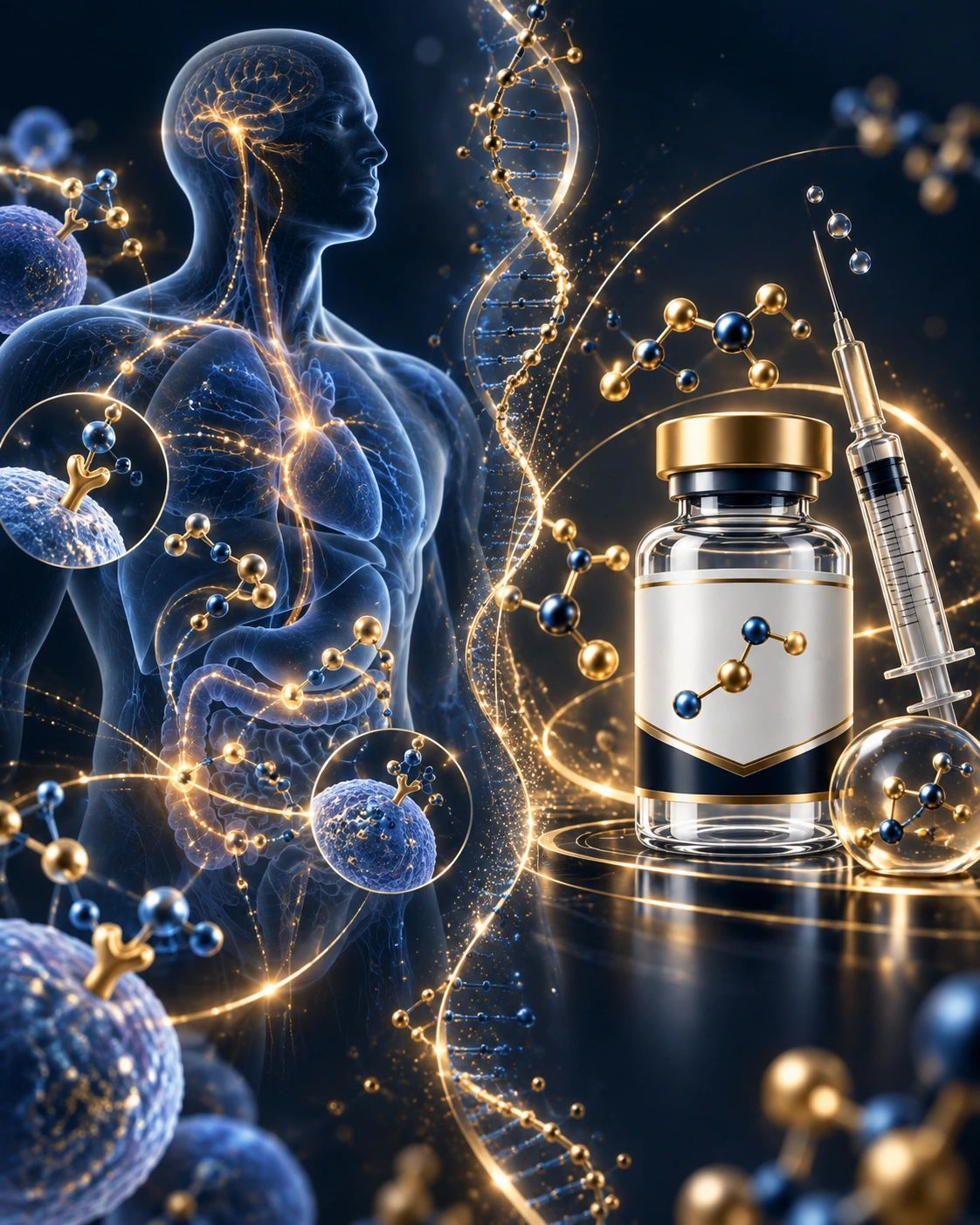
THE MOLECULE IS ONLY ONE PART OF THE PRODUCT.
A peptide product can also differ by:
- identity
- purity
- concentration
- sterility
- endotoxin burden
- degradation
- aggregation
- excipients
- storage
- transport
- reconstitution
- route of administration
MOLECULE EVIDENCE ≠ PRODUCT EVIDENCE
This website uses cookies.
We use cookies to analyze website traffic and optimize your website experience. By accepting our use of cookies, your data will be aggregated with all other user data.