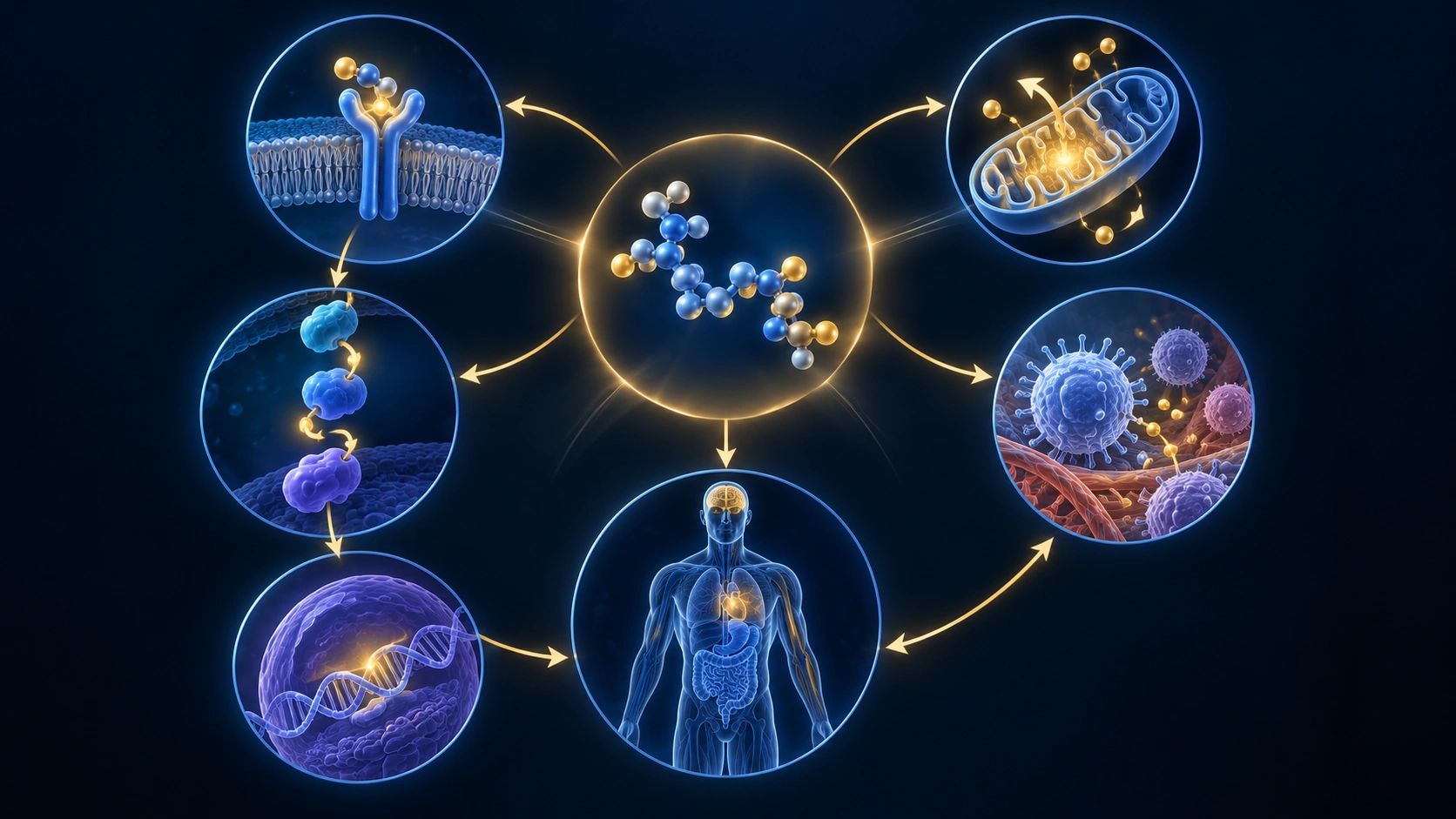
Clinical Peptide Medicine — Structured. Applied. Evolving.

Praxis Peptide Institute
  • HOME
  • START HERE
  • LEARN
  • PEPTIDE GUIDES
  • PEP EXPERIENCE REGISTRY
  • EXPLORE REGISTRY
  • ADVANCED LEARNER TRAINING
  • CLINICIAN TRAINING
  • ABOUT
  • More
    • HOME
    • START HERE
    • LEARN
    • PEPTIDE GUIDES
    • PEP EXPERIENCE REGISTRY
    • EXPLORE REGISTRY
    • ADVANCED LEARNER TRAINING
    • CLINICIAN TRAINING
    • ABOUT
  • Sign In
  • Create Account

  • My Account
  • Signed in as:

  • filler@godaddy.com


  • My Account
  • Sign out

Signed in as:

filler@godaddy.com

  • HOME
  • START HERE
  • LEARN
  • PEPTIDE GUIDES
  • PEP EXPERIENCE REGISTRY
  • EXPLORE REGISTRY
  • ADVANCED LEARNER TRAINING
  • CLINICIAN TRAINING
  • ABOUT

Account

  • My Account
  • Sign out

  • Sign In
  • My Account

DSIP Peptide Guide: Delta Sleep, Circadian Regulation, Stress Physiology, HPA-Axis Signaling, More..

  A comprehensive DSIP guide covering delta sleep-inducing peptide biology, slow-wave sleep, sleep architecture, circadian regulation, HPA-axis signaling, stress adaptation, pain and withdrawal research, human evidence, monitoring, and the Praxis clinical reasoning framework. 

UNDERSTAND THE PEPTIDE

Delta sleep-inducing peptide — DSIP — is a nine-amino-acid peptide originally isolated during experiments investigating humoral signals associated with sleep.

Its sequence is:

TRP — ALA — GLY — GLY — ASP — ALA — SER — GLY — GLU

or:

  • WAGGDASGE. 

The name:

  • DELTA SLEEP-INDUCING PEPTIDE

immediately creates an expectation.

Give DSIP.

↓

Create delta sleep.

↓

Sleep improves.

But the actual biology is much more complicated.

DSIP has historically been studied in relation to:

  • slow-wave sleep 
  • sleep onset 
  • sleep architecture 
  • circadian rhythms 
  • stress physiology 
  • ACTH signaling 
  • neurotransmitters 
  • pain 
  • withdrawal 
  • autonomic physiology

Early work reported sleep-promoting effects in several species and humans, but subsequent research produced inconsistent findings, and later reviews questioned whether DSIP itself should truly be considered a physiological endogenous “sleep factor.” 

That uncertainty makes DSIP especially useful educationally.

Because it teaches an important principle:

  • A PEPTIDE CAN HAVE INTERESTING BIOLOGY WITHOUT FITTING THE SIMPLE NAME WE GIVE IT.

The best description is therefore not:

  • “THE DEEP-SLEEP PEPTIDE.”

A better description is:

  • A NEUROREGULATORY NONAPEPTIDE WITH HISTORICAL EFFECTS ON SLEEP, CIRCADIAN, STRESS, NEUROENDOCRINE, AND AUTONOMIC PHYSIOLOGY, BUT WITH AN ENDOGENOUS ROLE AND THERAPEUTIC SLEEP EFFECT THAT REMAIN INCOMPLETELY RESOLVED.

That is a much more interesting story.
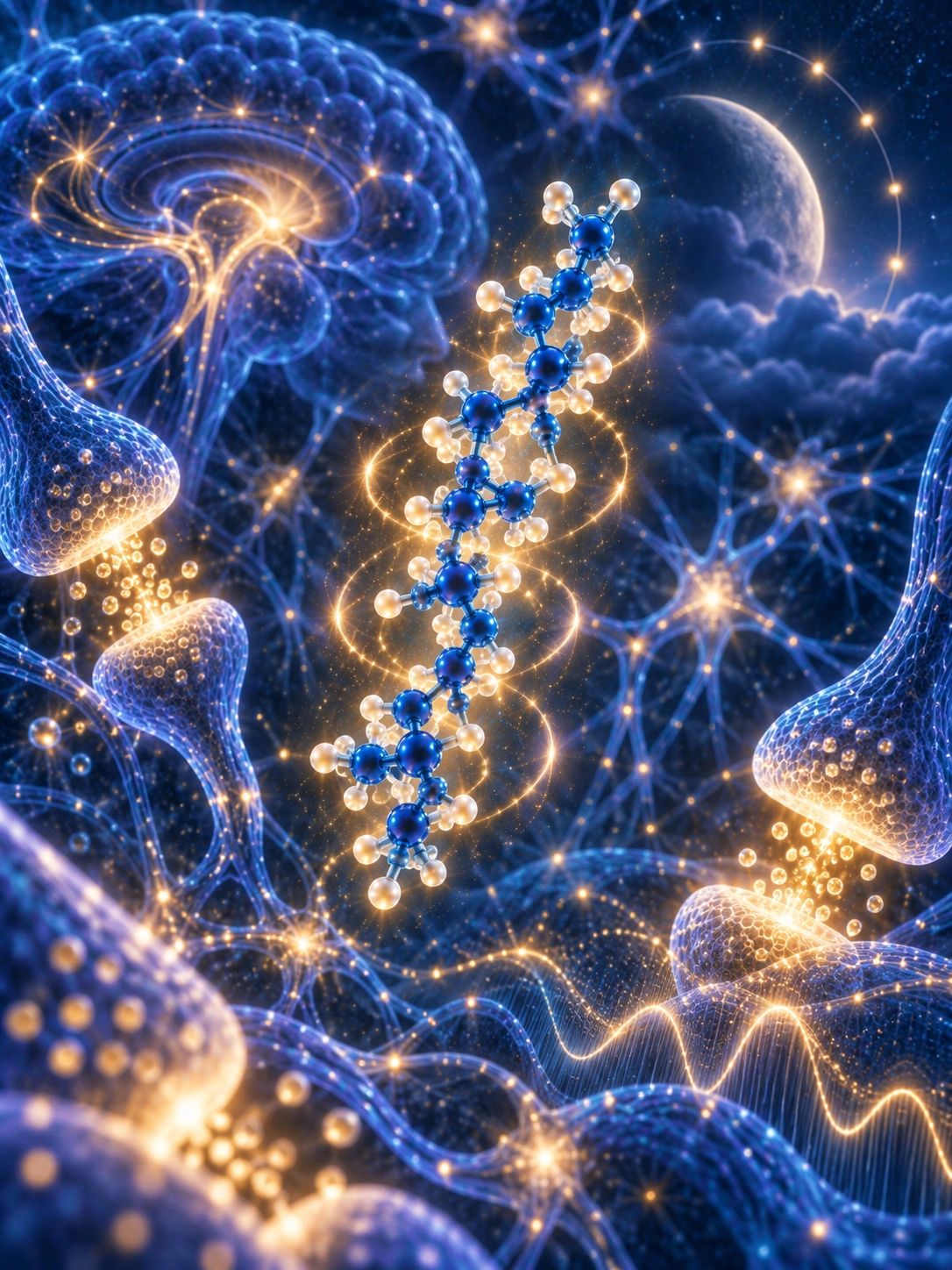
WHAT IS DSIP?

DSIP

IS DSIP REALLY AN ENDOGENOUS SLEEP PEPTIDE?

THE IDENTITY MODEL

DSIP is a:

NONAPEPTIDE — 9 AMINO ACIDS.


Its sequence is:

TRP-ALA-GLY-GLY-ASP-ALA-SER-GLY-GLU. 


It was originally isolated from the cerebral venous blood of rabbits following electrical stimulation associated with sleep-like EEG activity.


Researchers observed that administration could enhance:

DELTA / SLOW-WAVE EEG ACTIVITY

and named the molecule:

DELTA SLEEP-INDUCING PEPTIDE. 


That historical discovery was compelling.


But several decades of subsequent research made the picture:

LESS SIMPLE.

THE IDENTITY MODEL

IS DSIP REALLY AN ENDOGENOUS SLEEP PEPTIDE?

THE IDENTITY MODEL

SLEEP-RELATED EXPERIMENTAL CONDITION

↓

Isolation of:

WAGGDASGE

↓

Named:

DSIP

↓

Experimental effects involving:

SLEEP

CIRCADIAN RHYTHMS

NEUROTRANSMITTERS

HORMONES

STRESS

PAIN

↓

But:

PHYSIOLOGICAL ENDOGENOUS ROLE REMAINS UNCERTAIN


The key lesson is:

NAME ≠ COMPLETE MECHANISM.

IS DSIP REALLY AN ENDOGENOUS SLEEP PEPTIDE?

IS DSIP REALLY AN ENDOGENOUS SLEEP PEPTIDE?

IS DSIP REALLY AN ENDOGENOUS SLEEP PEPTIDE?

This is probably the most important question in the entire guide.

Early research reported:

DSIP-LIKE IMMUNOREACTIVITY

in:

brain 

plasma 

peripheral tissues 

and this initially supported the idea that DSIP might be an endogenous:

SLEEP-REGULATING FACTOR. 


But later work raised important questions.

A 2006 review concluded that DSIP remained an:

“UNRESOLVED RIDDLE,”

noting uncertainty regarding its natural occurrence, synthesis, and actual physiological role. The authors proposed that some historical DSIP-like immunoreactivity may reflect related peptides rather than necessarily intact endogenous DSIP itself. 


That distinction is extremely important.


We have to separate:

SYNTHETIC DSIP HAS BIOLOGICAL ACTIVITY

from:

INTACT DSIP IS A MAJOR ENDOGENOUS HUMAN SLEEP HORMONE.


Those are not the same claim.

THE ENDOGENOUS-SIGNAL PROBLEM

THE ENDOGENOUS-SIGNAL PROBLEM

IS DSIP REALLY AN ENDOGENOUS SLEEP PEPTIDE?

A common mistake in peptide medicine is:

MOLECULE PRODUCES EFFECT WHEN ADMINISTERED

↓

therefore:

MOLECULE MUST NORMALLY CONTROL THAT EFFECT IN HUMANS.


Not necessarily.


A molecule can pharmacologically alter a system without being:

THE MAIN PHYSIOLOGICAL REGULATOR OF THAT SYSTEM.


DSIP is a perfect example of why:

PHARMACOLOGY ≠ PHYSIOLOGY.

WHAT IS DELTA SLEEP?

THE ENDOGENOUS-SIGNAL PROBLEM

THE SLEEP-ARCHITECTURE MODEL

Delta activity refers to very slow electrical brain activity.


During normal sleep, high-amplitude delta waves are especially associated with:

N3 SLEEP

also called:

SLOW-WAVE SLEEP.


This stage is associated with:

high arousal threshold 

reduced sympathetic activity 

growth-hormone pulses 

physical restoration 

memory-related processes 

metabolic recovery 


But:

MORE DELTA ACTIVITY IS NOT AUTOMATICALLY BETTER SLEEP.


Sleep quality also depends on:

continuity 

timing 

REM 

NREM cycling 

breathing 

arousals 

total sleep time 

circadian alignment 

Again:

SLEEP IS ARCHITECTURE.

Not:

ONE WAVEFORM.

THE SLEEP-ARCHITECTURE MODEL

THE ENDOGENOUS-SIGNAL PROBLEM

THE SLEEP-ARCHITECTURE MODEL

Normal sleep cycles through:

N1

↓

N2

↓

N3 / SLOW-WAVE SLEEP

↓

REM

↓

Repeat

The proportions change across:

THE NIGHT.


A therapy that changes one stage can affect:

THE WHOLE ARCHITECTURE.


Therefore the relevant question is not:

“DID DELTA WAVES INCREASE?”


It is:

“DID THE PERSON'S SLEEP BECOME MORE FUNCTIONAL?”

EARLY HUMAN SLEEP RESEARCH

EARLY HUMAN SLEEP RESEARCH

EARLY HUMAN SLEEP RESEARCH

Early human studies created much of DSIP's reputation.


In a small 1981 double-blind crossover study of six healthy volunteers, intravenous DSIP increased sleep during a daytime observation period and was associated with shorter sleep onset and improved sleep efficiency during the subsequent night. The investigators noted that the effect did not resemble classical pharmacological sedation. 


That is a very interesting finding.


It suggests DSIP may not work like:

A CONVENTIONAL SEDATIVE.


But later studies were:

LESS IMPRESSIVE.

THE INSOMNIA DATA

EARLY HUMAN SLEEP RESEARCH

EARLY HUMAN SLEEP RESEARCH

A double-blind study in 16 patients with chronic insomnia found somewhat higher sleep efficiency and shorter sleep latency with DSIP.


However:

most other sleep measures did not meaningfully improve, and the authors concluded that short-term DSIP treatment was unlikely to provide major therapeutic benefit. 


Another controlled insomnia study found limited changes and concluded that sleep improvement was of:

LITTLE CLINICAL SIGNIFICANCE. 


This is exactly the type of evidence pattern that deserves:

NUANCE.


Not:

“DSIP WORKS.”

And not:

“DSIP DOES NOTHING.”


The more accurate interpretation is:

EARLY HUMAN SLEEP SIGNAL EXISTS, BUT CLINICAL EFFECTS WERE INCONSISTENT AND GENERALLY MODEST.

SLEEP ONSET VS SEDATION

EARLY HUMAN SLEEP RESEARCH

THE SLEEP-TRANSITION MODEL

This may be one of the more interesting DSIP concepts.


A conventional sedative may:

SUPPRESS CNS ACTIVITY.


DSIP research raised the possibility of something different:

FACILITATION OF THE PHYSIOLOGICAL TRANSITION INTO SLEEP.


A 1988 review proposed that some DSIP effects may occur in peripheral physiology before overt sleep and that the peptide could influence preparatory mechanisms involved in sleep onset. 


That suggests a different therapeutic model.


Not:

FORCE THE BRAIN OFF.

But potentially:

HELP THE BODY ENTER THE SLEEP STATE.


That remains a hypothesis rather than an established mechanism.

But it is biologically interesting.

THE SLEEP-TRANSITION MODEL

THE SLEEP-TRANSITION MODEL

THE SLEEP-TRANSITION MODEL

Normal transition:

WAKE

↓

Autonomic activity changes

↓

Temperature regulation changes

↓

Hormonal signaling changes

↓

Neural synchronization changes

↓

SLEEP


Potential DSIP concept:

DSIP

↓

Modifies:

NEURAL + ENDOCRINE + AUTONOMIC PREPARATION

↓

Potential:

EASIER SLEEP TRANSITION


Again

this is broader than:

SEDATION.

CIRCADIAN BIOLOGY

THE SLEEP-TRANSITION MODEL

TIME IS PART OF THE DOSE

DSIP has also been associated with:

CIRCADIAN EFFECTS.


Historical research described alterations in:

locomotor rhythms 

neurotransmitter rhythms 

hormonal rhythms 

physiological sleep timing 

and reviews emphasized that some DSIP effects appear dependent on:

TIME OF DAY. 


That is important.


Because a peptide can have:

THE SAME DOSE

at:

TWO DIFFERENT TIMES

and potentially produce:

DIFFERENT BIOLOGICAL EFFECTS.


That is chronobiology.

TIME IS PART OF THE DOSE

THE SLEEP-TRANSITION MODEL

TIME IS PART OF THE DOSE

This concept deserves emphasis.

For circadian-active signals:

DOSE

alone may be insufficient.


We may need to consider:

DOSE + TIME.


For example:

10 PM

and:

10 AM

are not biologically equivalent environments.


The brain.

Hormones.

Temperature.

Autonomic tone.

All differ.


DSIP therefore provides another useful example of:

CHRONOPHARMACOLOGY.

DSIP VS MELATONIN

NEUROTRANSMITTER SIGNALING

THE RECEPTOR QUESTION

These should not be conflated.

MELATONIN

Has a well-established endogenous source:

PINEAL GLAND.


Its major physiological role is:

DARKNESS / CIRCADIAN SIGNALING.

It acts through characterized:

MT1 / MT2 RECEPTORS.


DSIP

Has a much less clearly established endogenous physiological role.

Its receptor remains:

POORLY DEFINED.


Research spans:

sleep 

stress 

neurotransmission 

endocrine effects 

pain 


So:

MELATONIN = WELL-CHARACTERIZED CIRCADIAN SIGNAL

while:

DSIP = EXPERIMENTAL NEUROREGULATORY PEPTIDE WITH SLEEP-RELATED EFFECTS.


That is a much cleaner distinction.

THE RECEPTOR QUESTION

NEUROTRANSMITTER SIGNALING

THE RECEPTOR QUESTION

Unlike peptides such as:

VIP

or:

GLP-1,

DSIP does not have a single widely accepted receptor pathway that explains its biology.


Historical research proposed interactions with:

adrenergic signaling 

serotonergic systems 

opioid-related signaling 

GABAergic systems 

neuroendocrine pathways 


But no simple:

DSIP RECEPTOR → SECOND MESSENGER → EFFECT

model has become definitive.


This limits mechanistic certainty.


But it also suggests that DSIP may act through:

NETWORK MODULATION

or possibly through:

METABOLITES / RELATED PEPTIDES.

NEUROTRANSMITTER SIGNALING

NEUROTRANSMITTER SIGNALING

NEUROTRANSMITTER SIGNALING

Older DSIP research reported changes involving:

serotonin 

catecholamines 

monoamine oxidase 

other neurotransmitter systems 


This is one reason DSIP's effects have extended beyond:

SLEEP.


A molecule affecting multiple neurotransmitter systems could theoretically alter:

mood 

stress 

arousal 

pain 

withdrawal 

sleep 


Again:

the exact causal hierarchy remains unresolved.

HPA-AXIS BIOLOGY

THE HPA-AXIS MODEL

NEUROTRANSMITTER SIGNALING

One particularly interesting human finding involves:

ACTH.


In a randomized, double-blind crossover study of 11 healthy men, intravenous DSIP produced a significant reduction in plasma ACTH-like immunoreactivity for at least several hours compared with saline.


Interestingly:

CORTISOL DID NOT SIGNIFICANTLY CHANGE. 


That is fascinating because it demonstrates that:

HPA-AXIS SIGNALS CAN BECOME PARTIALLY DISSOCIATED.

THE HPA-AXIS MODEL

THE HPA-AXIS MODEL

THE HPA-AXIS MODEL

HYPOTHALAMUS

↓

CRH

↓

PITUITARY

↓

ACTH

↓

ADRENAL

↓

Cortisol

DSIP

↓

Observed in one human study:

ACTH-LIKE IMMUNOREACTIVITY ↓

but:

CORTISOL ≈ unchanged. 


This tells us something important:

PEPTIDE EFFECT ≠ SIMPLE LINEAR HORMONE EFFECT.


Feedback.

Timing.

Adrenal sensitivity.

Assay biology.

All matter.

STRESS BIOLOGY

THE HPA-AXIS MODEL

THE HPA-AXIS MODEL

DSIP has long been associated experimentally with:

ANTI-STRESS OR STRESS-MODULATING EFFECTS.


Historical studies described changes in:

stress responses 

autonomic physiology 

hormone secretion 

locomotor behavior 

neurotransmitter systems


This led researchers to consider DSIP not simply as:

A SLEEP SIGNAL

but as:

A BROADER ADAPTIVE-STRESS PEPTIDE. 


That may explain why its research crossed into:

PAIN

and:

WITHDRAWAL.

SLEEP AND STRESS ARE CONNECTED

SLEEP AND STRESS ARE CONNECTED

SLEEP AND STRESS ARE CONNECTED

A stressed nervous system may maintain:

HYPERAROUSAL.


That means

even when someone is tired

the brain remains:

READY FOR THREAT.


This can produce:

racing thoughts 

elevated sympathetic tone 

muscle tension 

sleep-onset difficulty 

repeated awakenings 


So improving sleep may sometimes require:

REDUCING THE WAKE / THREAT SIGNAL

rather than simply:

ADDING A SEDATIVE SIGNAL.


DSIP's stress-related research makes this an interesting hypothesis.

PAIN

SLEEP AND STRESS ARE CONNECTED

SLEEP AND STRESS ARE CONNECTED

DSIP has also been investigated in:

PAIN.


An early pilot study involving seven patients with chronic pain syndromes reported reduced pain in six participants following repeated intravenous DSIP administration. 


The study was:

VERY SMALL.


So it cannot establish robust clinical efficacy.


But it is biologically interesting because:

SLEEP + PAIN + STRESS

are tightly linked.


Poor sleep increases:

PAIN SENSITIVITY.


Pain disrupts:

SLEEP.

Stress amplifies:

BOTH.


A peptide influencing the shared regulatory network could theoretically affect all three.

WITHDRAWAL RESEARCH

SLEEP AND STRESS ARE CONNECTED

AUTONOMIC PHYSIOLOGY

Historical DSIP research also explored:

alcohol withdrawal 

opioid withdrawal 

autonomic symptoms 

sleep disruption 

pain 


Again

withdrawal is a state of:

EXTREME NEUROPHYSIOLOGICAL INSTABILITY.


The nervous system has adapted to chronic drug exposure.


When that exposure stops:

THE COUNTERREGULATORY SYSTEM BECOMES UNMASKED.


DSIP's reported effects in this area contributed to the broader idea that the peptide might influence:

HOMEOSTATIC ADAPTATION. 


But this older evidence does not make DSIP a replacement for:

MODERN MEDICALLY SUPERVISED WITHDRAWAL TREATMENT.

AUTONOMIC PHYSIOLOGY

AUTONOMIC PHYSIOLOGY

AUTONOMIC PHYSIOLOGY

Research reviewed in the 1980s also described changes in:

heart rate 

blood pressure 

thermoregulation 

after DSIP exposure. 


This again supports the idea that sleep induction may involve:

WHOLE-BODY STATE CHANGE.


Before sleep:

heart rate tends to decline.


Core temperature begins changing.

Sympathetic activity decreases.


The body does not simply:

FLIP A BRAIN SWITCH.


Sleep is a:

SYSTEMS TRANSITION.

THE CORE MECHANISM MAP

DSIP — WAGGDASGE

↓

Poorly resolved primary target

↓

Potential modulation of:

  • SLEEP-STATE SIGNALING
  • CIRCADIAN PHYSIOLOGY
  • NEUROTRANSMITTER SYSTEMS
  • HPA-AXIS SIGNALING
  • AUTONOMIC / STRESS PHYSIOLOGY

↓

Potential:

  • SLEEP-ONSET SUPPORT
  • SLEEP-ARCHITECTURE CHANGE
  • STRESS ADAPTATION
  • PAIN MODULATION

But:

  • MECHANISM REMAINS INCOMPLETELY DEFINED

and:

  • HUMAN SLEEP BENEFIT HAS BEEN INCONSISTENT.

That is the correct core map.


WHAT THIS MECHANISM MAY SUGGEST

Mechanistically, DSIP deserves research interest in:

  • sleep-onset regulation 
  • sleep architecture 
  • stress-related insomnia 
  • circadian-state transitions 
  • neuroendocrine stress signaling 
  • hyperarousal 
  • pain-sleep interactions 
  • withdrawal-related sleep disruption 
  • autonomic regulation 

Its strongest conceptual niche may be:

  • THE TRANSITION FROM WAKEFUL STRESS PHYSIOLOGY INTO RESTORATIVE SLEEP PHYSIOLOGY.

WHAT THIS MECHANISM DOES NOT PROVE

DSIP biology does not prove that it:

  • is the body's master sleep hormone 
  • reliably increases deep sleep in humans 
  • treats every insomnia phenotype 
  • replaces melatonin 
  • treats obstructive sleep apnea 
  • corrects circadian misalignment 
  • substitutes for adequate sleep opportunity 
  • treats chronic pain independently of its cause 
  • safely treats withdrawal without medical supervision 
  • normalizes cortisol because ACTH changed 
  • should be used whenever someone has poor sleep 

Again:

  • INSOMNIA IS NOT ONE BIOLOGICAL DISORDER.

THE EVIDENCE, POTENTIAL APPLICATIONS, AND LIMITATIONS

ORIGINAL BIOLOGICAL EVIDENCE

HISTORICALLY IMPORTANT

DSIP was isolated and chemically characterized as the nonapeptide:

WAGGDASGE

after sleep-associated experimental stimulation in rabbits. 

That is the foundation of the entire field.

PRECLINICAL EVIDENCE

BROAD BUT VARIABLE

Research has included:

  • slow-wave sleep 
  • REM sleep 
  • neurotransmission 
  • circadian rhythm 
  • pain 
  • stress 
  • withdrawal 
  • endocrine signaling 

The breadth is impressive.

The consistency is:

  • LESS SO.

HUMAN SLEEP EVIDENCE

REAL BUT MIXED

Some early studies reported:

  • increased sleep 
  • reduced sleep latency 
  • improved sleep efficiency 

while later controlled insomnia studies found only:

  • SMALL OR CLINICALLY LIMITED BENEFITS. 

That is the appropriate evidence characterization.

ENDOGENOUS PHYSIOLOGY

UNRESOLVED

Perhaps the greatest scientific uncertainty concerns whether:

  • INTACT DSIP ITSELF

functions as a major endogenous sleep peptide.

Later reviews raised substantial doubts and suggested that at least some DSIP-like biological or immunoreactive signals may reflect:

  • RELATED MOLECULES. 

Again:

this is not a minor technical issue.

It changes how we interpret:

  • THE ENTIRE PEPTIDE.

Research

INSOMNIA

SLEEP-MAINTENANCE INSOMNIA

SLEEP-ONSET INSOMNIA

DSIP's most obvious research application is:

INSOMNIA.


But insomnia itself includes very different phenotypes:

difficulty initiating sleep 

difficulty maintaining sleep 

early-morning awakening 

circadian misalignment 

hyperarousal 

medication-induced insomnia 

sleep-disordered breathing masquerading as insomnia 


That matters because DSIP's historical effects appear more consistent with:

SLEEP TRANSITION / ARCHITECTURE MODULATION

than with:

UNIVERSAL HYPNOSIS.

SLEEP-ONSET INSOMNIA

SLEEP-MAINTENANCE INSOMNIA

SLEEP-ONSET INSOMNIA

This may be the most coherent theoretical application.


If a patient's problem is:

THE SYSTEM CANNOT TRANSITION FROM WAKE TO SLEEP,

then a peptide affecting:

stress physiology 

autonomic tone 

neuroendocrine signaling 

sleep-state organization 

could make conceptual sense.


But even here

we have to ask:

WHY CAN'T THE SYSTEM TRANSITION?

Caffeine at 6 PM?

Bright light at midnight?

Anxiety?

Pain?

Hyperthyroidism?

Circadian delay?


Again:

PATTERN BEFORE PEPTIDE.

SLEEP-MAINTENANCE INSOMNIA

SLEEP-MAINTENANCE INSOMNIA

SLEEP-MAINTENANCE INSOMNIA

Repeated awakenings may arise from:

sleep apnea 

periodic limb movements 

pain 

nocturia 

reflux 

alcohol 

environmental disturbance 

menopause-related symptoms 


A peptide affecting sleep-state regulation will not necessarily correct:

THE CAUSE OF THE AWAKENING.


This is why:

SLEEP ARCHITECTURE HAS TO BE INTERPRETED IN CONTEXT.


OBSTRUCTIVE SLEEP APNEA

OBSTRUCTIVE SLEEP APNEA

SLEEP-MAINTENANCE INSOMNIA

This distinction deserves emphasis.


Sleep apnea occurs because:

THE AIRWAY REPEATEDLY COLLAPSES OR BECOMES OBSTRUCTED DURING SLEEP.


That causes:

HYPOXIA + AROUSALS.


A sleep-promoting peptide cannot mechanically stabilize:

THE UPPER AIRWAY.


A study measuring circulating DSIP-like immunoreactivity in sleep apnea patients found no convincing role for a single plasma DSIP measurement as a disease-activity biomarker. 


Again:

SLEEPINESS ≠ SLEEP-PEPTIDE DEFICIENCY.

CIRCADIAN DISRUPTION

OBSTRUCTIVE SLEEP APNEA

STRESS-RELATED INSOMNIA

DSIP's circadian associations make shift work and circadian disruption biologically interesting.


But the strongest human circadian zeitgebers remain:

light 

darkness 

sleep timing 

meal timing 

activity 


A peptide cannot fully compensate for:

CHRONICALLY CONTRADICTORY TIME CUES.


If someone is exposed to:

BRIGHT LIGHT AT 2 AM

every night:

the biology is receiving:

A VERY POWERFUL WAKE SIGNAL.

STRESS-RELATED INSOMNIA

OBSTRUCTIVE SLEEP APNEA

STRESS-RELATED INSOMNIA

This is perhaps one of DSIP's most interesting conceptual niches.

The pattern may look like:

TIRED BODY

ACTIVE THREAT NETWORK

↓

Cannot initiate sleep

↓

Sleep loss

↓

Stress reactivity increases

↓

Following night becomes harder

↓

SELF-REINFORCING LOOP


A peptide that changes:

STRESS + SLEEP TRANSITION PHYSIOLOGY

could theoretically interrupt that loop.


That remains an area where:

BETTER MODERN HUMAN RESEARCH WOULD BE EXTREMELY USEFUL.

PAIN AND SLEEP

HPA-AXIS DYSREGULATION

HPA-AXIS DYSREGULATION

Chronic pain commonly causes:

SLEEP FRAGMENTATION.


Poor sleep then increases:

PAIN SENSITIVITY.


That creates:

PAIN

↓

POOR SLEEP

↓

PAIN SENSITIVITY ↑

↓

MORE PAIN

DSIP's historical pain and sleep research makes this interaction particularly interesting. 


Again

the deeper question is:

WHICH NODE IN THE LOOP IS BEING CHANGED?

HPA-AXIS DYSREGULATION

HPA-AXIS DYSREGULATION

HPA-AXIS DYSREGULATION

The ACTH finding gives DSIP another possible niche:

STRESS-ENDOCRINE PHYSIOLOGY.


But one should not jump from:

ACTH DECREASED

to:

DSIP LOWERS STRESS HORMONES.


In the human study:

CORTISOL DID NOT FALL. 


That is precisely why:

MEASURE THE WHOLE AXIS

is more useful than:

FOLLOW ONE BIOMARKER.

WHAT WE KNOW

HPA-AXIS DYSREGULATION

WHAT WE THINK MAY BE HAPPENING

DSIP is a nine-amino-acid peptide.

Its sequence is Trp-Ala-Gly-Gly-Asp-Ala-Ser-Gly-Glu — WAGGDASGE. 


It was originally isolated during experiments involving sleep-associated EEG activity in rabbits. 


Early animal and human research reported sleep-modifying effects. 


Human studies have reported changes in sleep latency, sleep efficiency, and total sleep under selected experimental conditions. 


Controlled studies in chronic insomnia later found effects that were modest, inconsistent, or of limited clinical significance. 


DSIP research also includes circadian, neurotransmitter, autonomic, endocrine, pain, and stress biology. 


One human study found reduced ACTH-like immunoreactivity after intravenous DSIP without a corresponding reduction in cortisol. 


The existence and physiological significance of intact endogenous DSIP remain less certain than its name often implies. 


That uncertainty is central to understanding the peptide correctly.

WHAT WE THINK MAY BE HAPPENING

WHAT WE THINK MAY BE HAPPENING

WHAT WE THINK MAY BE HAPPENING

DSIP may be better understood as:

A STATE-TRANSITION MODULATOR

rather than:

A PURE SLEEP SWITCH.


The body is awake.

↓

Neural arousal is high.

↓

Sympathetic tone is high.

↓

Stress systems remain active.

↓

Sleep requires coordinated change in:

AUTONOMIC

NEUROENDOCRINE

NEURAL

and:

CIRCADIAN

systems.

DSIP may influence parts of:

THAT TRANSITION.

↓

Potential:

SLEEP BECOMES EASIER TO ENTER OR MAINTAIN

under certain conditions.


That model would explain why:

time of administration may matter 

effects can occur outside sleep itself 

endocrine and autonomic changes have been observed 

sleep effects have not always resembled conventional sedation 


It also explains why the peptide's effect might be:

HIGHLY CONTEXT DEPENDENT.

WHAT REMAINS CONTEXT-DEPENDENT

WHAT WE THINK MAY BE HAPPENING

WHAT REMAINS CONTEXT-DEPENDENT

Important questions include:

Does intact DSIP occur physiologically in humans? 

If so, where is it synthesized? 

What releases it? 

Is DSIP-like immunoreactivity actually measuring intact DSIP? 

Is there a specific DSIP receptor? 

Which metabolites are biologically active? 

Which neurotransmitter system mediates the dominant effect? 

Does DSIP primarily affect sleep onset or sleep architecture? 

Which insomnia phenotype responds best? 

Does time of administration materially alter effect? 

How does circadian phase affect response? 

Are the stress effects independent of the sleep effects? 

Why does ACTH change without parallel cortisol reduction? 

Does DSIP meaningfully alter slow-wave sleep in modern polysomnographic studies? 

Can contemporary wearable/EEG technology reproduce early findings? 

What is the pharmacokinetic profile after different routes? 

Is a DSIP analog more pharmacologically useful than native DSIP? 

Can the effect be reproduced in larger modern human trials? 


Again

this is not a reason to dismiss DSIP.


It is a reason to recognize that:

THE MOST IMPORTANT QUESTIONS ABOUT DSIP ARE STILL BASIC PHYSIOLOGY QUESTIONS.

THE PRAXIS LENS

DO NOT BEGIN WITH DSIP

Begin with: WHY IS THE PATIENT NOT SLEEPING?            

Then:

PHYSIOLOGY

↓

PATTERN

↓

MECHANISM

↓

EVIDENCE

↓

RISK

↓

MONITORING

↓

DECISION

PHYSIOLOGY

Healthy sleep requires:

  • adequate sleep pressure 
  • circadian alignment 
  • autonomic downregulation 
  • appropriate body-temperature rhythm 
  • controlled arousal 
  • airway patency 
  • stable glucose 
  • appropriate environmental cues 
  • normal sleep architecture 

DSIP appears potentially relevant to:

  • SLEEP-STATE TRANSITION + STRESS / CIRCADIAN REGULATION.

But it cannot replace:

  • THE FOUNDATIONAL SLEEP SYSTEM.

EVIDENCE

Ask:

WHAT OUTCOME ARE WE ACTUALLY DISCUSSING?

  • sleep latency? 
  • total sleep time? 
  • slow-wave sleep? 
  • sleep efficiency? 
  • daytime recovery? 
  • stress physiology? 

Then ask:

  • WHAT DOES THE HUMAN EVIDENCE ACTUALLY SHOW?

For DSIP:

  • THERE IS HUMAN DATA.

But:

  • THE RESULTS ARE MIXED. 

That distinction should remain visible.

PATTERN

What is actually happening?

  • difficulty falling asleep? 
  • repeated awakening? 
  • early waking? 
  • delayed circadian phase? 
  • rumination? 
  • pain? 
  • restless legs? 
  • sleep apnea? 
  • stimulant use? 
  • nocturia? 

Again:

  • “POOR SLEEP” IS NOT A MECHANISM.

RISK

Potential considerations include:

  • excessive sleepiness 
  • altered sleep timing 
  • headache or nonspecific neurophysiological effects 
  • interactions with sedatives or CNS-active therapies 
  • product identity and purity 
  • using a sleep-promoting approach while missing sleep apnea 
  • delaying evaluation of persistent insomnia 
  • assuming better subjective sleep means better sleep architecture 

Again:

  • FEELING SEDATED

is not the same as:

  • SLEEPING PHYSIOLOGICALLY.

MECHANISM

Does DSIP biology match:

  • THE DOMINANT BOTTLENECK?

If the patient cannot sleep because:

  • THE AIRWAY COLLAPSES 30 TIMES PER HOUR,

address:

  • THE AIRWAY.

If:

  • CAFFEINE EXPOSURE

is maintaining wake signaling:

address:

  • CAFFEINE.

If:

  • CIRCADIAN TIMING

is shifted three hours later:

correct:

  • LIGHT + TIME CUES.

But if the patient has:

  • HYPERAROUSAL + FAILED TRANSITION INTO SLEEP

despite appropriate circadian conditions:

DSIP's historical biology becomes:

  • MORE MECHANISTICALLY INTERESTING.

MONITORING

Monitoring should follow:

  • THE SLEEP HYPOTHESIS.

SLEEP ONSET

  • sleep latency 
  • bedtime consistency 
  • pre-sleep arousal 
  • time-to-sleep 

SLEEP MAINTENANCE

  • awakenings 
  • wake after sleep onset 
  • total sleep time 

SLEEP QUALITY

  • morning restoration 
  • daytime sleepiness 
  • cognition 
  • energy 

SLEEP ARCHITECTURE

When appropriate:

  • polysomnography 
  • validated EEG measurements 
  • NREM / REM distribution 
  • apnea-hypopnea index 

FOUNDATIONAL DRIVERS

  • caffeine 
  • alcohol 
  • medications 
  • light exposure 
  • airway symptoms 
  • pain 
  • stress 
  • circadian timing 

Again:

monitor:

  • THE SLEEP PROBLEM THAT ACTUALLY EXISTS.
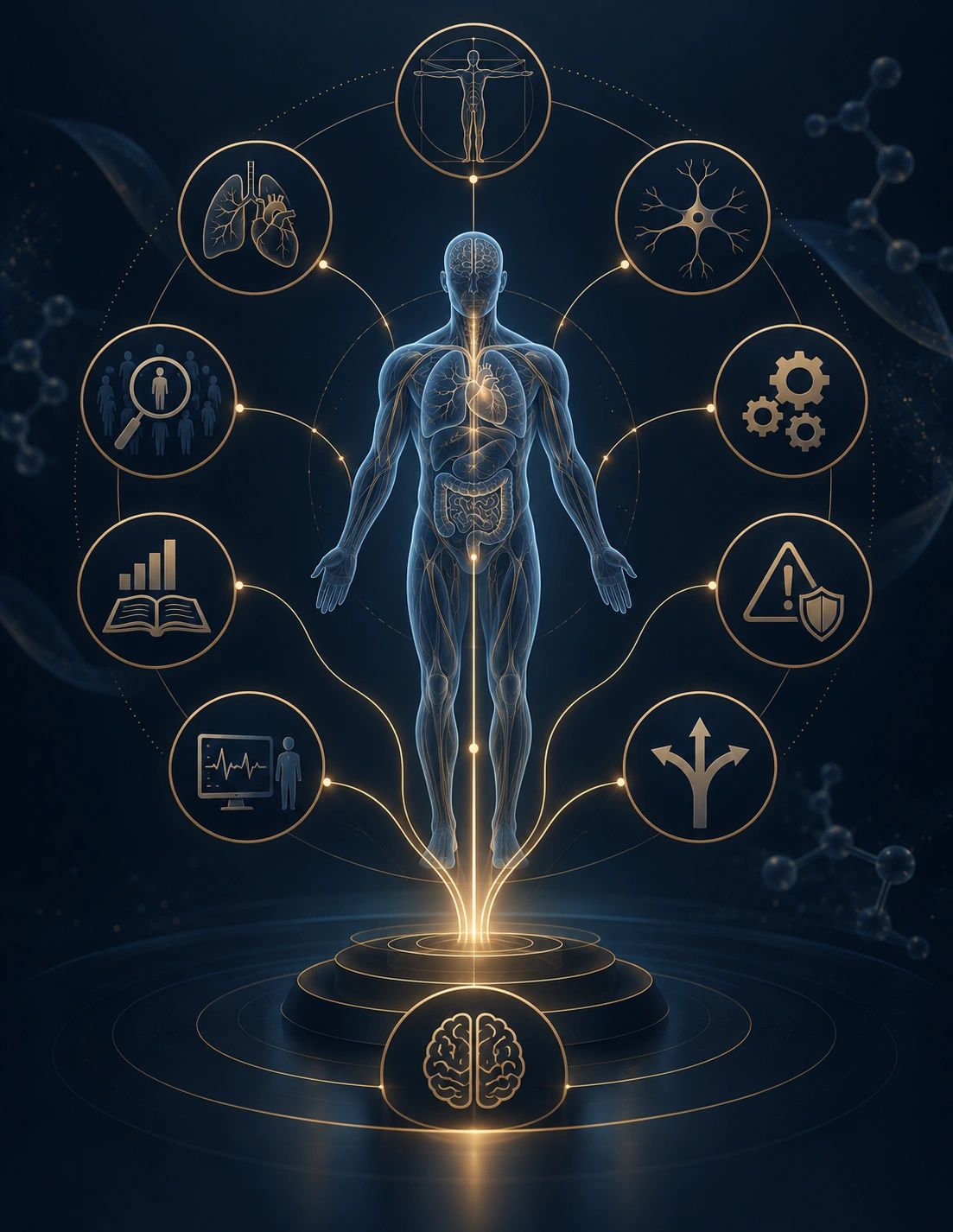
THE PRAXIS 5
MECHANISM

DSIP appears to influence:

  • SLEEP-STATE REGULATION + CIRCADIAN PHYSIOLOGY + NEUROENDOCRINE / STRESS SIGNALING.

Its precise molecular target remains:

  • INCOMPLETELY DEFINED.

EVIDENCE

Original peptide characterization:

  • STRONG.

Historical preclinical physiology:

  • SUBSTANTIAL.

Human sleep research:

  • REAL BUT MIXED.

Modern mechanistic definition:

  • LESS DEVELOPED.

Endogenous physiological identity:

  • UNRESOLVED.

That is the appropriate evidence calibration.

RISK

The biggest conceptual mistake is:

  • TREATING INSOMNIA AS A LACK OF SLEEP PEPTIDE.

Sleep can fail because of:

  • AIRWAY
  • CIRCADIAN
  • PSYCHOLOGICAL
  • METABOLIC
  • PAIN
  • MEDICATION
  • ENVIRONMENTAL

problems.

MONITORING

Monitor:

  • SLEEP LATENCY + MAINTENANCE + ARCHITECTURE + NEXT-DAY FUNCTION.

If the hypothesis is:

  • MORE RESTORATIVE SLEEP,

then:

  • THE PERSON SHOULD FUNCTION BETTER THE NEXT DAY.

Not merely:

  • SPEND MORE TIME UNCONSCIOUS.

PATIENT CONTEXT

A patient with:

  • STRESS-RELATED SLEEP-ONSET INSOMNIA

is not identical to:

someone with:

  • OBSTRUCTIVE SLEEP APNEA.

A shift worker with:

  • CIRCADIAN MISALIGNMENT

is not identical to:

someone with:

  • PAIN-DRIVEN AWAKENINGS.

A patient taking:

  • HIGH-DOSE STIMULANTS

is not identical to:

someone with:

  • NORMAL WAKE SIGNALING BUT FAILED SLEEP TRANSITION.

Same peptide.

Different:

  • SLEEP ENVIRONMENT.

SEVEN QUESTIONS TO ASK BEFORE DSIP

1. WHAT SLEEP PROBLEM ARE WE ACTUALLY TRYING TO CHANGE?

  • onset? 
  • maintenance? 
  • architecture? 
  • circadian timing? 
  • hyperarousal? 

2. WHAT IS CAUSING THE PROBLEM?

  • airway? 
  • caffeine? 
  • stress? 
  • pain? 
  • medication? 
  • circadian misalignment? 
  • endocrine disease? 

3. DOES DSIP'S KNOWN BIOLOGY MATCH THAT BOTTLENECK?

  • sleep transition? 
  • stress regulation? 
  • circadian physiology? 
  • neuroendocrine signaling? 

4. WHAT TYPE OF EVIDENCE SUPPORTS THIS PARTICULAR USE?

  • early human? 
  • controlled insomnia? 
  • animal? 
  • endocrine? 
  • theoretical? 

5. IS THE PATIENT'S SLEEP PROBLEM SOMETHING THAT MUST BE CORRECTED STRUCTURALLY OR BEHAVIORALLY FIRST?

Especially:

  • SLEEP APNEA + CIRCADIAN MISALIGNMENT + STIMULANT EXPOSURE.

6. WHAT WILL WE MONITOR?

  • sleep latency? 
  • awakenings? 
  • total sleep? 
  • morning function? 
  • EEG / polysomnography? 

7. WHAT WOULD DEFINE SUCCESS?

Not:

  • “I FELT SLEEPY.”

But:

  • SLEEP BECAME MORE CONSOLIDATED, PHYSIOLOGICALLY APPROPRIATE, AND RESTORATIVE — WITH BETTER NEXT-DAY FUNCTION.


DSIP

KEY TAKEAWAYS

  •  DSIP is a nine-amino-acid peptide.
  • Its sequence is Trp-Ala-Gly-Gly-Asp-Ala-Ser-Gly-Glu — WAGGDASGE. 
  • It was originally isolated during experiments investigating sleep-associated EEG activity. 
  • Its name comes from early observations involving slow-wave / delta EEG activity.
  • DSIP should not automatically be called the body's natural master sleep hormone.
  • Its endogenous physiological identity remains incompletely resolved. 
  • Early human research demonstrated sleep-related biological activity. 
  • Controlled insomnia trials later showed smaller and inconsistent effects. 
  • That means the human evidence is mixed rather than nonexistent.
  • DSIP appears to have biology beyond sleep.
  • Historical research includes circadian, endocrine, stress, autonomic, pain, and neurotransmitter effects. 
  • Some effects appear dependent on time of administration.
  • This makes chronobiology particularly relevant.
  • One human study found reduced ACTH-like immunoreactivity after DSIP administration while cortisol remained unchanged. 
  • That demonstrates why an endocrine pathway cannot always be interpreted from one hormone alone.
  • DSIP has also been studied historically in pain and withdrawal states. 
  • These findings support the idea that DSIP may participate more broadly in stress-state regulation.
  • Sleep onset is not the same as sedation.
  • Some DSIP research suggests its effects may involve physiological preparation for sleep rather than classical CNS suppression. 
  • This is an interesting but incompletely established model.
  • Sleep quality cannot be reduced to delta-wave quantity alone.
  • NREM, REM, continuity, respiratory stability, circadian timing, and daytime function all matter.
  • Insomnia is heterogeneous.
  • Sleep apnea, pain, hyperarousal, circadian disruption, medication effects, endocrine disease, and stimulant exposure may all produce sleep complaints.
  • DSIP should therefore not be reduced to “the sleep peptide.”
  • Its deeper conceptual identity may be a neuroendocrine state-transition and stress-regulation peptide whose exact physiological role still requires clarification.
  • The best question is not “does DSIP increase deep sleep?”
  • The better question is “what is preventing the nervous system from moving successfully from wake physiology into restorative sleep, does DSIP intersect with that failed transition, and can we demonstrate improved sleep architecture and next-day function rather than simply increased subjective sleepiness?”

THE BOTTOM LINE

DSIP may actually be more interesting because:

  • THE SIMPLE STORY DID NOT HOLD UP PERFECTLY.

The original story was:

DSIP

↓

DELTA SLEEP

↓

BETTER SLEEP.

But biology forced the question to become:

  • WHAT DOES THIS PEPTIDE REALLY DO?

And the answer appears to be:

  • MORE COMPLICATED.

DSIP research touches:

SLEEP

↓

CIRCADIAN TIME

↓

AUTONOMIC PHYSIOLOGY

↓

STRESS

↓

ACTH

↓

PAIN

↓

NEUROTRANSMISSION

That suggests the deeper question may not be:

  • “IS DSIP A HYPNOTIC?”

It may be:

  • “DOES DSIP HELP ORGANIZE A PHYSIOLOGICAL STATE?”

Because sleep itself is:

  • A STATE CHANGE.

To sleep properly:

the nervous system must stop behaving as though:

  • THE PERSON SHOULD REMAIN AWAKE.

Sympathetic drive changes.

Temperature changes.

Hormones change.

Neural networks synchronize differently.

The brain does not simply:

  • SHUT OFF.

It transitions into:

  • ANOTHER ORGANIZED PHYSIOLOGICAL STATE.

DSIP may influence part of that process.

But the evidence also teaches us restraint.

Some early human studies were encouraging.

Later controlled insomnia studies were not especially impressive. 

And even the fundamental endogenous identity of DSIP remains debated. 

That makes DSIP a perfect Praxis peptide.

Because the correct response is neither:

  • “IT IS A MIRACLE SLEEP PEPTIDE.”

nor:

  • “IT DOES NOTHING.”

The correct response is:

  • FOLLOW THE BIOLOGY.

Ask:

  • “WHAT exact sleep phenotype is present, why is wake physiology persisting when sleep should occur, is the bottleneck circadian timing, autonomic hyperarousal, pain, airway obstruction, medication, or another process, does DSIP plausibly act on that failed transition, and what objective change in sleep latency, continuity, architecture, restoration, and next-day function would demonstrate that the system actually normalized?”

That is the difference between:

  • TAKING SOMETHING TO SLEEP

and:

  • UNDERSTANDING SLEEP PHYSIOLOGY.


STOP MEMORIZING PEPTIDES. START UNDERSTANDING THE SYSTEM.

      Praxis Peptide Institute provides educational information and is not a substitute for individualized medical diagnosis or treatment. DSIP is an experimental nonapeptide with historical research involving sleep, circadian rhythms, stress physiology, endocrine signaling, pain, and autonomic regulation. Its precise endogenous role and primary molecular mechanism remain incompletely defined, and human sleep studies have produced mixed results. Interpretation should therefore begin with the specific sleep or stress phenotype, identify underlying airway, circadian, medical, pharmacological, psychological, and environmental drivers, and use measurable sleep architecture and functional outcomes rather than subjective sedation alone to judge biological relevance. 

Copyright © 2026 Praxis Peptide Institute - All Rights Reserved.

Powered by

This website uses cookies.

We use cookies to analyze website traffic and optimize your website experience. By accepting our use of cookies, your data will be aggregated with all other user data.

Accept