Clinical Peptide Medicine — Structured. Applied. Evolving.
Healing Is Not One Event. It Is a Coordinated Biological Sequence.
When tissue is damaged, the body does not simply:
“heal.”
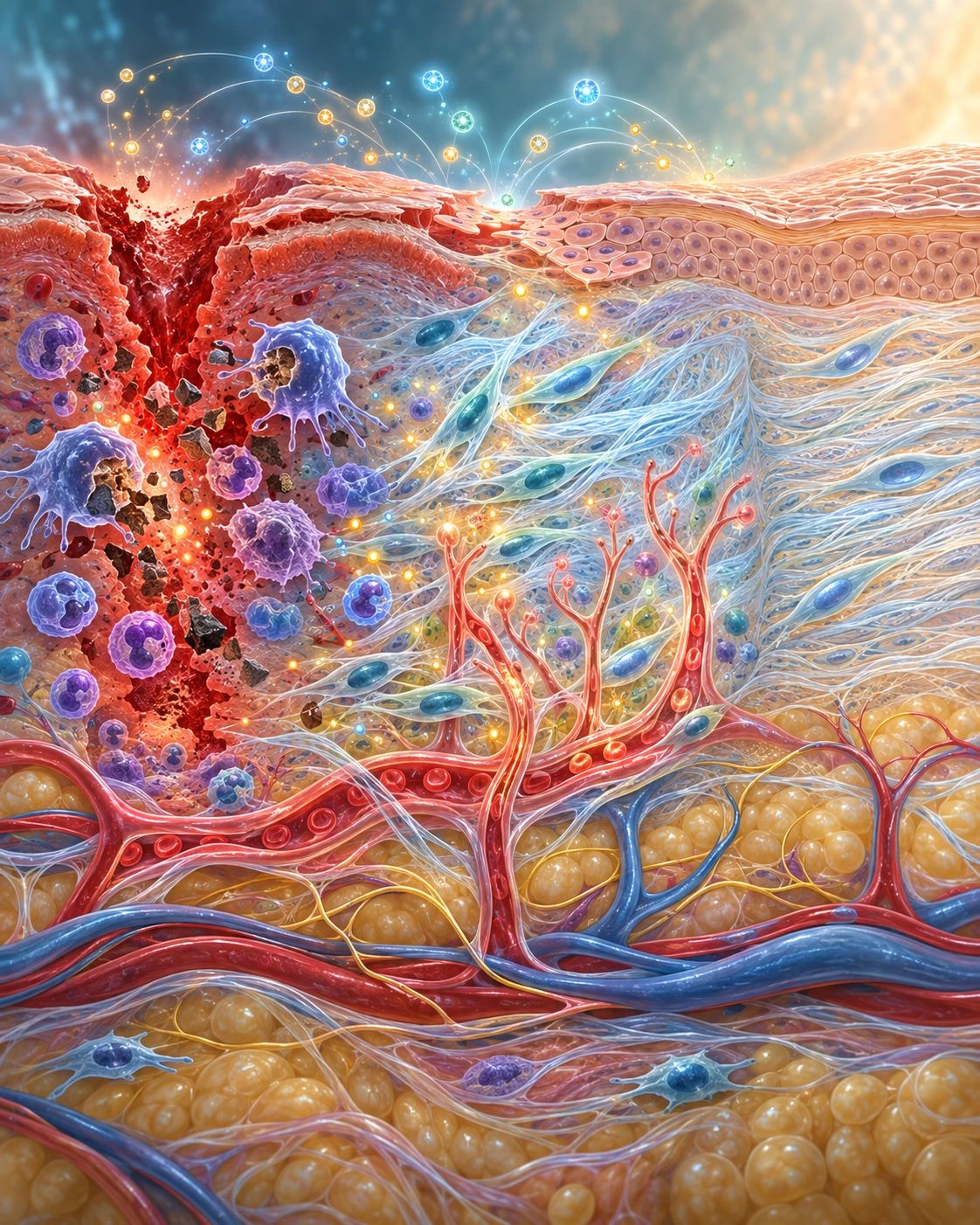
It begins a highly coordinated process involving:
- inflammation
- immune-cell recruitment
- debris removal
- blood-vessel signaling
- fibroblast activity
- extracellular matrix production
- collagen remodeling
- cellular proliferation
- tissue-specific regeneration
Every phase communicates with the next.
Too little repair can leave tissue weak or dysfunctional.
Too much repair can contribute to:
- excessive scar formation
- fibrosis
- abnormal remodeling
The goal is not:
maximum growth.
The goal is:
appropriate reconstruction.
THE BIOLOGY OF REPAIR
A useful way to understand tissue healing is:
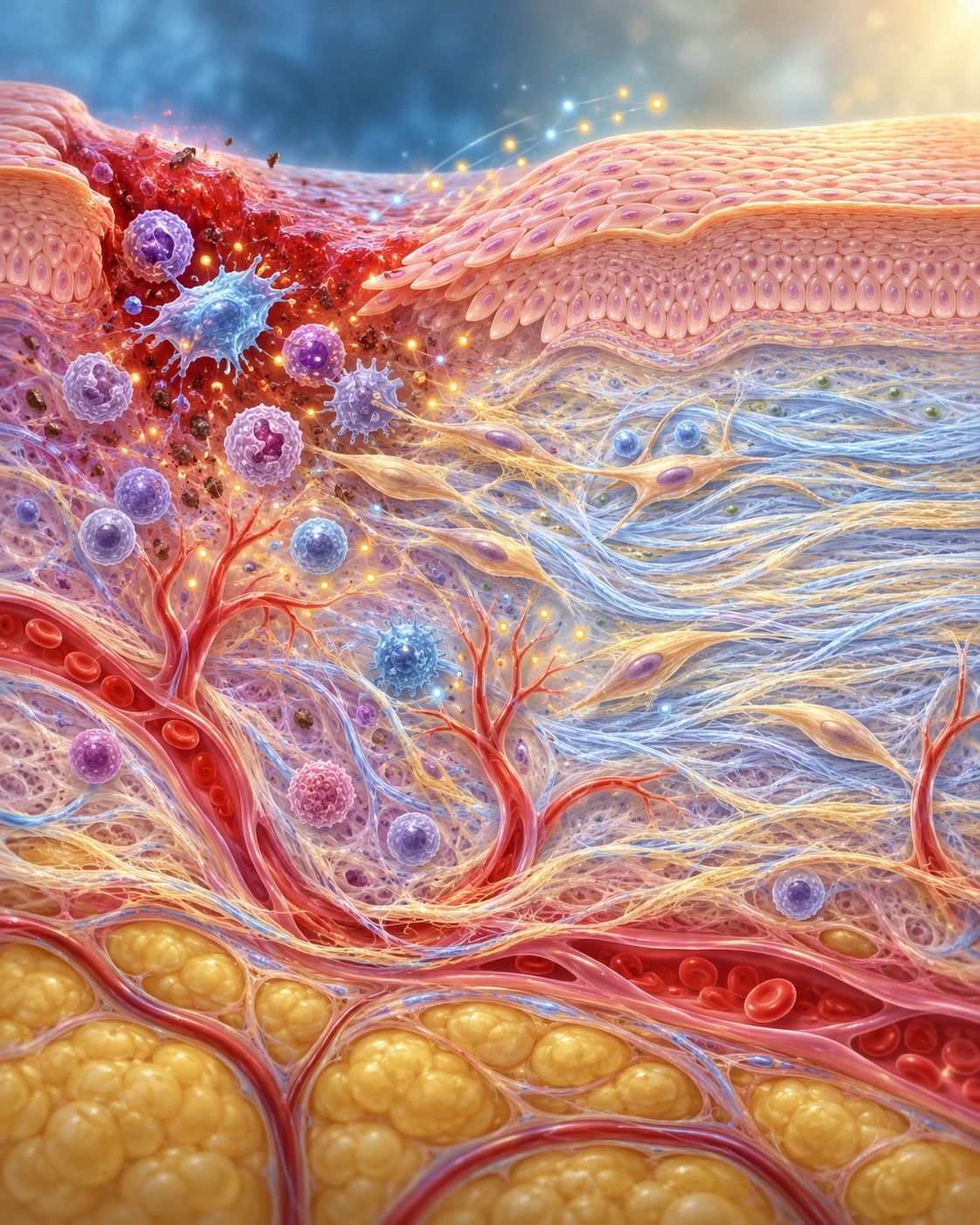
INJURY → INFLAMMATION → CLEANUP → REPAIR SIGNALING → MATRIX FORMATION → REMODELING → FUNCTION
These phases overlap.
They are not perfectly separate.
But the sequence helps us understand an important principle:
A repair signal that is useful at one stage may become inappropriate at another.
For example:
- Early inflammation may help organize healing.
- Persistent inflammation may interfere with it.
- Angiogenesis can restore blood supply.
- Excessive angiogenic signaling may become undesirable.
- Collagen can restore structural strength.
- Excessive collagen deposition can create fibrosis.
Healing is therefore a problem of:
Timing + amount + location + regulation.
REPAIR
REGENERATION
REGENERATION

Restores tissue integrity through bio-signaling mechanisms, sometimes by replacing damaged tissue with scar or connective tissue, which is a key aspect of the tissue healing process that is often explored in peptide medicine education.
REGENERATION
REGENERATION
REGENERATION
Restores the original tissue architecture and function more completely through various bio-signaling mechanisms. For example, a superficial skin injury may regenerate remarkably well due to effective communication within the tissue healing process. In contrast, severe cardiac injury may heal primarily through scar formation. Both scenarios involve healing, yet they do not produce the same biological outcome. A useful distinction to understand in peptide medicine education is: Repair → Restore Stability and Regeneration → Restore Original Tissue. The body often uses some combination of both.
INFLAMMATION IS PART OF REPAIR
IMMUNE CELLS HELP BUILD THE REPAIR ENVIRONMENT
IMMUNE CELLS HELP BUILD THE REPAIR ENVIRONMENT
Restores tissue integrity through bio-signaling mechanisms, sometimes by replacing damaged tissue with scar or connective tissue, which is a key aspect of the tissue healing process that is often explored in peptide medicine education.
IMMUNE CELLS HELP BUILD THE REPAIR ENVIRONMENT
IMMUNE CELLS HELP BUILD THE REPAIR ENVIRONMENT
IMMUNE CELLS HELP BUILD THE REPAIR ENVIRONMENT
Restores the original tissue architecture and function more completely through various bio-signaling mechanisms. For example, a superficial skin injury may regenerate remarkably well due to effective communication within the tissue healing process. In contrast, severe cardiac injury may heal primarily through scar formation. Both scenarios involve healing, yet they do not produce the same biological outcome. A useful distinction to understand in peptide medicine education is: Repair → Restore Stability and Regeneration → Restore Original Tissue. The body often uses some combination of both.
ANGIOGENESIS: REBUILDING THE BLOOD SUPPLY
Damaged tissue often requires increased blood supply.
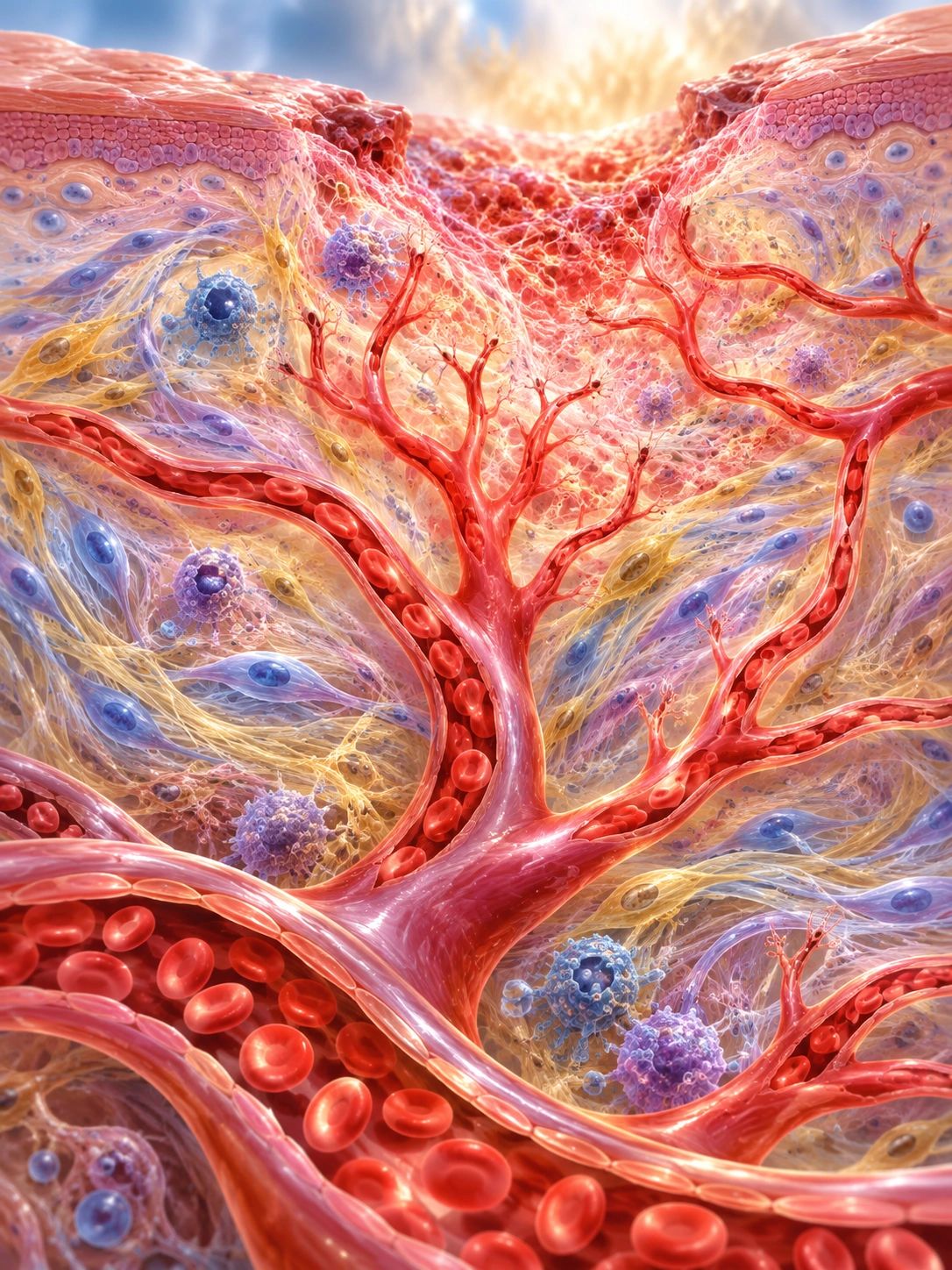
Angiogenesis refers to the formation of new blood vessels from existing vascular structures.
This can help provide:
- oxygen
- nutrients
- immune access
- repair resources
A major signaling pathway involved is:
VEGF — vascular endothelial growth factor.
But angiogenesis illustrates another PPI principle:
more signaling is not automatically better.
Too little angiogenesis may limit healing.
Uncontrolled angiogenesis can be relevant to:
- cancer
- abnormal vascular growth
- certain inflammatory states
The question is not:
- “Does this increase VEGF?”
It is:
- “Should VEGF signaling be increased in this biological context?”
WHERE PEPTIDES ENTER THE DISCUSSION
Several peptides are frequently discussed in regenerative medicine.
The most prominent include:
BPC-157
Often discussed in relation to:
- gastrointestinal biology
- angiogenic signaling
- tendon and ligament repair
TB-500 / Thymosin Beta-4 Biology
Often discussed in relation to:
- actin
- cell migration
- tissue repair
GHK-Cu
Frequently discussed in relation to:
- skin biology
- collagen
- extracellular matrix remodeling
- wound repair
Each approaches tissue repair through:
- Different biology.
They should not simply be grouped as:
- “healing peptides.”
BPC-157: MECHANISM VS EVIDENCE
BPC-157 is one of the most heavily discussed peptides in regenerative medicine.
Preclinical research has explored effects involving:
- gastrointestinal tissue
- angiogenic pathways
- nitric oxide biology
- tendon and ligament models
- wound healing
That makes it scientifically interesting.
But an important evidence gap remains:
extensive preclinical interest does not equal extensive high-quality human clinical evidence.
This distinction will receive its own article.
TB-500 AND THYMOSIN BETA-4
Thymosin beta-4 is a naturally occurring peptide associated with:
- actin dynamics
- cell migration
- wound biology
- tissue repair
TB-500 is commonly discussed in peptide communities in connection with thymosin beta-4-related biology.
However, product terminology and molecular identity deserve careful attention.
We will separate:
- known thymosin beta-4 biology
from:
- claims made about commercial TB-500 products.
GHK-CU: COPPER SIGNALING AND TISSUE REMODELING
GHK-Cu is a copper-binding peptide with significant interest in:
- skin biology
- collagen remodeling
- wound healing
- extracellular matrix regulation
Compared with some investigational repair peptides, GHK-Cu also has a different history of:
- topical and cosmetic research.
Again:
- route and indication matter.
HEALING SPEED IS NOT THE ONLY ENDPOINT
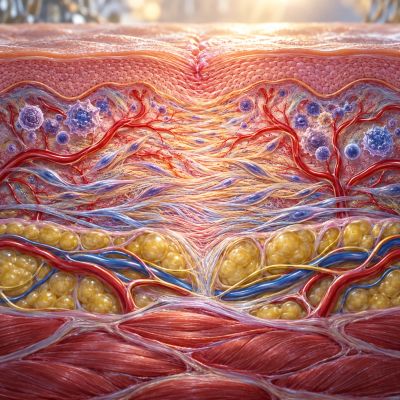
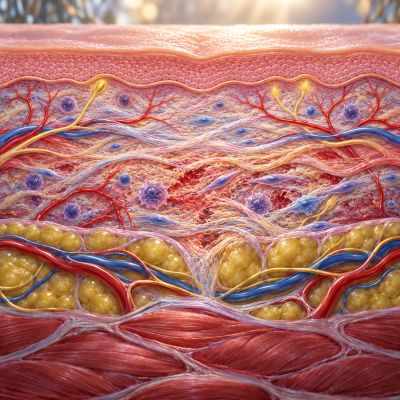
A therapy that promotes faster closure of tissue does not automatically guarantee better tissue quality. Important outcomes to consider in the tissue healing process may include: tensile strength, elasticity, vascular organization, scar quality, function, and recurrence. Rather than simply asking, "Does it heal faster?" a more insightful question would be, "What kind of tissue exists after healing?" Understanding the bio-signaling mechanisms involved in this process can enhance our perspective, supported by peptide medicine education.
PAIN RELIEF IS NOT PROOF OF TISSUE REPAIR
Restores tissue integrity through bio-signaling mechanisms, sometimes by replacing damaged tissue with scar or connective tissue, which is a key aspect of the tissue healing process that is often explored in peptide medicine education.
IMAGING IS INFORMATION — NOT THE ENTIRE OUTCOME
Restores the original tissue architecture and function more completely through various bio-signaling mechanisms. For example, a superficial skin injury may regenerate remarkably well due to effective communication within the tissue healing process. In contrast, severe cardiac injury may heal primarily through scar formation. Both scenarios involve healing, yet they do not produce the same biological outcome. A useful distinction to understand in peptide medicine education is: Repair → Restore Stability and Regeneration → Restore Original Tissue. The body often uses some combination of both.
NUTRITION IS PART OF REGENERATIVE BIOLOGY
What are the factors affecting the tissue healing process? Is it related to bio-signaling mechanisms, mechanical instability, persistent inflammation, nutritional deficiency, or poor cellular response? Understanding these elements is crucial in peptide medicine education to optimize recovery.
OXYGEN DELIVERY MATTERS
Faster healing? Better tissue quality? Less pain? Greater strength? These outcomes are influenced by various bio-signaling mechanisms and are not necessarily the same endpoint in the tissue healing process. Understanding these factors is crucial in peptide medicine education.
METABOLIC HEALTH MATTERS TOO
The extracellular matrix, or ECM, is often described as structural scaffolding, but it also plays a crucial role in bio-signaling mechanisms by communicating with cells. Cells can sense stiffness, tension, matrix composition, and adhesion through receptors such as integrins. This interaction significantly influences the tissue healing process, affecting proliferation, migration, and differentiation. Therefore, tissue repair is not simply about cells rebuilding a structure; it involves a dynamic relationship where cells and structure continuously communicate, a key concept in peptide medicine education.
AGE CHANGES REPAIR BIOLOGY
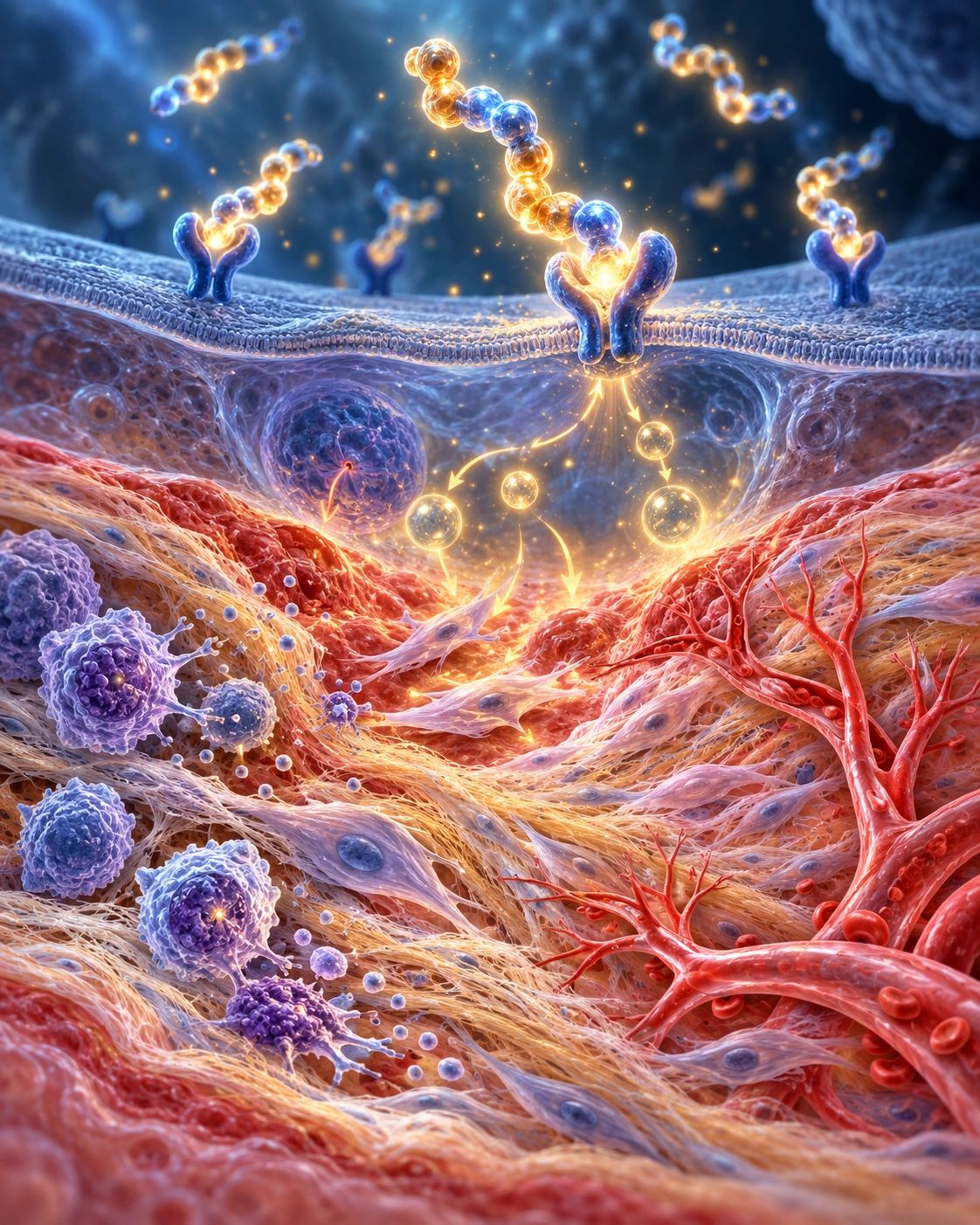
Important growth-related signals in the context of bio-signaling mechanisms include: VEGF, TGF-beta, PDGF, FGF, and IGF-related pathways. These signals can significantly influence various aspects of the tissue healing process, such as angiogenesis, fibroblast activity, cell migration, proliferation, and matrix deposition. However, it is essential to note that none of these factors should automatically be classified as good growth factors. Their effectiveness and relevance depend largely on the specific context and timing, a critical aspect emphasized in peptide medicine education.
THE GOAL IS NOT TO MAKE AN OLDER TISSUE “GROW LIKE A YOUNG TISSUE”
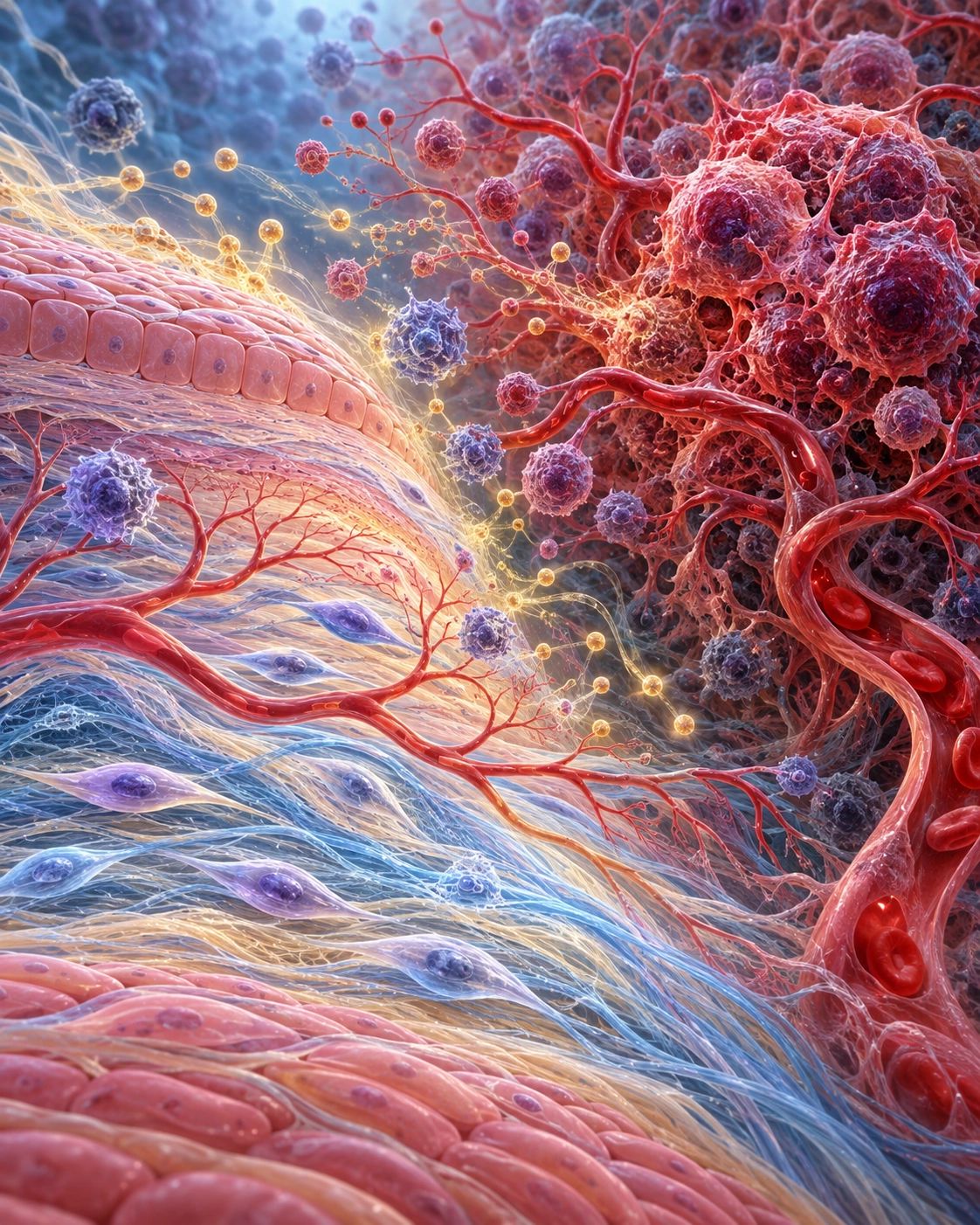
TGF-beta plays a significant role in various bio-signaling mechanisms, including repair, immune regulation, and extracellular matrix production. However, persistent TGF-beta signaling can lead to complications such as fibrosis. This indicates that a pathway essential for the normal tissue healing process can become detrimental when the signaling does not cease appropriately. Essentially, this scenario represents the repair equivalent of chronic inflammation, a key topic in peptide medicine education.
CANCER BIOLOGY MUST REMAIN PART OF THE REGENERATIVE CONVERSATION
Regenerative medicine often discusses:
- growth
- angiogenesis
- proliferation
- growth factors
Those same processes can also be relevant to:
- tumor biology.
This does not mean:
- every regenerative peptide causes cancer.
That would be an unsupported leap.
But it does mean we should ask:
- What growth pathways are being altered, and in whom?

THE PRAXIS APPROACH
A therapy that promotes faster closure of tissue does not automatically guarantee better tissue quality. Important outcomes to consider in the tissue healing process may include: tensile strength, elasticity, vascular organization, scar quality, function, and recurrence. Rather than simply asking, "Does it heal faster?" a more insightful question would be, "What kind of tissue exists after healing?" Understanding the bio-signaling mechanisms involved in this process can enhance our perspective, supported by peptide medicine education.
THE PRAXIS 5
Mechanism → Evidence → Risk → Monitoring → Patient Context
For regenerative medicine:
- Mechanism - What repair pathway are we altering?
- Evidence - Has the mechanism translated into meaningful human repair?
- Risk - What could happen if repair signaling becomes excessive or misdirected?
- Monitoring - How will structural and functional recovery be measured?
- Patient Context - Does this person's tissue, injury, health status, and healing phase match the intervention?