Clinical Peptide Medicine — Structured. Applied. Evolving.

Praxis Peptide Institute
  • HOME
  • START HERE
  • LEARN
  • PEPTIDE GUIDES
  • PEP EXPERIENCE REGISTRY
  • EXPLORE REGISTRY
  • ADVANCED LEARNER TRAINING
  • CLINICIAN TRAINING
  • ABOUT
  • More
    • HOME
    • START HERE
    • LEARN
    • PEPTIDE GUIDES
    • PEP EXPERIENCE REGISTRY
    • EXPLORE REGISTRY
    • ADVANCED LEARNER TRAINING
    • CLINICIAN TRAINING
    • ABOUT
  • Sign In
  • Create Account

  • My Account
  • Signed in as:

  • filler@godaddy.com


  • My Account
  • Sign out

Signed in as:

filler@godaddy.com

  • HOME
  • START HERE
  • LEARN
  • PEPTIDE GUIDES
  • PEP EXPERIENCE REGISTRY
  • EXPLORE REGISTRY
  • ADVANCED LEARNER TRAINING
  • CLINICIAN TRAINING
  • ABOUT

Account

  • My Account
  • Sign out

  • Sign In
  • My Account

GUT & BARRIER HEALTH

Digestion Is Only Part of the Story

The gastrointestinal tract is one of the largest interfaces between:

  • the outside world

and:

  • the internal human environment.

Every day, the intestinal system must distinguish between:

  • nutrients that should be absorbed 
  • organisms that may be tolerated 
  • organisms that may be dangerous 
  • molecules that should remain outside the bloodstream 
  • immune signals that require activation 
  • immune signals that require restraint 

This is not simply:

  • digestion.

It is:

  • biological surveillance.

And the intestinal barrier sits in the middle of that decision.


Understanding gut health therefore requires much more than asking:

  • “Which probiotic should I take?”

The better questions are:

  • Is digestion functioning?
  • Is absorption functioning?
  • Is the intestinal barrier intact?
  • Is immune signaling appropriately regulated?
  • Is motility normal?
  • Is the microbiome supporting or disrupting the environment?
  • Is the problem actually originating in the gut—or is another system changing gut function downstream?


That is the Praxis approach to:

  • Gut & Barrier Health.


Key Idea

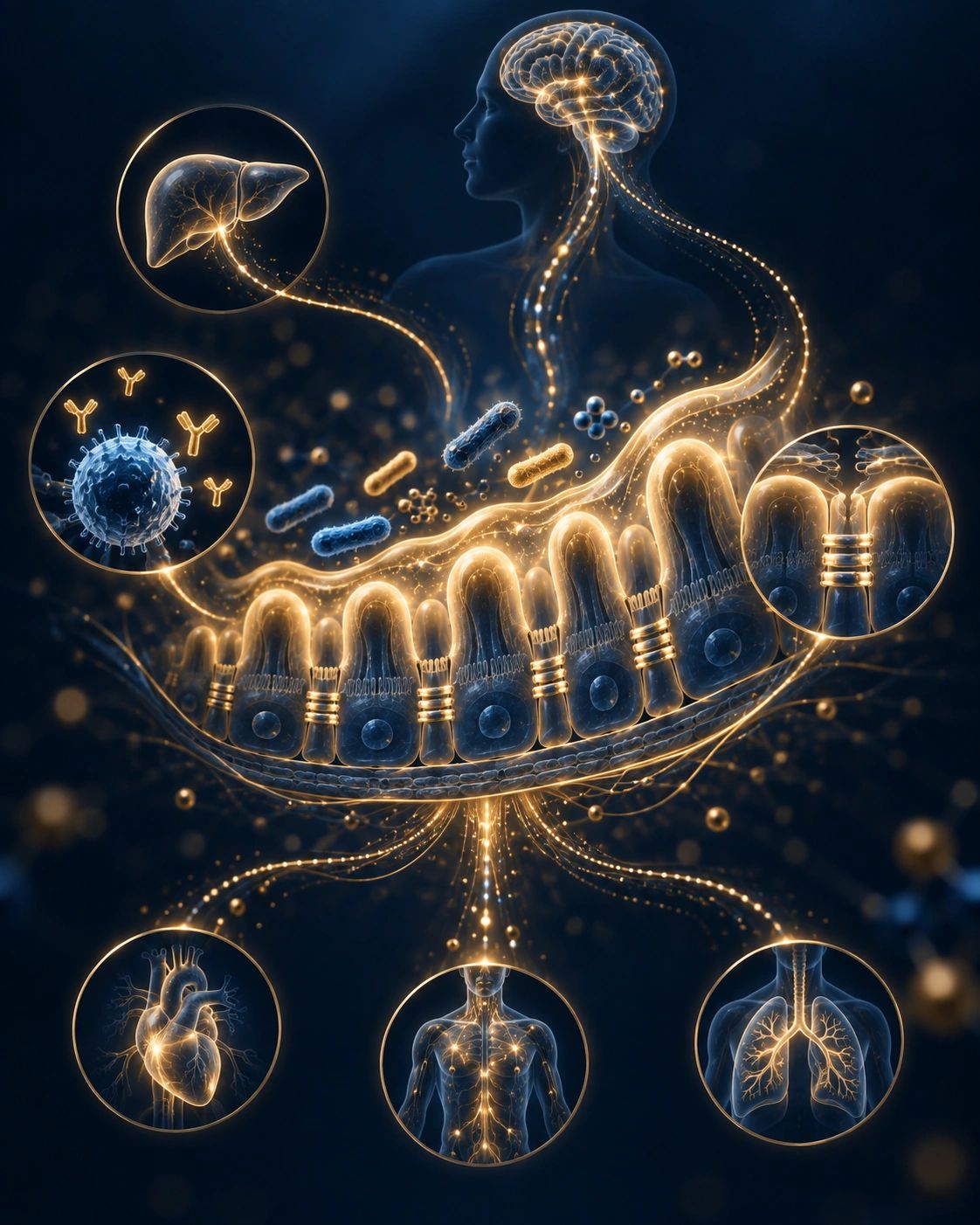
The gastrointestinal system is not one organ performing one task. It is a coordinated network of epithelium, mucus, immune cells, microbiota, nerves, endocrine signals, blood flow, digestive secretions, and metabolic pathways working together to decide what enters the body, what stays outside it, and how the body responds to what it encounters.


A symptom such as:

  • bloating 
  • reflux 
  • diarrhea 
  • constipation 
  • abdominal pain 
  • food intolerance 
  • fatigue after eating 

does not identify:

  • which part of that network is failing.

That requires:

  • pattern recognition.

THE GUT IS A BORDER

One of the most useful ways to understand gastrointestinal physiology is to stop thinking of the intestine as:

  • a tube containing food

and start thinking of it as:

  • a controlled biological border

Environment

On one side:

  • the external environment.


On the other:

  • the internal circulation.


Between them:

  • the intestinal barrier.

Selective Passage

That barrier must allow selective passage of:

  • amino acids 
  • glucose 
  • fatty acids 
  • vitamins 
  • minerals 
  • water

Limiting Movement

Limits inappropriate movement of:

  • pathogens 
  • microbial products 
  • toxins 
  • incompletely processed material 

This requires extraordinary:

  • selectivity.

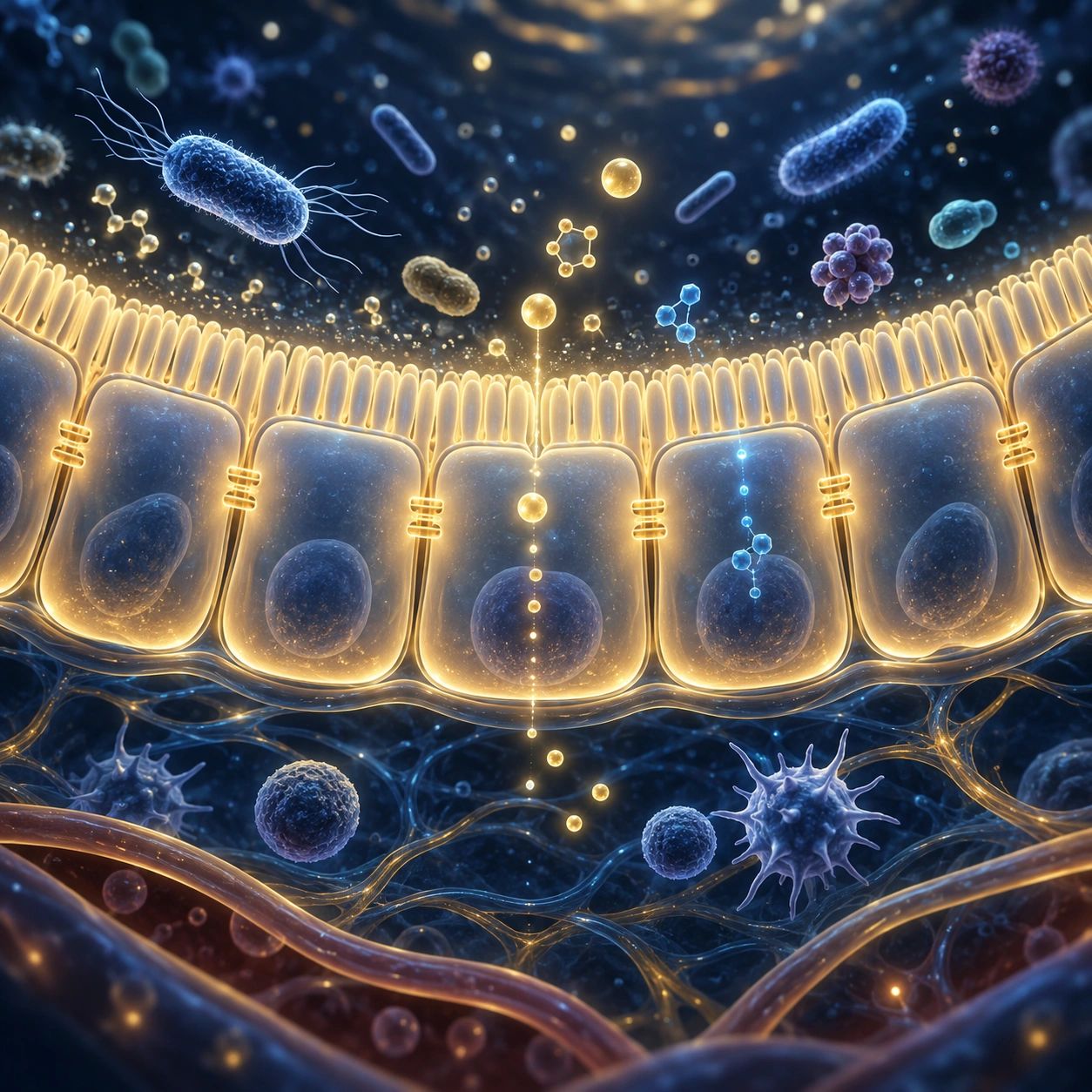
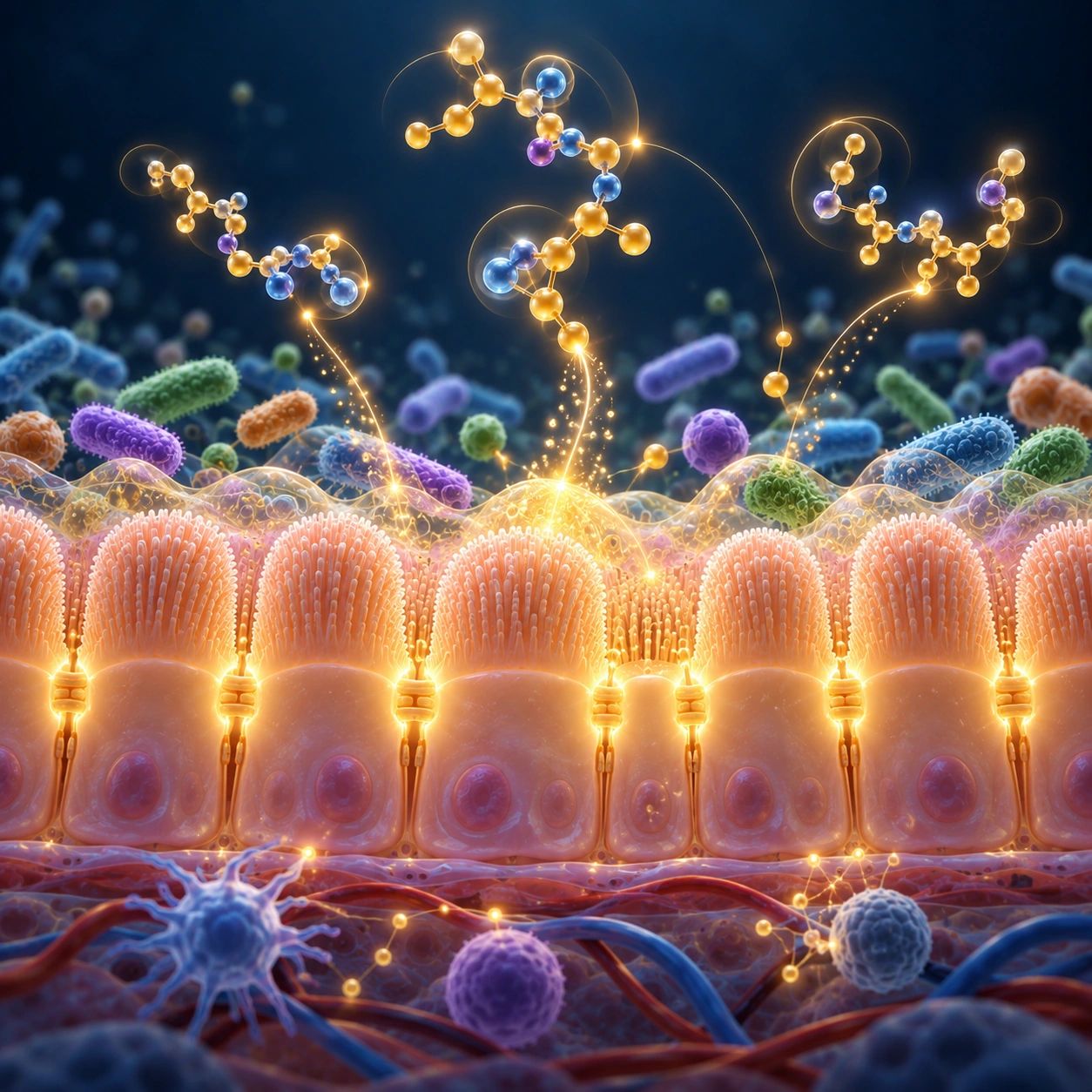
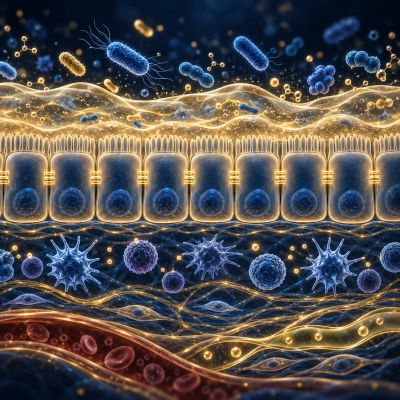
THE BARRIER IS NOT ONE STRUCTURE

Gut-barrier integrity depends on several layers working together.

LUMINAL ENVIRONMENT

  • Food
  • Microorganisms
  • Metabolites
  • Digestive products


MUCUS LAYER

  • Physical separation
  • Antimicrobial compounds
  • Microbial habitat


EPITHELIAL CELLS

  • Selective absorption
  • Transport
  • Barrier function


TIGHT JUNCTIONS

  • Regulation of paracellular movement


IMMUNE SYSTEM

  • Surveillance
  • Tolerance
  • Defense


CIRCULATION

  • Systemic exposure
  • Metabolic distribution


The barrier is therefore:

  • structural + immunological + biochemical.
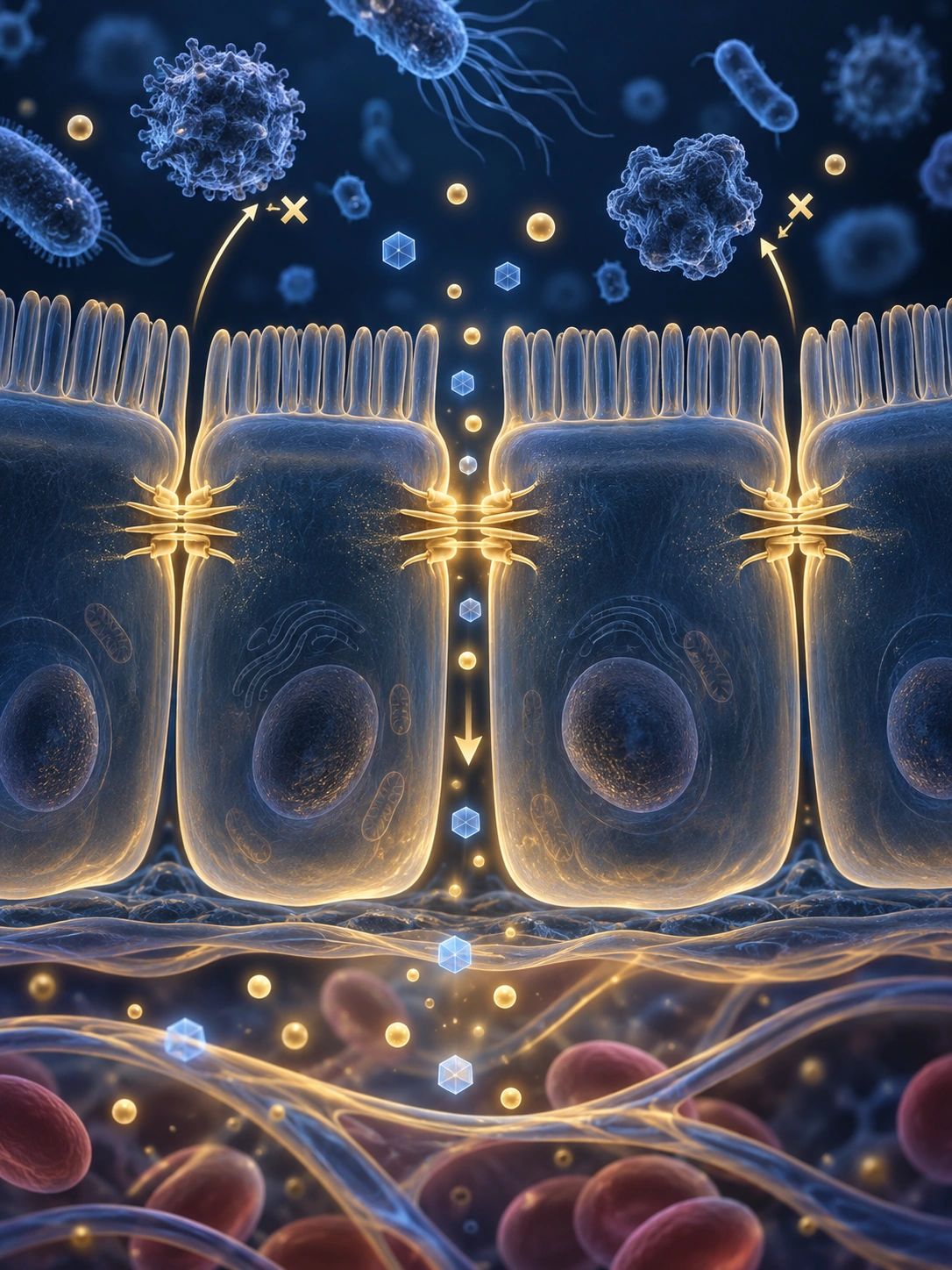
TIGHT JUNCTIONS — THE CONTROLLED GATE

Adjacent intestinal epithelial cells are connected by protein complexes commonly discussed as:

  • tight junctions.

These include proteins such as:

  • claudins 
  • occludin 
  • junctional adhesion molecules 
  • ZO-related proteins 

Their purpose is not to make the intestine:

  • completely impermeable.

That would be incompatible with:

  • absorption.

Instead, the system regulates:

  • what can move between cells.

This is why the term:

  • “leaky gut”

requires precision.


Increased intestinal permeability can occur.

But:

  • intestinal permeability is a physiological variable—not automatically a diagnosis explaining every systemic symptom.

PERMEABILITY IS NOT BINARY

The barrier is not simply:

  • open

or:

  • closed.

Permeability can change because of:

  • inflammation 
  • infection 
  • epithelial injury 
  • alcohol 
  • medications 
  • nutritional status 
  • ischemia 
  • severe physiological stress 

Some changes may be:

  • temporary.

Others may accompany:

  • disease.

The important question is not:

  • “Is the gut leaky?”

It is:

  • “Why has barrier behavior changed, how important is that change, and what functional consequence is occurring?”

THE MUCUS LAYER IS PART OF THE BARRIER

Before most microorganisms ever contact epithelial cells, they encounter:

  • mucus.

Mucus helps:

  • physically separate microbes from the epithelium 
  • trap particles 
  • concentrate antimicrobial compounds 
  • create microbial niches 

This layer is produced largely by:

  • goblet cells.

Barrier health therefore depends on more than:

  • tight-junction proteins.

It also depends on:

  • surface ecology.


MICROBIOME

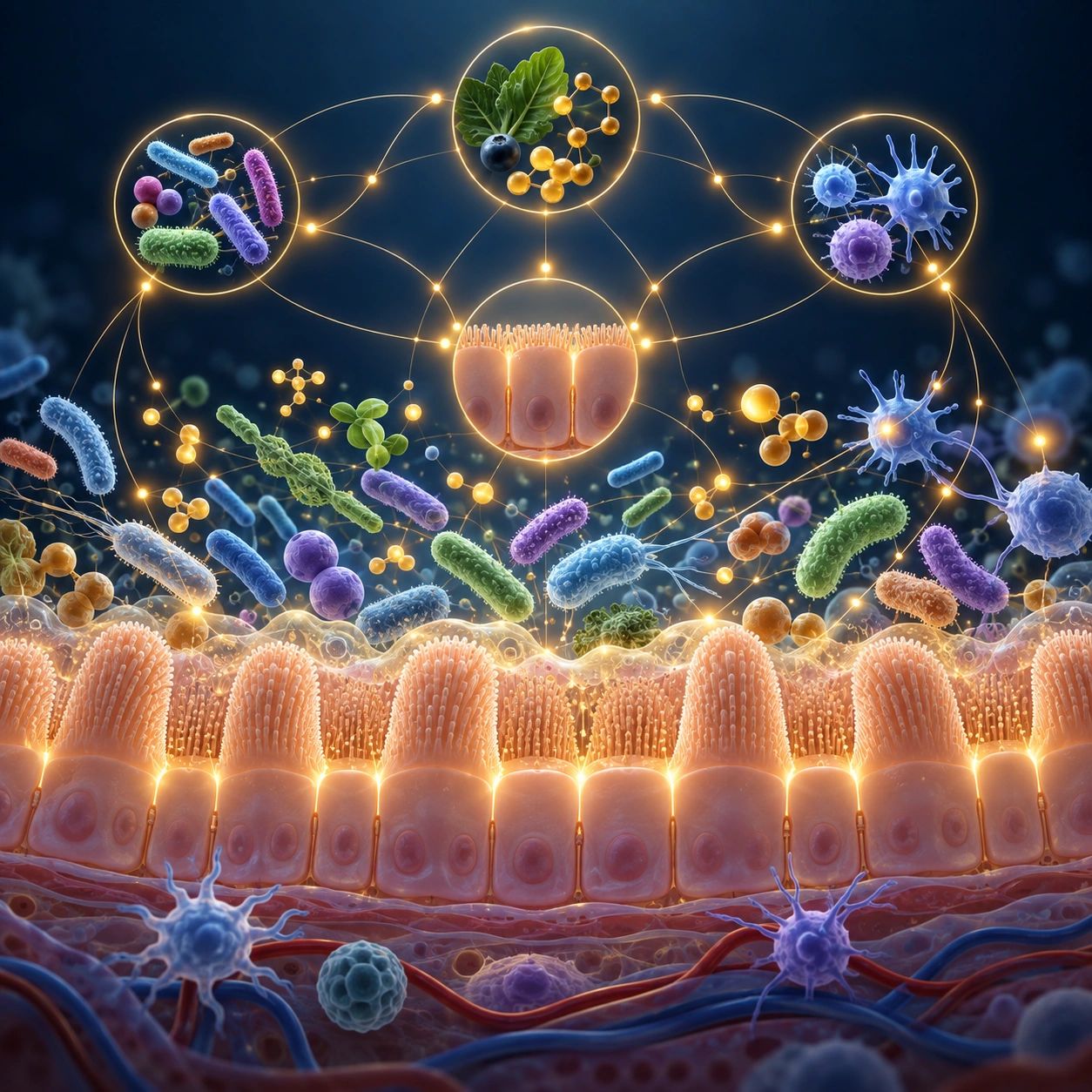
THE MICROBIOME IS AN ECOSYSTEM — NOT AN ORGAN SCORE

MORE MICROBIAL DIVERSITY IS NOT ALWAYS AUTOMATICALLY BETTER

MORE MICROBIAL DIVERSITY IS NOT ALWAYS AUTOMATICALLY BETTER

 The microbiome has become one of the most heavily marketed areas in medicine.


But the microbiome is not:

a single organism.

It is an:

ecosystem.


It can contain:

bacteria 

viruses 

fungi 

archaea 


And those organisms interact with:

diet 

bile acids 

intestinal transit 

medications 

immune function 

host genetics 


This makes microbiome interpretation:

extremely complex.

MORE MICROBIAL DIVERSITY IS NOT ALWAYS AUTOMATICALLY BETTER

MORE MICROBIAL DIVERSITY IS NOT ALWAYS AUTOMATICALLY BETTER

MORE MICROBIAL DIVERSITY IS NOT ALWAYS AUTOMATICALLY BETTER

 And:

one bacterial species is rarely the entire story.


A stool report may identify:

relative abundance.


That does not automatically tell us:

whether the organism is causing symptoms 

what is happening at the mucosal surface 

whether the microbial community is metabolically healthy 

whether the finding requires treatment 


This is why:

microbiome data must be interpreted as ecology, not as a list of good and bad organisms.

THE MICROBIOME PRODUCES SIGNALS

THE MICROBIOME PRODUCES SIGNALS

THE MICROBIOME PRODUCES SIGNALS

  Microorganisms do not simply:

occupy space.


They produce metabolites.


One major group includes:

short-chain fatty acids.

Examples include:

acetate 

propionate 

butyrate 


These can influence:

colonocyte metabolism 

immune signaling 

epithelial integrity 

endocrine signaling 


This creates:

Food → Microbial Metabolism → Metabolites → Host Signaling


Diet therefore changes physiology partly through:

what microbes do with it.

BUTYRATE IS A GOOD EXAMPLE

THE MICROBIOME PRODUCES SIGNALS

THE MICROBIOME PRODUCES SIGNALS

  Butyrate is frequently described as:

beneficial.


There is good biological reason for interest.

Colonocytes can use butyrate as:

an important energy substrate.


Butyrate may also influence:

barrier function 

immune regulation 

gene expression 


But even here:

context matters.


A metabolite should not become:

a universal therapy simply because its normal physiology is useful.

THE IMMUNE SYSTEM

THE IMMUNE SYSTEM LIVES AT THE GUT BORDER

THE IMMUNE SYSTEM LIVES AT THE GUT BORDER

THE IMMUNE SYSTEM LIVES AT THE GUT BORDER

 The gastrointestinal tract contains enormous:

immune infrastructure.


Why?

Because it constantly encounters:

foreign material.


But most of that material is not:

dangerous.


The immune system must therefore perform two seemingly opposite functions:

DEFEND

against pathogens

while:

TOLERATING

food and appropriate commensal organisms.


This makes the gut one of the clearest examples of:

immune regulation.

TOO LITTLE IMMUNE RESPONSE

THE IMMUNE SYSTEM LIVES AT THE GUT BORDER

THE IMMUNE SYSTEM LIVES AT THE GUT BORDER

 Can allow:

infection 

microbial invasion 


But:

too much response

can contribute to:

inflammation 

tissue injury 


The goal is not:

maximum immunity.


It is:

appropriate immunity.

SECRETORY IgA

THE GUT AND IMMUNE SYSTEM ARE BIDIRECTIONAL

THE GUT AND IMMUNE SYSTEM ARE BIDIRECTIONAL

 One important mucosal immune molecule is:

secretory IgA.


It can interact with:

microorganisms 

antigens 

at mucosal surfaces.


This helps regulate the relationship between:

host and environment.


But a single stool IgA value still does not tell us:

everything about mucosal immunity.


Again:

marker ≠ complete system.

THE GUT AND IMMUNE SYSTEM ARE BIDIRECTIONAL

THE GUT AND IMMUNE SYSTEM ARE BIDIRECTIONAL

THE GUT AND IMMUNE SYSTEM ARE BIDIRECTIONAL

 Gut Dysfunction

↓

Barrier disruption

Microbial changes

Immune signaling

↓

Systemic Effects


But the direction can also reverse:

Systemic Immune Dysfunction

↓

Inflammatory signaling

Motility changes

Barrier effects

↓

Gut Dysfunction


This matters because:

the gut is not always the origin.

Sometimes it is:

the target.
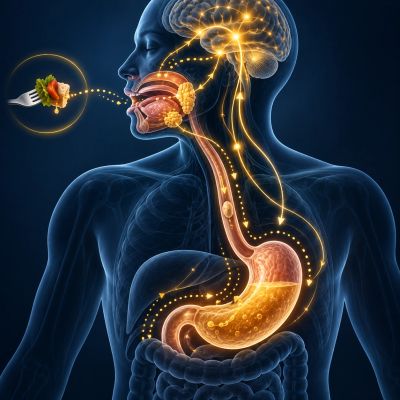
DIGESTION BEGINS BEFORE THE INTESTINE

Gut health begins with:

  • processing food correctly.

That includes:

  • chewing 
  • stomach acid 
  • pancreatic enzymes 
  • bile 
  • intestinal enzymes 

Poor digestion can change:

  • what reaches the distal intestine.

That can alter:

  • substrate availability 
  • fermentation 
  • microbial ecology 
  • symptoms 

So an apparent microbiome problem may sometimes begin:

  • upstream.

STOMACH ACID HAS MULTIPLE JOBS

Hydrochloric acid supports:

  • protein digestion 
  • pepsin activation 
  • nutrient processing 
  • microbial defense 

Low or altered gastric-acid physiology can therefore affect:

  • more than reflux symptoms.

But reflux itself does not automatically mean:

  • too much acid.

Gastroesophageal reflux can involve:

  • lower-esophageal-sphincter function 
  • anatomy 
  • gastric pressure 
  • motility 
  • obesity 

Again:

  • symptom ≠ mechanism.

PANCREATIC FUNCTION MATTERS

The pancreas contributes digestive enzymes for:

  • proteins 
  • fats 
  • carbohydrates 

If enzyme output is inadequate:

nutrients can remain:

  • poorly digested.

This can produce:

  • malabsorption 
  • stool changes 
  • weight loss 
  • nutrient deficiency 

An apparent gut-barrier or microbiome problem may therefore actually involve:

  • digestive insufficiency.

BILE IS MORE THAN A FAT-DEGESTION TOOL

Bile helps:

  • emulsify dietary fat.

But bile acids are also:

  • signaling molecules.

They can interact with receptors involved in:

  • metabolism 
  • glucose regulation 
  • intestinal signaling 
  • microbial ecology 

This means:

  • liver → gallbladder → intestine → microbiome → metabolism

are deeply connected.

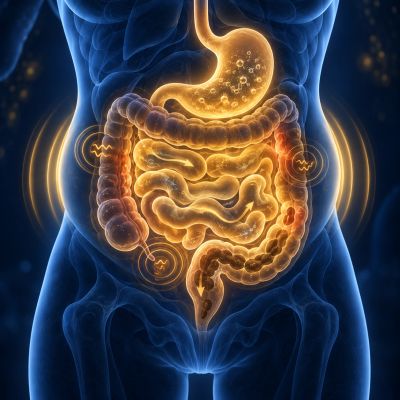
MOTILITY SHAPES THE ENTIRE ECOSYSTEM

Food and microbes should not remain:

  • stationary.

Intestinal motility determines:

  • transit time 
  • exposure 
  • fermentation 
  • stool formation 

Too fast:

  • diarrhea.

Too slow:

  • constipation.

But altered transit can also change:

  • the microbial environment itself.

This means dysbiosis may sometimes be:

  • a consequence of abnormal motility.

THE MIGRATING MOTOR COMPLEX

During fasting periods, the upper gastrointestinal tract undergoes organized:

  • migrating motor activity.

This helps move residual material through:

  • the small intestine.

Abnormal motility can potentially contribute to conditions involving:

  • small-intestinal microbial overgrowth.

This is an important reminder:

  • microbial location matters as much as microbial identity.

Organisms can be normal in:

  • one location

and problematic in:

  • another.

THE ENTERIC NERVOUS SYSTEM

The intestine contains an extensive neural network often called:

  • the enteric nervous system.

It regulates:

  • motility 
  • secretion 
  • blood flow 
  • local reflexes 

This is why the gastrointestinal system can perform enormous amounts of regulation:

  • without conscious control.

It also helps explain why:

  • stress can profoundly alter digestion.

THE GUT–BRAIN AXIS IS REAL

But it is frequently:

  • oversimplified.

Communication occurs through:

  • autonomic nerves 
  • endocrine signals 
  • immune mediators 
  • microbial metabolites 
  • vagal pathways 

So:

  • brain state can change gut function.

And:

  • gut physiology can influence brain signaling.

But this does not mean:

  • every psychiatric or neurological disorder originates in the gut.

That claim goes much farther than:

  • the evidence.

THE VAGUS NERVE IS PART OF THIS NETWORK

The vagus nerve carries information between:

  • brain and internal organs.

It influences:

  • digestive function 
  • autonomic regulation 

This makes vagal signaling relevant to:

  • gut-brain communication.

But again:

  • vagus nerve involvement does not turn every gastrointestinal disorder into a vagal disorder.
THE GUT IS ALSO AN ENDOCRINE ORGAN

SEROTONIN IS ALSO HEAVILY CONNECTED TO THE GUT

THE GUT IS ALSO AN ENDOCRINE ORGAN

 Specialized enteroendocrine cells release signaling molecules such as:

GLP-1 

GIP 

CCK 

secretin 

PYY 

serotonin-related signals 

These can influence:

appetite 

pancreatic function 

gastric emptying 

insulin secretion 

motility 


This directly connects Gut & Barrier Health to:

Metabolic Health.

GLP-1 IS A PERFECT EXAMPLE

SEROTONIN IS ALSO HEAVILY CONNECTED TO THE GUT

THE GUT IS ALSO AN ENDOCRINE ORGAN

 GLP-1 is often discussed only in relation to:

weight-loss medications.


But physiologically it is part of:

intestinal nutrient sensing.


Food enters the gut.

Enteroendocrine cells detect nutrients.

Signals are released.


Those signals influence:

appetite 

insulin secretion 

gastric emptying 


The gut therefore helps tell the rest of the body:

what has just entered.

SEROTONIN IS ALSO HEAVILY CONNECTED TO THE GUT

SEROTONIN IS ALSO HEAVILY CONNECTED TO THE GUT

SEROTONIN IS ALSO HEAVILY CONNECTED TO THE GUT

 A large amount of peripheral serotonin biology is associated with:

the gastrointestinal system.


Gut serotonin participates in:

motility 

secretion 

local signaling 


But:

gut serotonin is not equivalent to brain serotonin.


This is another example where popular language can turn:

a real biological relationship

into:

an inaccurate clinical claim.

INTESTINAL BLOOD FLOW MATTERS

INTESTINAL BLOOD FLOW MATTERS

SEROTONIN IS ALSO HEAVILY CONNECTED TO THE GUT

 The gut requires:

perfusion.


Blood flow supports:

oxygen delivery 

nutrient transport 

tissue integrity 

repair 


Severe reductions in perfusion can injure:

the intestinal barrier.


This connects Gut & Barrier Health directly with:

Vascular Biology.


Again:

barrier function depends on upstream physiology.

MITOCHONDRIA MATTER HERE TOO

INTESTINAL BLOOD FLOW MATTERS

MITOCHONDRIA MATTER HERE TOO

 Intestinal epithelial cells require:

energy.


Barrier maintenance requires:

cell turnover 

transport 

repair 

immune signaling 


That means mitochondrial health can influence:

barrier resilience.


But the existence of mitochondria in intestinal cells does not mean:

every gut disorder is a mitochondrial disorder.

The mitochondrial section taught us exactly why:

that inference is too broad.

THE GUT–LIVER AXIS

INTESTINAL BLOOD FLOW MATTERS

MITOCHONDRIA MATTER HERE TOO

 Blood from much of the gastrointestinal tract travels first toward:

the liver.


This means the liver receives:

absorbed nutrients 

microbial products 

intestinal metabolites 

The liver then:

processes nutrients 

regulates metabolism 

produces bile 

participates in detoxification 


This creates:

Gut → Portal Circulation → Liver → Bile → Gut


A biological loop.

THIS IS WHY THE GUT CANNOT BE SEPARATED FROM THE LIVER

FOOD ALLERGY AND FOOD INTOLERANCE ARE NOT INTERCHANGEABLE

THIS IS WHY THE GUT CANNOT BE SEPARATED FROM THE LIVER

 Altered intestinal physiology can influence:

hepatic exposure.


And altered liver or bile physiology can change:

the intestinal environment.


Systems medicine means recognizing:

the loop.

FOOD INTOLERANCE IS NOT ONE THING

FOOD ALLERGY AND FOOD INTOLERANCE ARE NOT INTERCHANGEABLE

THIS IS WHY THE GUT CANNOT BE SEPARATED FROM THE LIVER

  Someone says:

“I react to food.”


That could involve:

enzyme deficiency 

malabsorption 

immune allergy 

fermentation 

pharmacological effects 

motility 

conditioned response 


These mechanisms require:

different management.

FOOD ALLERGY AND FOOD INTOLERANCE ARE NOT INTERCHANGEABLE

FOOD ALLERGY AND FOOD INTOLERANCE ARE NOT INTERCHANGEABLE

FOOD ALLERGY AND FOOD INTOLERANCE ARE NOT INTERCHANGEABLE

 Food allergy

can involve:

immune recognition.

Food intolerance

may involve:

digestive enzymes 

dose-dependent substrate handling 

fermentation 


Using the same word:

reaction

for both can create:

diagnostic confusion.

HISTAMINE ADDS ANOTHER LAYER

CONSTIPATION IS A PATTERN — NOT A DIAGNOSIS

FOOD ALLERGY AND FOOD INTOLERANCE ARE NOT INTERCHANGEABLE

 Histamine participates in:

immune signaling 

gastric physiology 

vascular responses 


Foods can contain:

histamine or related compounds.


Microbial metabolism can also influence:

histamine exposure.


But the popular label:

“histamine intolerance”

should still be evaluated carefully.


Symptoms are:

real.

The underlying mechanism may vary.

SIBO ALSO REQUIRES MECHANISTIC THINKING

CONSTIPATION IS A PATTERN — NOT A DIAGNOSIS

CONSTIPATION IS A PATTERN — NOT A DIAGNOSIS

  Small intestinal bacterial overgrowth is not simply:

bad bacteria.


The deeper question is:

Why did excessive microbial burden develop in the small intestine?


Possible contributors can involve:

motility 

anatomy 

gastric physiology 

medications 


If the upstream environment remains unchanged:

recurrence may occur.


That is why treating organisms alone may not be:

the entire solution.

CONSTIPATION IS A PATTERN — NOT A DIAGNOSIS

CONSTIPATION IS A PATTERN — NOT A DIAGNOSIS

CONSTIPATION IS A PATTERN — NOT A DIAGNOSIS

  Constipation can reflect differences in:

motility 

pelvic-floor function 

hydration 

medications 

endocrine physiology 

neurological function 


So:

“take a probiotic”

is not automatically:

mechanistically appropriate.


The pattern comes first.

DIARRHEA IS ALSO A PATTERN

 Potential mechanisms include:

  • infection 
  • inflammation 
  • malabsorption 
  • medication effect 
  • altered secretion 
  • rapid transit 

The same symptom can emerge from:

  • completely different biology.

BLOATING MAY BE ONE OF THE MOST NONSPECIFIC GUT SYMPTOMS

 It can involve:

  • gas 
  • fermentation 
  • visceral sensitivity 
  • constipation 
  • altered motility 
  • food volume 


This is why:

  • bloating ≠ dysbiosis

and:

  • bloating ≠ SIBO.


Those may be possibilities.

They are not:

  • synonyms.

IBS IS ALSO NOT ONE SIMPLE PATHWAY

Irritable bowel syndrome can involve interactions among:

  • motility 
  • visceral sensitivity 
  • gut-brain signaling 
  • diet 
  • previous infection 
  • microbial factors 

This explains why:

  • the same treatment does not work for every patient.

IBS is a particularly good example of:

  • pattern heterogeneity.

IBD IS DIFFERENT

Inflammatory bowel diseases such as:

  • Crohn's disease 
  • ulcerative colitis 

involve:

  • immune-mediated intestinal inflammation.

These should not be collapsed into:

  • functional gut disorders.

The distinction matters because:

  • tissue inflammation changes the risk profile.

CELIAC DISEASE IS ANOTHER IMPORTANT EXAMPLE

 Celiac disease involves:

  • immune-mediated injury triggered by gluten in genetically susceptible individuals.

This is very different from:

  • generalized food sensitivity.

Again:

  • precise diagnosis matters.

THE GUT AND SYSTEMIC INFLAMMATION

The gut can influence:

  • systemic immune exposure.

Microbial components such as:

  • lipopolysaccharide

can activate immune pathways if they reach inappropriate compartments.

This has contributed to research on:

  • metabolic endotoxemia.

But the existence of this mechanism does not mean:

  • every chronic inflammatory disease begins with intestinal permeability.

That is:

  • too large a claim.

A CRITICAL PRAXIS DISTINCTION

 Mechanism exists

does not mean:

mechanism dominates every patient.


The clinical question remains:

Is this mechanism materially contributing here?

THIS IS THE ECOLOGICAL MODEL

DIET; MOTILITY; BILE; IMMUNE SIGNALING

MUCUS / BARRIER

↓

INTESTINAL ENVIRONMENT

↓

MICROBIAL ECOLOGY

↓

MICROBIAL METABOLITES

↓

HOST PHYSIOLOGY

And:

  • host physiology changes the environment again.

It is:

  • a loop.

THE ENVIRONMENT CAN SELECT THE MICROBIOME

This is one of the most important concepts in the entire section.

Instead of asking only:

  • “Which microbes are present?”

ask:

  • “Why does this intestinal environment support these organisms?”

That question changes:

  • everything.

Because the microbiome can be:

  • a reflection of its habitat.

GUT HEALTH SHOULD NEVER BECOME “KILL THE BAD, ADD THE GOOD”

The common model is:

  • Bad organism → antimicrobial

then:

  • Good organism → probiotic

But intestinal ecology may also depend on:

  • transit 
  • bile 
  • diet 
  • pH 
  • immune status 
  • mucus 
  • oxygen gradients 

This means ecology may not normalize unless:

  • the environment normalizes.

Real Results

Some probiotics may be useful in:

  • specific contexts.

But the category:

  • “probiotic”
  • Contains many different organisms and formulations.

The question should be:

  • Which strain?
  • For what indication?
  • At what dose?
  • With what evidence?

This is the same evidence discipline we use:

  • everywhere else.

PREBIOTICS ARE ALSO NOT UNIVERSALLY BENEFICIAL

Fermentable substrates may support:

  • microbial metabolism.

But in some patients they may also increase:

  • gas 
  • bloating 

That does not necessarily mean:

  • prebiotics are harmful.

It means:

  • patient context matters.

THE SAME GOES FOR FIBER

Fiber is not:

  • one compound.

Different fibers differ in:

  • solubility 
  • fermentability 
  • viscosity 

And patients differ in:

  • transit 
  • microbial ecology 
  • tolerance 

Again:

  • category labels hide biology.

PEPTIDES RELEVANT TO GUT & BARRIER BIOLOGY

Depending on the exact mechanism and evidence:

KPV

often discussed through:

  • inflammatory signaling 
  • intestinal-barrier research 

GLP-2 / TEDUGLUTIDE BIOLOGY

relevant to:

  • intestinal growth 
  • absorptive capacity 
  • mucosal adaptation 

BPC-157

frequently discussed in relation to:

  • gastrointestinal protection 
  • tissue repair 

Although many broad claims exceed:

  • the strength of human evidence.

Potential discussion may also involve other signaling molecules connected to:

  • motility 
  • mucosal immunity 
  • epithelial repair 

But the same rule applies:

  • the peptide follows the pattern.

KPV IS NOT SIMPLY A “GUT PEPTIDE”

KPV is a short peptide fragment related to:

  • α-MSH biology.

Research has explored:

  • inflammatory signaling 
  • intestinal inflammation 
  • epithelial biology 

This can make KPV:

  • mechanistically interesting.

But the correct question is not:

  • “Does this patient have gut symptoms?”

It is:

  • “Is inappropriate inflammatory signaling or barrier dysfunction actually part of the pattern, and what human evidence supports the proposed use?”

GLP-2 SHOWS HOW POWERFUL INTESTINAL PEPTIDE SIGNALING CAN BE

GLP-2 is produced physiologically by:

  • intestinal L cells.

It influences:

  • intestinal growth 
  • absorptive function 
  • blood flow 
  • barrier-related biology 

And importantly:

a GLP-2 analogue:

  • teduglutide

has an established clinical role in:

  • short bowel syndrome.

This provides a powerful example of:

  • peptide physiology becoming peptide medicine.

The strongest peptide medicine often emerges when:

  • mechanism and disease match tightly.

BPC-157 REQUIRES MUCH MORE CAUTION

BPC-157 is heavily marketed for:

  • gut repair 
  • ulcer healing 
  • tissue regeneration 

Its preclinical gastrointestinal literature is:

  • interesting.

But broad routine human therapeutic claims remain much more uncertain.

That means:

  • mechanism should not be confused with established clinical efficacy.

Again:

  • the evidence determines the claim.

THE GUT PEPTIDE DECISION MODEL

PATIENT WITH GASTROINTESTINAL SYMPTOMS

↓

DEFINE THE PATTERN

  • Digestion?
  • Motility?
  • Inflammation?
  • Barrier?
  • Malabsorption?
  • Microbial ecology?

↓

IDENTIFY THE MECHANISM

↓

CORRECT UPSTREAM PHYSIOLOGY

↓

CONSIDER TARGETED THERAPY

↓

MONITOR FUNCTION


Do not begin with the peptide.

WHAT SHOULD ACTUALLY BE MONITORED?

The answer depends on:

  • the pattern.

For a patient with inflammatory disease:

  • symptoms 
  • inflammatory activity 
  • disease-specific markers 
  • nutritional status 

may matter.

For malabsorption:

  • weight 
  • nutrients 
  • stool characteristics 
  • absorptive function 

may matter.

For motility:

  • stool frequency 
  • transit-related symptoms 
  • abdominal symptoms 

may matter.

Again:

  • monitor the function being targeted.

EXPLORE THE GUT & BARRIER HEALTH LEARNING LIBRARY

THE GUT IS A BARRIER BEFORE IT IS A MICROBIOME — START WITH THE PHYSIOLOGY

Understand the epithelial layer, mucus, tight junctions, immune surveillance, absorption, and why the intestinal system is fundamentally a controlled interface between the environment and the internal body. 

READ ARTICLE

INTESTINAL PERMEABILITY — WHAT “LEAKY GUT” ACTUALLY MEANS

Separate measurable barrier permeability from the enormous range of conditions now casually attributed to “leaky gut.” 

READ ARTICLE

TIGHT JUNCTIONS — CLAUDINS, OCCLUDIN, ZO PROTEINS, AND THE CONTROLLED GATE

Explore how epithelial cells regulate movement between intestinal compartments and why permeability should not be thought of as simply open versus closed. 

READ ARTICLE

THE MUCUS LAYER — THE PART OF THE GUT BARRIER MOST PEOPLE FORGET

Understand goblet cells, mucins, antimicrobial defense, microbial separation, and why epithelial protection begins before organisms ever reach the intestinal wall. 

READ ARTICLE

THE MICROBIOME IS AN ECOSYSTEM — NOT A LIST OF GOOD AND BAD BACTERIA

Learn why diversity, abundance, microbial function, environment, diet, transit, and location matter more than simply labeling organisms beneficial or harmful. 

READ ARTICLE

THE ENVIRONMENT SELECTS THE MICROBIOME — WHY DYSBIOSIS MAY BE A CONSEQUENCE

Explore how bile, motility, pH, diet, oxygen, medication, mucus, and immunity shape microbial ecology—and why repeatedly killing organisms may fail if the environment remains unchanged. 

READ ARTICLE

SHORT-CHAIN FATTY ACIDS — BUTYRATE, ACETATE, PROPIONATE, AND MICROBIAL SIGNALING

Understand how bacterial fermentation produces metabolites that influence colonocytes, immunity, barrier biology, and metabolism. 

READ ARTICLE

DIGESTION BEFORE DYSBIOSIS — STOMACH ACID, PANCREATIC ENZYMES, BILE, AND THE UPSTREAM GUT

Learn how inadequate digestion can alter everything that reaches the lower intestine and create symptoms commonly blamed on the microbiome. 

READ ARTICLE

GASTRIC ACID AND REFLUX — WHY HEARTBURN IS NOT SIMPLY “TOO MUCH ACID”

Explore acid physiology, LES function, anatomy, gastric pressure, digestion, microbial defense, and why reflux symptoms should not automatically determine the mechanism. 

READ ARTICLE

BILE ACIDS — DIGESTION, SIGNALING, THE MICROBIOME, AND METABOLIC CONTROL

Learn why bile acids are simultaneously digestive compounds, microbial modifiers, and signaling molecules connecting liver, gut, and metabolism. 

READ ARTICLE

MOTILITY — THE FORGOTTEN DRIVER OF GUT HEALTH

Understand transit, the migrating motor complex, constipation, diarrhea, microbial location, and why abnormal movement can create an abnormal intestinal environment. 

READ ARTICLE

SIBO — WHY THE REAL QUESTION IS OFTEN “WHY DID THE BACTERIA GROW THERE?”

Separate organism eradication from the motility, anatomical, gastric, and environmental factors that allow recurrence. 

READ ARTICLE

CONSTIPATION IS A PATTERN, NOT A DIAGNOSIS

THE GUT–IMMUNE AXIS — DEFENSE, TOLERANCE, IgA, AND WHY MORE IMMUNITY IS NOT ALWAYS BETTER

BLOATING DOES NOT AUTOMATICALLY MEAN SIBO OR DYSBIOSIS

 Explore slow transit, pelvic-floor dysfunction, medications, endocrine physiology, hydration, neurological causes, and why treatment should follow mechanism. 

READ ARTICLE

BLOATING DOES NOT AUTOMATICALLY MEAN SIBO OR DYSBIOSIS

THE GUT–IMMUNE AXIS — DEFENSE, TOLERANCE, IgA, AND WHY MORE IMMUNITY IS NOT ALWAYS BETTER

BLOATING DOES NOT AUTOMATICALLY MEAN SIBO OR DYSBIOSIS

 Understand fermentation, gas handling, visceral sensitivity, stool retention, meal volume, and the many ways the same symptom can emerge. 

READ ARTICLE

THE GUT–IMMUNE AXIS — DEFENSE, TOLERANCE, IgA, AND WHY MORE IMMUNITY IS NOT ALWAYS BETTER

THE GUT–IMMUNE AXIS — DEFENSE, TOLERANCE, IgA, AND WHY MORE IMMUNITY IS NOT ALWAYS BETTER

THE GUT–IMMUNE AXIS — DEFENSE, TOLERANCE, IgA, AND WHY MORE IMMUNITY IS NOT ALWAYS BETTER

 Explore mucosal immunity, antigen exposure, immune tolerance, microbial surveillance, and the balance between host defense and inflammatory injury. 

READ ARTICLE

THE GUT–BRAIN AXIS — REAL BIOLOGY WITHOUT THE HYPE

THE GUT–LIVER AXIS — PORTAL CIRCULATION, BILE, MICROBIAL PRODUCTS, AND METABOLIC SIGNALING

THE GUT–IMMUNE AXIS — DEFENSE, TOLERANCE, IgA, AND WHY MORE IMMUNITY IS NOT ALWAYS BETTER

 Understand the enteric nervous system, vagal signaling, immune mediators, microbial metabolites, stress, and why gut-brain communication should not be turned into “all disease starts in the gut.” 

READ ARTICLE

THE GUT–LIVER AXIS — PORTAL CIRCULATION, BILE, MICROBIAL PRODUCTS, AND METABOLIC SIGNALING

THE GUT–LIVER AXIS — PORTAL CIRCULATION, BILE, MICROBIAL PRODUCTS, AND METABOLIC SIGNALING

THE GUT–LIVER AXIS — PORTAL CIRCULATION, BILE, MICROBIAL PRODUCTS, AND METABOLIC SIGNALING

 Learn why nearly everything absorbed from the intestine first encounters the liver and how liver and intestinal physiology continuously shape one another. 

READ ARTICLE

FOOD ALLERGY, INTOLERANCE, MALABSORPTION, AND “FOOD SENSITIVITY” ARE NOT THE SAME THING

THE GUT–LIVER AXIS — PORTAL CIRCULATION, BILE, MICROBIAL PRODUCTS, AND METABOLIC SIGNALING

THE GUT–LIVER AXIS — PORTAL CIRCULATION, BILE, MICROBIAL PRODUCTS, AND METABOLIC SIGNALING

 Separate immune allergy, enzyme deficiency, dose-dependent intolerance, fermentation, and poorly defined sensitivity labels. 

READ ARTICLE

HISTAMINE AND THE GUT — REAL PHYSIOLOGY, COMPLEX DIAGNOSIS

CELIAC DISEASE — A MODEL OF GENETICS, ANTIGEN EXPOSURE, IMMUNITY, AND BARRIER INJURY

IBS VS IBD — WHY FUNCTIONAL AND INFLAMMATORY GUT DISEASE MUST NOT BE CONFUSED

 Explore histamine production, degradation, mast cells, foods, microbial metabolism, gastrointestinal signaling, and why histamine-related symptoms require pattern recognition. 

READ ARTICLE

IBS VS IBD — WHY FUNCTIONAL AND INFLAMMATORY GUT DISEASE MUST NOT BE CONFUSED

CELIAC DISEASE — A MODEL OF GENETICS, ANTIGEN EXPOSURE, IMMUNITY, AND BARRIER INJURY

IBS VS IBD — WHY FUNCTIONAL AND INFLAMMATORY GUT DISEASE MUST NOT BE CONFUSED

 Compare irritable bowel syndrome with Crohn's disease and ulcerative colitis, including motility, visceral sensitivity, immune-mediated tissue injury, risk, and treatment implications. 

READ ARTICLE

CELIAC DISEASE — A MODEL OF GENETICS, ANTIGEN EXPOSURE, IMMUNITY, AND BARRIER INJURY

CELIAC DISEASE — A MODEL OF GENETICS, ANTIGEN EXPOSURE, IMMUNITY, AND BARRIER INJURY

GUT BARRIER DYSFUNCTION AND SYSTEMIC INFLAMMATION — HOW FAR DOES THE EVIDENCE REALLY GO?

 Use celiac disease to understand how a defined antigen can interact with genetics and adaptive immunity to produce measurable intestinal pathology. 

READ ARTICLE

GUT BARRIER DYSFUNCTION AND SYSTEMIC INFLAMMATION — HOW FAR DOES THE EVIDENCE REALLY GO?

PREBIOTICS, FIBER, AND FERMENTATION — WHEN FEEDING THE MICROBIOME HELPS AND WHEN IT WORSENS SYMPTOMS

GUT BARRIER DYSFUNCTION AND SYSTEMIC INFLAMMATION — HOW FAR DOES THE EVIDENCE REALLY GO?

 Explore microbial products, endotoxemia, immune activation, metabolic disease, and where legitimate barrier biology becomes exaggerated into universal disease claims. 

READ ARTICLE

PROBIOTICS — STRAIN, DOSE, INDICATION, AND WHY “TAKE A PROBIOTIC” IS NOT A CLINICAL PLAN

PREBIOTICS, FIBER, AND FERMENTATION — WHEN FEEDING THE MICROBIOME HELPS AND WHEN IT WORSENS SYMPTOMS

PREBIOTICS, FIBER, AND FERMENTATION — WHEN FEEDING THE MICROBIOME HELPS AND WHEN IT WORSENS SYMPTOMS

 Learn why probiotic organisms differ and why evidence must be specific to strain, formulation, patient, and outcome. 

READ ARTICLE

PREBIOTICS, FIBER, AND FERMENTATION — WHEN FEEDING THE MICROBIOME HELPS AND WHEN IT WORSENS SYMPTOMS

PREBIOTICS, FIBER, AND FERMENTATION — WHEN FEEDING THE MICROBIOME HELPS AND WHEN IT WORSENS SYMPTOMS

PREBIOTICS, FIBER, AND FERMENTATION — WHEN FEEDING THE MICROBIOME HELPS AND WHEN IT WORSENS SYMPTOMS

 Explore fiber type, microbial fermentation, short-chain fatty acids, gas, transit, and why the same intervention can produce very different effects among patients. 

READ ARTICLE

KPV — INFLAMMATORY SIGNALING, BARRIER BIOLOGY, AND WHAT THE EVIDENCE ACTUALLY SUPPORTS

Examine KPV through α-MSH-related biology, intestinal inflammation, epithelial signaling, preclinical evidence, human uncertainty, safety, and appropriate monitoring. 

READ ARTICLE

GLP-2 — THE INTESTINAL GROWTH SIGNAL THAT BECAME REAL PEPTIDE MEDICINE

Explore GLP-2 physiology, intestinal adaptation, mucosal growth, absorption, blood flow, and how teduglutide demonstrates the transition from peptide mechanism to established therapy. 

READ ARTICLE

BPC-157 AND THE GUT — PROMISING BIOLOGY, EXTRAORDINARY CLAIMS, AND THE HUMAN EVIDENCE GAP

Examine gastric protection, tissue-repair biology, angiogenesis-related mechanisms, animal research, human evidence, and why BPC-157 should not be presented as a proven universal gut-healing peptide. 

READ ARTICLE

GUT PEPTIDES ARE NOT INTERCHANGEABLE — KPV VS GLP-2 VS BPC-157

Compare immune modulation, intestinal adaptation, tissue repair, evidence, clinical status, risks, and why the label “gut peptide” tells us almost nothing about which mechanism is actually needed. 

READ ARTICLE

WHEN SHOULD YOU ACTUALLY THINK ABOUT A GUT OR BARRIER PEPTIDE?

Bring physiology, diagnosis, evidence, risk, patient selection, upstream causes, and treatment sequencing together before choosing a molecule. 

READ ARTICLE

HOW TO MONITOR GUT & BARRIER PEPTIDE THERAPY — MEASURE THE FUNCTION YOU ARE TRYING TO RESTORE

Define symptom baselines, inflammatory markers, nutritional status, bowel function, absorption, disease-specific outcomes, adverse effects, and stopping rules. 

READ ARTICLE

HOW TO EVALUATE A GUT-HEALING CLAIM — FROM TIGHT JUNCTIONS TO HUMAN OUTCOMES

Finish the section by learning how to separate mechanistic statements such as “improves tight junctions” from much larger claims involving IBS, inflammatory bowel disease, food intolerance, autoimmunity, systemic inflammation, or whole-body healing. 

READ ARTICLE

THE GUT IS NOT SIMPLY A MICROBIOME.

It is:

  • a barrier.
  • an immune interface.
  • a digestive system.
  • an endocrine organ.
  • a neural network.
  • a microbial ecosystem.
  • a metabolic environment.

And each of those systems can influence:

  • the others.

That is why gut medicine becomes confusing when every symptom is reduced to:

  • dysbiosis.

Or:

  • leaky gut.

Or:

  • food sensitivity.

Or:

  • one organism.

The better approach is to identify:

  • the pattern.

Find:

  • the mechanism.

Determine:

  • what sits upstream.

Correct:

  • the environment.

Then decide whether:

  • nutrition, medication, microbial therapy, a peptide, or no additional treatment at all

is actually required.


Better gut medicine does not begin with more treatments.


It begins with a better model of the system.

Copyright © 2026 Praxis Peptide Institute - All Rights Reserved.

Powered by

This website uses cookies.

We use cookies to analyze website traffic and optimize your website experience. By accepting our use of cookies, your data will be aggregated with all other user data.

Accept