Clinical Peptide Medicine — Structured. Applied. Evolving.

Praxis Peptide Institute
  • HOME
  • START HERE
  • LEARN
  • PEPTIDE GUIDES
  • PEP EXPERIENCE REGISTRY
  • EXPLORE REGISTRY
  • ADVANCED LEARNER TRAINING
  • CLINICIAN TRAINING
  • ABOUT
  • More
    • HOME
    • START HERE
    • LEARN
    • PEPTIDE GUIDES
    • PEP EXPERIENCE REGISTRY
    • EXPLORE REGISTRY
    • ADVANCED LEARNER TRAINING
    • CLINICIAN TRAINING
    • ABOUT
  • Sign In
  • Create Account

  • My Account
  • Signed in as:

  • filler@godaddy.com


  • My Account
  • Sign out

Signed in as:

filler@godaddy.com

  • HOME
  • START HERE
  • LEARN
  • PEPTIDE GUIDES
  • PEP EXPERIENCE REGISTRY
  • EXPLORE REGISTRY
  • ADVANCED LEARNER TRAINING
  • CLINICIAN TRAINING
  • ABOUT

Account

  • My Account
  • Sign out

  • Sign In
  • My Account

CARDIOVASCULAR & VASCULAR HEALTH

Circulation Is More Than Blood Flow

 The cardiovascular system is a communication, transport, pressure, oxygen-delivery, endothelial, and metabolic network. Understanding vascular health means looking beyond the heart alone. 

EXPLORE CARDIOVASCULAR PEPTIDES

THE HEART IS ONLY ONE PART OF THE SYSTEM

The cardiovascular system includes:

Heart → Arteries → Arterioles → Capillaries → Veins → Endothelium → Blood → Tissue

Every organ depends on this network for oxygen delivery, nutrient transport, waste removal, hormonal communication, immune trafficking, temperature regulation, and metabolic exchange. 

PRAXIS PRINCIPLE:

Blood flow is not simply plumbing. It is regulated biology.
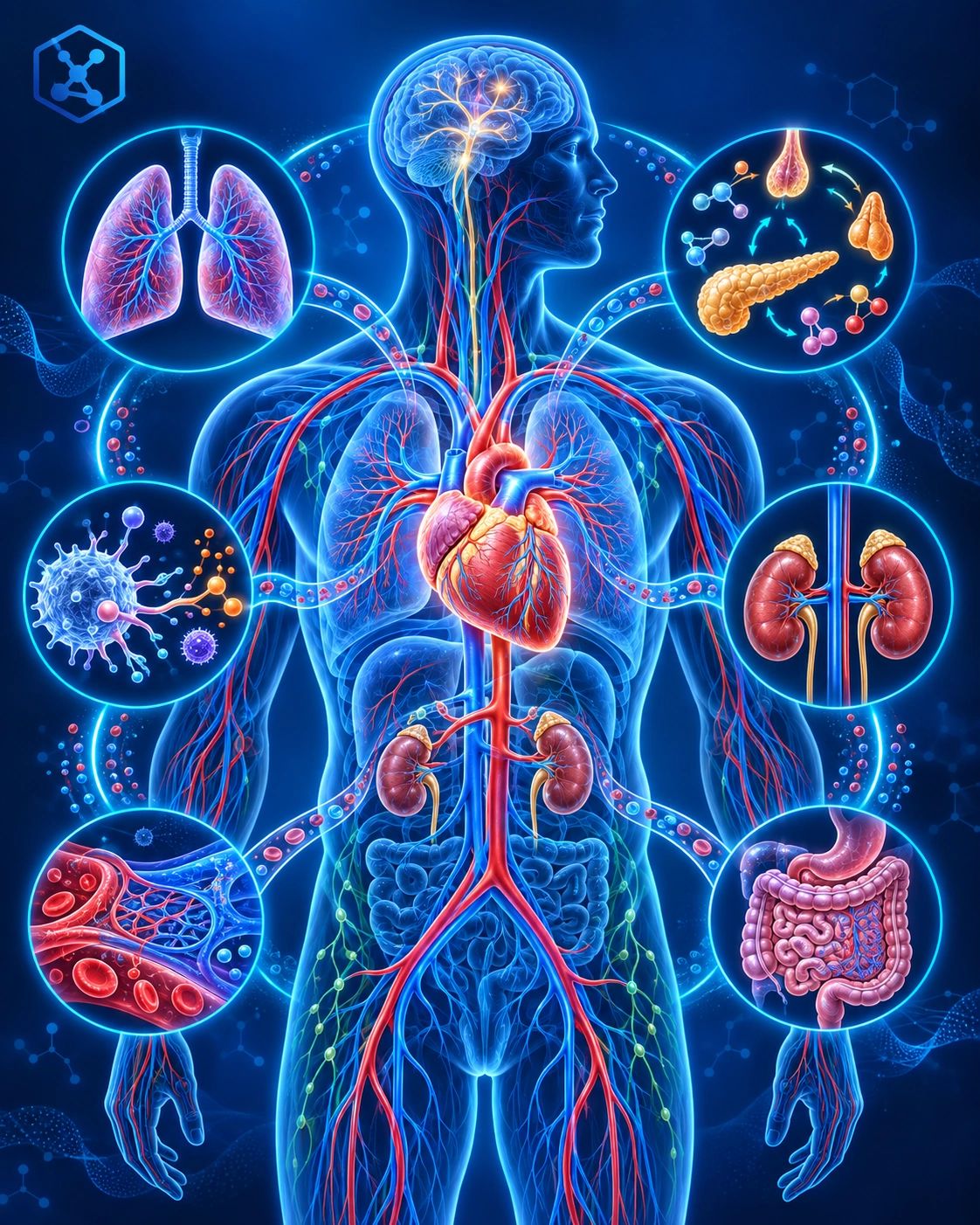
WHAT THE VASCULAR SYSTEM ACTUALLY DOES

Oxygen Delivery
Moves oxygen from the lungs to metabolically active tissue.


Nutrient Transport
Carries glucose, amino acids, lipids, hormones, and micronutrients.


Pressure Regulation
Coordinates cardiac output, vascular tone, fluid balance, and resistance.


Immune Communication
Allows immune cells and inflammatory signals to move throughout the body.


Heat Regulation
Changes peripheral circulation in response to temperature and metabolic demand.


Tissue Exchange
Capillaries connect circulation with the cellular environment.


THE VASCULAR SYSTEM CONNECTS NEARLY EVERY OTHER HUMAN SYSTEM.
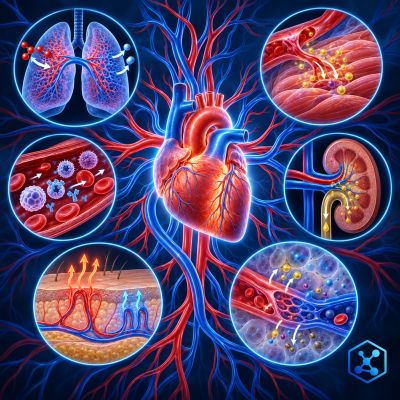
START WITH THE ENDOTHELIUM

VASCULAR HEALTH IS A SIGNALING PROBLEM TOO

MACROCIRCULATION vs MICROCIRCULATION

THE ENDOTHELIUM IS NOT JUST A LINING

The inner surface of blood vessels is biologically active.


It participates in:

Vascular tone • Coagulation • Inflammation • Permeability • Angiogenesis • Immune signaling • Platelet activity


Then a short statement:

Endothelial dysfunction can appear long before a vessel becomes completely obstructed.


MACROCIRCULATION vs MICROCIRCULATION

VASCULAR HEALTH IS A SIGNALING PROBLEM TOO

MACROCIRCULATION vs MICROCIRCULATION

 MACROCIRCULATION

Large vessels move blood between the heart, lungs, organs, and extremities.

Think:

Flow • Pressure • Atherosclerosis • Arterial stiffness • Obstruction


MICROCIRCULATION

Arterioles, capillaries, and venules determine whether blood actually reaches tissues effectively.

Think:

Perfusion • Oxygen exchange • Nutrient delivery • Metabolite removal • Local regulation


A normal heartbeat does not automatically mean normal tissue perfusion.


VASCULAR HEALTH IS A SIGNALING PROBLEM TOO

VASCULAR HEALTH IS A SIGNALING PROBLEM TOO

ATHEROSCLEROSIS IS MORE THAN “CLOGGED ARTERIES”

Mechanical Stress

Metabolic Signals

Inflammatory Signals

Neural Signals

Hormonal / Peptide Signals

↓

ENDOTHELIUM & VASCULAR SMOOTH MUSCLE

↓

Dilation • Constriction • Permeability • Remodeling • Angiogenesis


The vascular system continuously interprets chemical and mechanical information.


Major signaling systems include:

Nitric oxide • Endothelin • Angiotensin • Bradykinin • Natriuretic peptides • CGRP • Adrenomedullin

ATHEROSCLEROSIS IS MORE THAN “CLOGGED ARTERIES”

ATHEROSCLEROSIS IS MORE THAN “CLOGGED ARTERIES”

ATHEROSCLEROSIS IS MORE THAN “CLOGGED ARTERIES”

LDL/ApoB exposure

↓

Retention within the arterial wall

↓

Endothelial and immune interaction

↓

Inflammatory response

↓

Plaque development and remodeling

↓

Stable disease OR plaque disruption/thrombosis


Then one strong statement:

Atherosclerosis is a biological disease process—not simply grease accumulating inside a pipe.

CARDIOVASCULAR RISK IS A PATTERN

ATHEROSCLEROSIS IS MORE THAN “CLOGGED ARTERIES”

MORE BLOOD FLOW IS NOT ALWAYS BETTER

 THE PATTERN MAY INCLUDE

Blood Pressure

ApoB / Lipoprotein Burden

Glucose & Insulin Regulation

Smoking

Body Composition

Inflammation

Kidney Function

Sleep / Sleep Apnea

Physical Activity

Genetics / Family History

Age

Nutrition


No single laboratory marker completely defines cardiovascular health.


The pattern matters.

MORE BLOOD FLOW IS NOT ALWAYS BETTER

ATHEROSCLEROSIS IS MORE THAN “CLOGGED ARTERIES”

MORE BLOOD FLOW IS NOT ALWAYS BETTER

 VASODILATION ≠ UNIVERSAL BENEFIT

ANGIOGENESIS ≠ UNIVERSAL BENEFIT

LOWER BLOOD PRESSURE ≠ ALWAYS BETTER

MORE GROWTH SIGNALING ≠ ALWAYS BETTER


The goal is not maximum circulation.


The goal is appropriate perfusion, pressure, vessel integrity, oxygen delivery, and biological regulation for the situation.

PEPTIDES ALREADY HELP REGULATE VASCULAR PHYSIOLOGY

ANP / BNP / CNP
Fluid balance, pressure, vascular signaling


Angiotensin II
Vascular tone, blood pressure, renal signaling


Bradykinin
Vasodilation and permeability signaling


Adrenomedullin
Vascular and endothelial regulation


CGRP
Potent neurovascular signaling


Apelin
Cardiovascular and metabolic signaling

Other experimental peptides and peptide-related compounds are being investigated for endothelial function, angiogenesis, vascular repair, inflammation, and microcirculation.


But vascular mechanism does not automatically equal cardiovascular benefit.
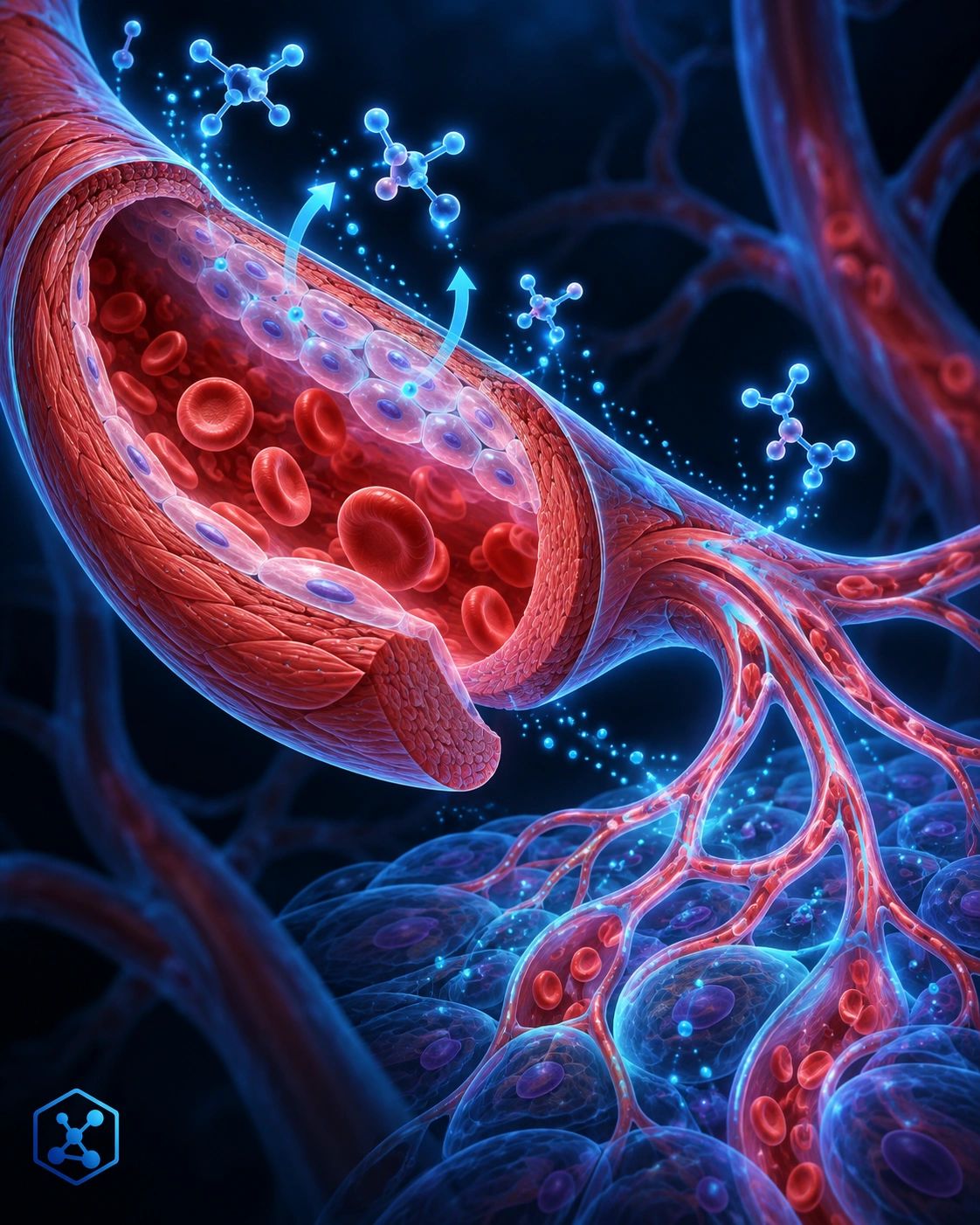

THE PRAXIS VASCULAR LENS

BEFORE ASKING “WHAT PEPTIDE?”

Ask:

1. What is the vascular pattern?

↓

2. Macrovascular, microvascular, cardiac, endothelial, metabolic, inflammatory—or mixed?

↓

3. What mechanism appears relevant?

↓

4. What does the evidence actually show?

↓

5. What cardiovascular risks already exist?

↓

6. What should be monitored?

↓

7. Does intervention improve something that matters?


Physiology → Pattern → Mechanism → Evidence → Risk → Monitoring → Decision
EXPLORE CARDIOVASCULAR & VASCULAR HEALTH

The Endothelium Is an Organ: Why the Inner Surface of Your Blood Vessels MattersAtherosclerosis Is Not Just “Clogged Arteries”Microcirculation: Why Blood Flow Means More Than Having Open ArteriesNitric Oxide: Why More Is Not Always BetterAngiogenesis: When New Blood Vessel Growth Helps—and When It Does NotBlood Pressure Is a Feedback System, Not Just a Number

Copyright © 2026 Praxis Peptide Institute - All Rights Reserved.

Powered by

This website uses cookies.

We use cookies to analyze website traffic and optimize your website experience. By accepting our use of cookies, your data will be aggregated with all other user data.

Accept