Clinical Peptide Medicine — Structured. Applied. Evolving.

Praxis Peptide Institute
  • HOME
  • START HERE
  • LEARN
  • PEPTIDE GUIDES
  • PEP EXPERIENCE REGISTRY
  • EXPLORE REGISTRY
  • ADVANCED LEARNER TRAINING
  • CLINICIAN TRAINING
  • ABOUT
  • More
    • HOME
    • START HERE
    • LEARN
    • PEPTIDE GUIDES
    • PEP EXPERIENCE REGISTRY
    • EXPLORE REGISTRY
    • ADVANCED LEARNER TRAINING
    • CLINICIAN TRAINING
    • ABOUT
  • Sign In
  • Create Account

  • My Account
  • Signed in as:

  • filler@godaddy.com


  • My Account
  • Sign out

Signed in as:

filler@godaddy.com

  • HOME
  • START HERE
  • LEARN
  • PEPTIDE GUIDES
  • PEP EXPERIENCE REGISTRY
  • EXPLORE REGISTRY
  • ADVANCED LEARNER TRAINING
  • CLINICIAN TRAINING
  • ABOUT

Account

  • My Account
  • Sign out

  • Sign In
  • My Account

BRAIN & NEUROBIOLOGY

Brain & Neurobiology | Peptides, Neuroinflammation, Neuroplasticity, Cognition & Neural Signaling 

Explore brain and neurobiology through neural signaling, neuroinflammation, neuroplasticity, neurotransmitters, BDNF, stress physiology, sleep, cognition, mitochondrial function, the blood-brain barrier, and emerging peptide biology. Learn the physiology before the molecule. 

BRAIN & NEUROBIOLOGY

The Brain Is Not a Collection of Symptoms. It Is a Signaling Network. 

Signaling Network

Fatigue.

Brain fog.

Poor concentration.

Memory changes.

Anxiety.

Sleep disruption.

Reduced motivation.

Changes in mood.


These symptoms are often discussed as though each represents a separate problem.


But the brain does not operate as isolated symptoms.

It operates through interconnected systems involving:

 neurons 

neurotransmitters 

neuropeptides 

glial cells 

mitochondria 

immune signaling 

vascular biology 

hormones 

metabolic state 

sleep 

the autonomic nervous system


The better question is not simply:

  • “What improves cognition?”

It is:

  • “Which neural system is failing to regulate correctly?”

The brain is not one pathway.

It is a constantly adapting network receiving information from the immune system, endocrine system, gut, metabolism, environment, and the rest of the body. 

START WITH NEURAL PHYSIOLOGY — NOT THE PEPTIDE

Before Discussion

Semax, Selank, and PE-22-28 are essential in the study of peptide medicine, especially in their roles in mitigating neuroinflammation and enhancing neuroplasticity. Additionally, Cerebrolysin-related biology and Pinealon contribute to our understanding of neurotrophic compounds. Furthermore, NAP-related peptides are significant in developing therapies targeting neuroinflammation, ultimately promoting neuroplasticity.

Understand

What the nervous system is actually doing. Because a peptide in peptide medicine that influences BDNF is not automatically a memory peptide. Similarly, a peptide that modifies inflammatory signaling does not automatically serve as a treatment for neuroinflammation. And a compound that alters a neurotransmitter pathway does not automatically correct the underlying physiological issues that caused that pathway to become abnormal, especially when considering the role of neuroplasticity.

PHYSIOLOGY → PATTERN → MECHANISM → EVIDENCE → RISK → MONITORING → DECISION

First, understand the neural system and its role in neuroinflammation and neuroplasticity. Then, decide whether the peptide medicine belongs within this system.

THE BRAIN IS CONSTANTLY INTEGRATING SIGNALS

Every second, the nervous system is processing information about:

  • the outside world

and:

  • the internal state of the body.

The brain receives information about:

  • oxygen 
  • glucose 
  • inflammation 
  • hormones 
  • immune activity 
  • sleep pressure 
  • threat 
  • reward 
  • pain 
  • temperature 
  • hydration 
  • energy availability 

It then modifies:

  • attention 
  • memory 
  • autonomic tone 
  • movement 
  • motivation 
  • appetite 
  • endocrine output 
  • behavior 


This is why brain symptoms can sometimes originate:

  • outside the brain itself.

A cognitive symptom does not automatically identify a cognitive pathology. 

THE MAJOR SYSTEMS

NEURAL SIGNALING

NEUROTRANSMITTERS

NEUROTRANSMITTERS

Action potentials, synapses, receptors, ion channels, and intracellular signaling are crucial for communication between neurons, especially in the context of neuroinflammation and neuroplasticity, which are essential in the development of peptide medicine.

EXPLORE NEURAL SIGNALING

NEUROTRANSMITTERS

NEUROTRANSMITTERS

NEUROTRANSMITTERS

Dopamine, serotonin, glutamate, GABA, acetylcholine, norepinephrine, and the complexity of neurotransmitter balance involve not just being 'high' or 'low' but also factors like neuroinflammation and neuroplasticity, which are essential in understanding how peptide medicine can influence these dynamics.

EXPLORE NEUROTRANSMITTERS

NEUROPLASTICITY

NEUROTRANSMITTERS

NEUROINFLAMMATION

Neuroplasticity describes how neurons change connections, strengthen circuits, and remodel networks in response to learning, injury, and environmental input, while also reflecting the complex interactions involved in neuroinflammation and the potential applications of peptide medicine.

EXPLORE NEUROPLASTICITY

NEUROINFLAMMATION

BRAIN ENERGY & MITOCHONDRIA

NEUROINFLAMMATION

Microglia, astrocytes, and cytokines play critical roles in neuroinflammation, affecting immune activation and oxidative stress. Understanding the distinction between protective neuroimmune signaling and persistent inflammation is essential for exploring neuroplasticity and the potential of peptide medicine.

EXPLORE NEUROINFLAMMATION

BRAIN ENERGY & MITOCHONDRIA

BRAIN ENERGY & MITOCHONDRIA

BRAIN ENERGY & MITOCHONDRIA

Understanding why neurons have enormous energy requirements is crucial, as it highlights how factors like mitochondrial function, glucose, oxygen, and metabolic health influence cognition. Additionally, exploring the roles of neuroinflammation and neuroplasticity can provide insights into how peptide medicine may enhance cognitive processes.

EXPLORE BRAIN ENERGY

BLOOD-BRAIN BARRIER

BRAIN ENERGY & MITOCHONDRIA

BRAIN ENERGY & MITOCHONDRIA

Understanding how the CNS regulates what enters the neural environment is crucial, especially in the context of neuroinflammation and neuroplasticity, highlighting why vascular and barrier integrity are essential. Furthermore, advancements in peptide medicine are exploring these dynamics to enhance treatment outcomes.

EXPLORE THE BLOOD-BRAIN BARRIER

STRESS & AUTONOMIC SIGNALING

STRESS & AUTONOMIC SIGNALING

STRESS & AUTONOMIC SIGNALING

Sympathetic activation, parasympathetic regulation, the HPA axis, and cortisol are all vital in understanding threat detection and resilience. Moreover, these factors are significantly affected by neuroinflammation and are influenced by neuroplasticity as well as peptide medicine, particularly in the context of chronic stress physiology.

EXPLORE STRESS BIOLOGY

SLEEP & NEURAL RECOVERY

STRESS & AUTONOMIC SIGNALING

STRESS & AUTONOMIC SIGNALING

Sleep architecture plays a critical role in processes such as memory consolidation, metabolic clearance, and autonomic recovery, influencing neuroplasticity. Additionally, understanding the impacts of neuroinflammation is crucial, as sleep cannot be replaced by cognitive enhancers or peptide medicine.

EXPLORE SLEEP & RECOVERY

THE BRAIN IS NOT MADE OF NEURONS ALONE

Neurons receive most of the attention.


But neural function also depends heavily on:

  • glial cells.


A brain can have intact neurons and still function poorly if the environment surrounding those neurons is abnormal. 

Astrocytes

Support:

  • neurotransmitter regulation 
  • metabolic support 
  • blood-brain barrier function 
  • ion balance

Microglia

Participate in:

  • immune surveillance 
  • debris clearance 
  • synaptic remodeling 
  • inflammatory signaling

Oligodendrocytes

Produce:

  • myelin

Supporting efficient neural transmission.

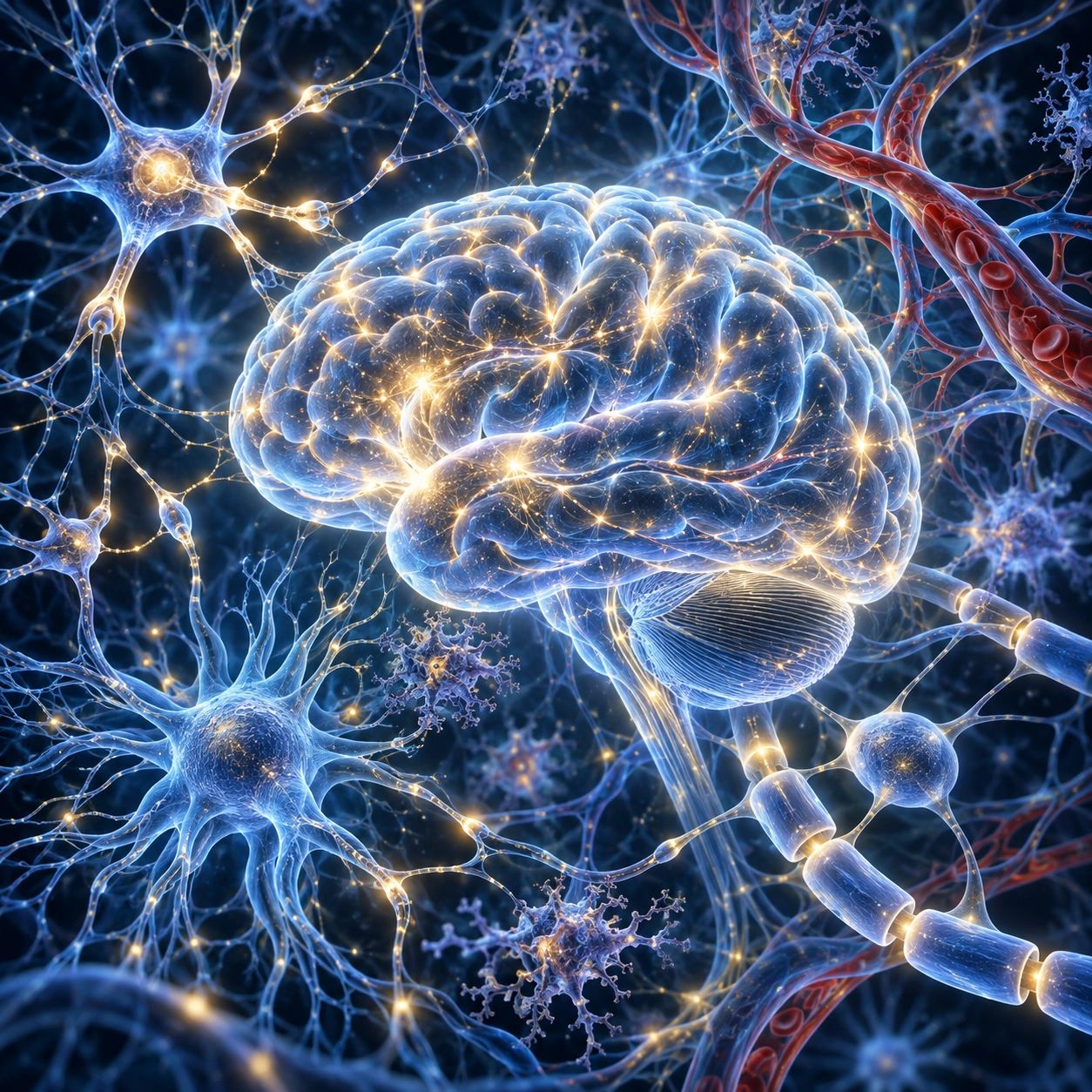
Illustration of brain cells and neural activity.

INFLAMMATION IN THE BRAIN IS NOT AUTOMATICALLY BAD

The neuroimmune system exists for a reason.

After: 


infection 

injury 

cellular damage 


Microglia and other immune pathways can help: 


identify danger 

remove damaged material 

coordinate repair 


The challenge arises when neuroinflammation leads to inflammatory signaling that is persistent, excessive, or poorly resolved. 


In such cases, these protective pathways may inadvertently contribute to: 

altered synaptic signaling 

oxidative stress 

mitochondrial dysfunction 

changes in cognition 

changes in mood or behavior 


This relationship highlights the importance of neuroplasticity and emerging treatments like peptide medicine in mitigating the effects of chronic neuroinflammation.

THREAT / DAMAGE → MICROGLIAL ACTIVATION → INFLAMMATORY SIGNALING → REPAIR / RESOLUTION

VS.

THREAT / DAMAGE → PERSISTENT MICROGLIAL ACTIVATION → CHRONIC SIGNALING → NETWORK DYSFUNCTION


The goal is not zero neuroinflammation.


The goal is appropriate activation followed by resolution.

THE BRAIN IS CONSTANTLY REMODELING ITSELF

Neuroplasticity describes the nervous system's ability to change in response to:

  • learning 
  • experience 
  • injury 
  • exercise 
  • stress 
  • environmental input 

This can involve:

  • synaptic strengthening 
  • synaptic weakening 
  • dendritic remodeling 
  • changes in neural networks

Plasticity itself is not automatically beneficial.


The brain can reinforce:

  • useful circuits

or:

  • maladaptive circuits.

Examples include persistent:

  • fear 
  • pain 
  • addiction 
  • rumination 


These can also represent:

  • learned neural patterns.

The goal is not maximum neuroplasticity.


It is adaptive neuroplasticity.
BDNF IS IMPORTANT — BUT “MORE BDNF” IS NOT A COMPLETE STRATEGY

Brain-derived neurotrophic factor, or BDNF, plays a crucial role in neuronal survival, synaptic plasticity, learning, and memory. This significance makes BDNF an appealing target in the realms of exercise, cognition, neurodegeneration, and peptide medicine discussions, particularly as it relates to neuroinflammation and neuroplasticity. However, it's important to note that an increase in BDNF is merely a mechanistic endpoint. It does not inherently indicate that memory has improved. The pathway from mechanism to biomarker, then to neural change and ultimately to functional outcome requires substantial evidence at each step.

NEURAL FUNCTION IS AN ENERGY PROBLEM TOO

The brain represents only a portion of total body mass but requires substantial:

Metabolic energy.

Neurons continuously consume ATP to maintain:

  • ion gradients 
  • action potentials 
  • neurotransmitter release 
  • synaptic function 


That means cognition is influenced by:

  • glucose regulation 
  • oxygen delivery 
  • mitochondrial function 
  • vascular health

A patient experiencing:

  • brain fog

May not necessarily need:

  • a cognitive peptide.


The relevant pattern could involve:

  • sleep 
  • glucose instability 
  • vascular physiology 
  • mitochondrial dysfunction 
  • inflammation 


Again:

  • pattern first.


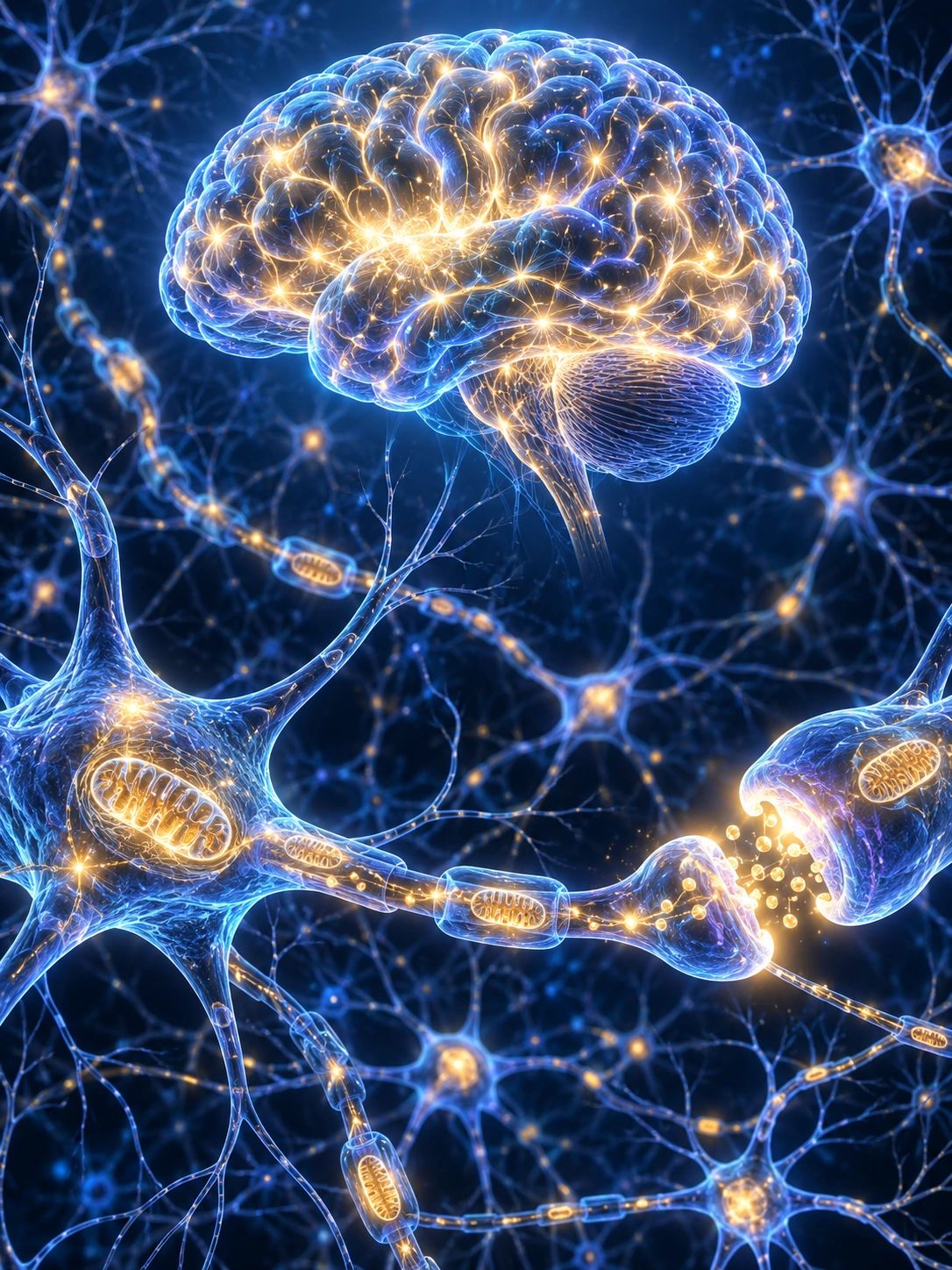
Digital illustration of a glowing brain with neural connections.

THE BRAIN CONTROLS ITS ENVIRONMENT

The Blood-Brain Barrier

After: 


infection 

injury 

cellular damage 


Microglia and other immune pathways can help: 


identify danger 

remove damaged material 

coordinate repair 


The challenge arises when neuroinflammation leads to inflammatory signaling that is persistent, excessive, or poorly resolved. 


In such cases, these protective pathways may inadvertently contribute to: 

altered synaptic signaling 

oxidative stress 

mitochondrial dysfunction 

changes in cognition 

changes in mood or behavior 


This relationship highlights the importance of neuroplasticity and emerging treatments like peptide medicine in mitigating the effects of chronic neuroinflammation.

Blood-brain barrier penetration is important — but it is not the only way peripheral biology communicates with the brain. 

THE BRAIN IS CONNECTED TO EVERYTHING

IMMUNE SYSTEM, GUT, ENDOCRINE SYSTEM, METABOLISM, VASCULAR SYSTEM, MITOCHONDRIA, SLEEP, AUTONOMIC NERVOUS SYSTEM


When one system changes, neural function may change with it.

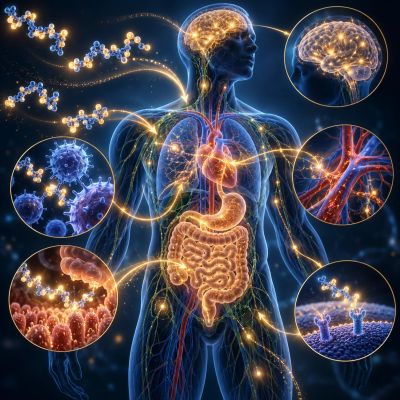
WHERE DO PEPTIDES ENTER THE SYSTEM?

Human body illustrating molecular and neural interactions.

Once the physiology is understood, individual peptides become much easier to organize.

Semax, Selank, and PE-22-28 are essential in the study of peptide medicine, especially in their roles in mitigating neuroinflammation and enhancing neuroplasticity. Additionally, Cerebrolysin-related biology and Pinealon contribute to our understanding of neurotrophic compounds. Furthermore, NAP-related peptides are significant in developing therapies targeting neuroinflammation, ultimately promoting neuroplasticity.

SEMAX

What the nervous system is actually doing. Because a peptide in peptide medicine that influences BDNF is not automatically a memory peptide. Similarly, a peptide that modifies inflammatory signaling does not automatically serve as a treatment for neuroinflammation. And a compound that alters a neurotransmitter pathway does not automatically correct the underlying physiological issues that caused that pathway to become abnormal, especially when considering the role of neuroplasticity.

SELANK

First, understand the neural system and its role in neuroinflammation and neuroplasticity. Then, decide whether the peptide medicine belongs within this system.

PE-22-28

An emerging peptide in peptide medicine is being discussed in relation to neuroplasticity, neuroinflammation, and antidepressant-like signaling, as well as cognition-related pathways.

PINEALON

A short peptide investigated in contexts such as neuroinflammation, neural aging, and gene-regulatory biology, particularly within cognitive and neuroprotective frameworks, highlights its potential in peptide medicine and its impact on neuroplasticity.

WHAT BRAIN PEPTIDES DO NOT DO

Illustration of molecular interactions in the brain's neural network.

PEPTIDES DO NOT REPLACE

Action potentials, synapses, receptors, ion channels, and intracellular signaling are crucial for communication between neurons, especially in the context of neuroinflammation and neuroplasticity, which are essential in the development of peptide medicine.

BRAIN & NEUROBIOLOGY ARTICLES

FOUNDATION

FOUNDATION

FOUNDATION

Action potentials, synapses, receptors, ion channels, and intracellular signaling are crucial for communication between neurons, especially in the context of neuroinflammation and neuroplasticity, which are essential in the development of peptide medicine.

READ ARTICLE

FOUNDATION

FOUNDATION

FOUNDATION

Dopamine, serotonin, glutamate, GABA, acetylcholine, norepinephrine, and the complexity of neurotransmitter balance involve not just being 'high' or 'low' but also factors like neuroinflammation and neuroplasticity, which are essential in understanding how peptide medicine can influence these dynamics.

READ ARTICLE

FOUNDATION

FOUNDATION

FOUNDATION

Neuroplasticity describes how neurons change connections, strengthen circuits, and remodel networks in response to learning, injury, and environmental input, while also reflecting the complex interactions involved in neuroinflammation and the potential applications of peptide medicine.

READ ARTICLE

FOUNDATION

NEUROIMMUNE BIOLOGY

FOUNDATION

Microglia, astrocytes, and cytokines play critical roles in neuroinflammation, affecting immune activation and oxidative stress. Understanding the distinction between protective neuroimmune signaling and persistent inflammation is essential for exploring neuroplasticity and the potential of peptide medicine.

READ ARTICLE

NEUROIMMUNE BIOLOGY

NEUROIMMUNE BIOLOGY

NEUROIMMUNE BIOLOGY

Understanding why neurons have enormous energy requirements is crucial, as it highlights how factors like mitochondrial function, glucose, oxygen, and metabolic health influence cognition. Additionally, exploring the roles of neuroinflammation and neuroplasticity can provide insights into how peptide medicine may enhance cognitive processes.

READ ARTICLE

NEUROIMMUNE BIOLOGY

NEUROIMMUNE BIOLOGY

NEUROIMMUNE BIOLOGY

Understanding how the CNS regulates what enters the neural environment is crucial, especially in the context of neuroinflammation and neuroplasticity, highlighting why vascular and barrier integrity are essential. Furthermore, advancements in peptide medicine are exploring these dynamics to enhance treatment outcomes.

READ ARTICLE

NEUROIMMUNE BIOLOGY

NEUROIMMUNE BIOLOGY

NEUROIMMUNE BIOLOGY

Sympathetic activation, parasympathetic regulation, the HPA axis, and cortisol are all vital in understanding threat detection and resilience. Moreover, these factors are significantly affected by neuroinflammation and are influenced by neuroplasticity as well as peptide medicine, particularly in the context of chronic stress physiology.

READ ARTICLE

ENERGY / RECOVERY

NEUROIMMUNE BIOLOGY

NEUROIMMUNE BIOLOGY

Sleep architecture plays a critical role in processes such as memory consolidation, metabolic clearance, and autonomic recovery, influencing neuroplasticity. Additionally, understanding the impacts of neuroinflammation is crucial, as sleep cannot be replaced by cognitive enhancers or peptide medicine.

READ ARTICLE

ENERGY / RECOVERY

NEUROIMMUNE BIOLOGY

ENERGY / RECOVERY

Sleep and the Brain — Understanding How Neural Recovery Involves Neuroinflammation and Neuroplasticity Beyond Peptide Medicine

READ ARTICLE

ENERGY / RECOVERY

NEUROTROPHIC BIOLOGY

ENERGY / RECOVERY

Stress, cortisol, and the autonomic nervous system are deeply interconnected, particularly when adaptation spirals into dysregulation. This dysregulation can lead to neuroinflammation, impacting overall brain health. Understanding the role of neuroplasticity helps highlight how our nervous systems can adapt to stressors, while emerging therapies in peptide medicine offer potential solutions to manage these complex interactions effectively.

READ ARTICLE

NEUROTROPHIC BIOLOGY

NEUROTROPHIC BIOLOGY

NEUROTROPHIC BIOLOGY

BDNF and Neurotrophic Signaling — Understanding the Role of Neuroinflammation in Neuroplasticity and Why More Growth Signaling Is Not Automatically Better for Cognition in the Context of Peptide Medicine

READ ARTICLE

NEUROTROPHIC BIOLOGY

NEUROTROPHIC BIOLOGY

NEUROTROPHIC BIOLOGY

Neurogenesis vs Neuroplasticity — Related Concepts in Understanding Neuroinflammation and Peptide Medicine, but Not the Same

READ ARTICLE

PEPTIDE-SPECIFIC ARTICLES

PEPTIDE-SPECIFIC ARTICLES

PEPTIDE-SPECIFIC ARTICLES

Action potentials, synapses, receptors, ion channels, and intracellular signaling are crucial for communication between neurons, especially in the context of neuroinflammation and neuroplasticity, which are essential in the development of peptide medicine.

READ ARTICLE

PEPTIDE-SPECIFIC ARTICLES

PEPTIDE-SPECIFIC ARTICLES

PEPTIDE-SPECIFIC ARTICLES

Dopamine, serotonin, glutamate, GABA, acetylcholine, norepinephrine, and the complexity of neurotransmitter balance involve not just being 'high' or 'low' but also factors like neuroinflammation and neuroplasticity, which are essential in understanding how peptide medicine can influence these dynamics.

READ ARTICLE

PEPTIDE-SPECIFIC ARTICLES

PEPTIDE-SPECIFIC ARTICLES

PEPTIDE-SPECIFIC ARTICLES

Neuroplasticity describes how neurons change connections, strengthen circuits, and remodel networks in response to learning, injury, and environmental input, while also reflecting the complex interactions involved in neuroinflammation and the potential applications of peptide medicine.

READ ARTICLE

PEPTIDE-SPECIFIC ARTICLES

PEPTIDE-SPECIFIC ARTICLES

PEPTIDE-SPECIFIC ARTICLES

Microglia, astrocytes, and cytokines play critical roles in neuroinflammation, affecting immune activation and oxidative stress. Understanding the distinction between protective neuroimmune signaling and persistent inflammation is essential for exploring neuroplasticity and the potential of peptide medicine.

READ ARTICLE

CLINICAL REASONING

PEPTIDE-SPECIFIC ARTICLES

CLINICAL REASONING

Understanding why neurons have enormous energy requirements is crucial, as it highlights how factors like mitochondrial function, glucose, oxygen, and metabolic health influence cognition. Additionally, exploring the roles of neuroinflammation and neuroplasticity can provide insights into how peptide medicine may enhance cognitive processes.

READ ARTICLE

CLINICAL REASONING

PEPTIDE-SPECIFIC ARTICLES

CLINICAL REASONING

Understanding how the CNS regulates what enters the neural environment is crucial, especially in the context of neuroinflammation and neuroplasticity, highlighting why vascular and barrier integrity are essential. Furthermore, advancements in peptide medicine are exploring these dynamics to enhance treatment outcomes.

READ ARTICLE

CLINICAL REASONING

CLINICAL REASONING

CLINICAL REASONING

Sympathetic activation, parasympathetic regulation, the HPA axis, and cortisol are all vital in understanding threat detection and resilience. Moreover, these factors are significantly affected by neuroinflammation and are influenced by neuroplasticity as well as peptide medicine, particularly in the context of chronic stress physiology.

READ ARTICLE

CLINICAL REASONING

CLINICAL REASONING

CLINICAL REASONING

Sleep architecture plays a critical role in processes such as memory consolidation, metabolic clearance, and autonomic recovery, influencing neuroplasticity. Additionally, understanding the impacts of neuroinflammation is crucial, as sleep cannot be replaced by cognitive enhancers or peptide medicine.

READ ARTICLE

EXPLORE THE COMPLETE LEARNING LIBRARY

Continue through peptide medicine using the PPI framework:

Physiology → Pattern → Mechanism → Evidence → Risk → Monitoring → Decision

RETURN TO LEARN

Copyright © 2026 Praxis Peptide Institute - All Rights Reserved.

Powered by

This website uses cookies.

We use cookies to analyze website traffic and optimize your website experience. By accepting our use of cookies, your data will be aggregated with all other user data.

Accept